
What Are Headbands For? Uses & Styles
What are headbands for when you want practical hair control that doubles as a personal style statement? This guide helps women explore classic uses, structural styles, and everyday pairing ideas, with handmade linen inspiration from BabunobGem and simple tips for keeping hair tidy through busy daily routines.
Key highlights
- Headbands serve both functional hair containment and expressive personal styling across casual, athletic, and formal settings.
- Construction styles range from rigid toothed arches to soft stretchy fabric loops, each answering distinct hair weights and scalp comfort needs.
- Natural fibers like linen add organic texture and a handmade look, while some molded plastic bases can press behind the ears.
- Placing a band just behind the hairline can help with slipping and keep scalp tension low.
What Headbands Are For: Core Uses, Anatomy, and Materials
Headbands are versatile hair accessories designed to keep stray strands away from the face and add decorative framing to various hairstyles. They come in different physical builds, ranging from flexible fabric loops to rigid molded bands lined with gripping teeth.
Hair accessories have a long history, from practical head coverings to ornamental wreaths. Today, the core intention remains familiar: keeping hair neatly organized while adding a touch of personal style. Understanding the balance between physical function and style can help you choose pieces that fit your daily life. Headbands go back a long way, and our article on when were headbands invented traces that story.
Functional Utility vs. Aesthetic Expression
When asking what are headbands for in day-to-day settings, the primary reason is practical hair containment. A well-placed band holds fringe and shorter layers back while you read, cook, garden, wash your face, or work on a computer. In athletic settings, many people wear stretchy bands to keep hair out of their eyes during workouts. For active days, you can see our stretchy running headband options here, finished with embroidered florals.
Beyond utility, headbands function as focal points in personal styling. A touch of textured cloth or delicate embroidery can transform second-day hair into an intentional hairstyle. It can frame facial features and add visual cohesion to casual denim, work attire, or vintage-inspired cottagecore dresses.
Core Structural Types: From Rigid Arches to Soft Wraps
Headbands generally fall into two broad structural camps: rigid horseshoe frames and soft circumferential bands. Rigid frames, often referred to as Alice bands, rely on molded plastic or spring steel to clamp lightly around the crown. Some feature interior teeth to anchor dense locks, though they can press into delicate areas behind the ears if worn for extended hours. For a fuller breakdown, our guide to types of headbands compares shapes, widths, and materials.
Soft bands wrap continuously around the circumference of the head. These can take the form of wide stretchy loops, gathered jersey wraps, or woven fabric bands. Soft fabric bands tend to feel less pressing than rigid frames, and they work with hairstyles such as buns, braids, and flowing waves.
Material Breakdown: Linen, Silk, Cotton, and Synthetics
The exterior material of a headband affects its texture and how it feels against your hair. Natural linen has a distinct slub texture and a matte look, which makes it a lovely canvas for hand embroidery.
Silk and satin have a smooth finish that some people find gentler on curly or delicate strands, though that smoothness can let bands shift forward on straight hair. Cotton is a familiar everyday fabric that is popular for casual wear. Synthetics such as polyester, spandex, and nylon are common in athletic styles because they stretch easily.
| Headband Style | Primary Purpose | Recommended Setting | Key Consideration |
|---|---|---|---|
| Fabric Stretchy Band | Hair hold and styling | Everyday wear, desk work, casual outings | Needs the right amount of stretch so it does not slide or roll |
| Hard Alice Band | Crisp hair sweep behind ears | Structured office attire, formal events | Rigid ends can press tender spots behind the ears |
| Athletic Sweatband | Perspiration absorption | Running, gym workouts, tennis | Stretchy synthetic fibers; check the care label |
| Knotted Turban Band | Adding crown height and volume | Casual weekend brunches, relaxed gatherings | Top knot adds bulk that may catch under outerwear hoods |
| Hand-Embroidered Linen Band | Artisanal detail and facial framing | Cottagecore styling, botanical looks, gifts | Spot clean with a damp cloth and air dry |
| Folded Bandana Wrap | Scalp coverage and hair tucking | Outdoor gardening, hiking, dusty tasks | Requires manual knotting at the nape of the neck |
| Toothed Comb Band | Mechanical grip on unruly hair | High winds, securing thick bangs | Teeth can snag fragile hair if removed carelessly |
| Wide Spa Towel Wrap | Sweeping hair away from skin | Morning skincare, cosmetic application | Loose fit designed primarily for stationary indoor tasks |
| Flexible Wire Bow Band | Customizable tension and retro charm | Vintage styling, casual daywear | Internal wire can bend out of alignment with rough handling |
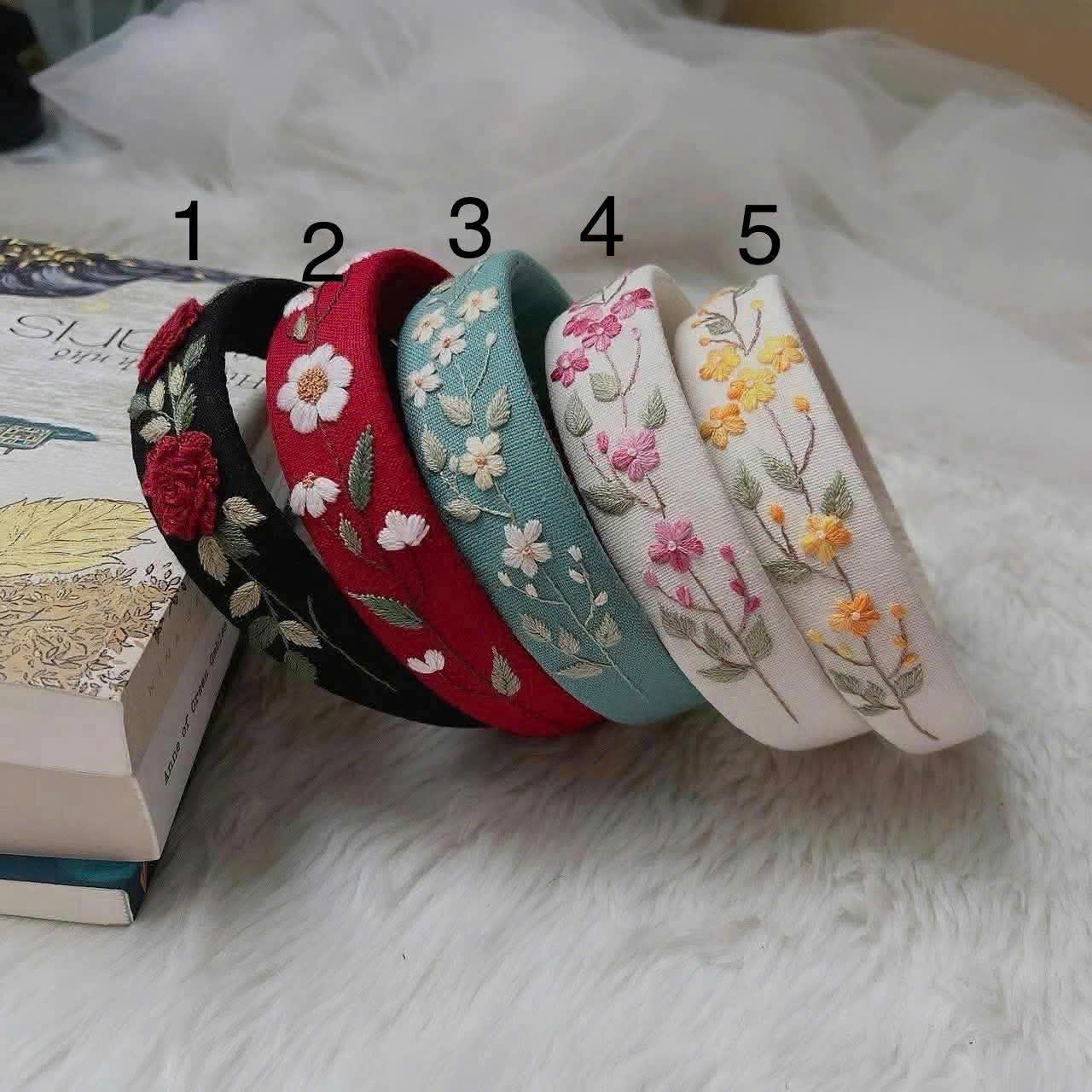
Wildflowers Embroidered Headband
This piece is embroidered by hand on natural linen, with a 1.2 in (3 cm) wide soft, stretchy band.
How to Choose and Style a Headband: A Step-by-Step Guide
To choose and style a headband successfully, evaluate your hair texture and scalp sensitivity, select a complementary band width, and position the accessory comfortably behind the hairline. This approach can help with strand control through the day without putting extra tension on your roots.
Finding an accessory you enjoy wearing takes a thoughtful approach. By considering structural design alongside personal style, you can select pieces that harmonize with your natural hair texture and daily wardrobe.
Step 1: Evaluate Your Hair Texture and Scalp Sensitivity
Before buying any hair accessory, examine your strand density and scalp comfort. Fine, silky hair tends to slip beneath smooth, heavy headbands, so lighter bands with textured natural weaves like linen or cotton may hold their place better than slick plastics. Coarse or voluminous hair may do better with wider bands that have more surface area to tame flyaways without riding upward.
If tight hair ties or heavy clips give you headaches, skip rigid inner cores. Molded plastic bands can press right above the ears. Soft, stretchy fabric headbands may feel less pressing. If any accessory gives you a headache or a sore spot, take it off, and see a doctor or dermatologist if it continues.
Step 2: Match the Band Width and Profile to Your Face Shape
Band width influences the visual proportions of your face. Narrow bands under an inch give a subtle accent and can look good with shorter haircuts, delicate features, or sleek low ponytails. A band around 1.2 in (3 cm) wide gives a little more presence while still looking understated.
Rounder faces often benefit from headbands that introduce vertical lines or subtle height, such as lightly gathered fabric designs or styles set slightly back from the forehead. Square jawlines can look softer when framed by gently rounded, flexible fabric bands paired with a few loose tendrils left out around the temples.
Step 3: Select Natural Fibers or Performance Fabrics
Match the textile to your primary daily environment. For intense gym sessions or outdoor runs, many people reach for stretchy synthetic knits made for athletic wear. BabunobGem offers botanical sports headbands with stretchy bands in 4 designs across 6 band colors.
For office days, study sessions, weekend farmers markets, and family gatherings, natural fibers are a popular choice. Natural linen has an understated, earthy look, and hand-stitched floral accents add warmth to casual cardigans and blouses.
Step 4: Position the Band Correctly to Limit Scalp Tension
How you put on a headband can influence both how well it stays put and how your scalp feels. Avoid pushing the band straight backward from your eyebrows, as this can drag hairline strands and pull uncomfortably. Instead, pull a soft fabric band down over your neck, then slide it upward to rest roughly an inch behind your front hairline. Our tutorial on how to wear a headband walks through more placement ideas.
Be mindful of keeping hair tension gentle. According to the American Academy of Dermatology, hair pulled back tightly over and over can cause traction alopecia. Leaving soft tendrils or bangs loose in front of the band can ease strain on your roots. If a band leaves your scalp sore, take it off, and see a doctor or dermatologist if it continues.
Step 5: Coordinate Patterns, Botanical Accents, and Wardrobe Tones
Treat your headband as an intentional styling element rather than an afterthought. Neutral fabric bands in natural cream or black complement monochromatic sweaters and denim without competing for visual attention. They provide a tidy finish for running errands or attending casual meetings.
When choosing embroidered floral designs, draw styling inspiration from the threadwork. Motifs like daisies, sunflowers, lavender, lilies, and wildflowers introduce delicate organic colors into your look. Pair warm yellow floral embroidery with earth-toned outerwear, or let lavender stitches introduce a subtle pastel accent against dark knits. You can browse our hand-embroidered headband designs here if you would like to try a floral accent.
Practical Headband Tips From Our Hand-Embroidery Studio
Practical headband wear relies on positioning the band at a natural diagonal tilt, adding light grip to freshly washed hair, and practicing mindful spot cleaning. These simple steps can help embroidered accessories look fresh through daily activities.
In our small studio in Ho Chi Minh City, we hand-embroider botanical motifs on linen. These are a few general habits for wearing and caring for fabric accessories.
A Diagonal Placement Trick: Try wearing your fabric headband at a slight angle rather than straight up and down. Rest the top edge roughly one to two inches behind your hairline and angle the lower edge down toward the nape of your neck. This diagonal placement follows the curve of the head and can help keep the band from creeping forward.
Building Gentle Grip on Clean Strands: Freshly washed hair is notoriously slick, which can cause fabric accessories to slide. Instead of using stiff hairsprays, mist your roots lightly with texturizing sea salt spray or dusting powder before putting on your headband. Textured strands give a fabric band more to hold onto, which can help your style stay put through the afternoon.
Layering Bands With Soft Updos: A fabric headband looks lovely when paired with other thoughtfully crafted pieces. Slide a 1.2 in (3 cm) wide embroidered linen headband into place, then gather your remaining hair into a relaxed half-up style with a hand-embroidered claw clip, or into a low ponytail with a linen scrunchie. Keeping the textiles consistent can create a harmonious cottagecore look that feels put together without looking rigid.
Mindful Spot Cleaning: Natural linen and delicate embroidery threads should never be washed aggressively. If your headband picks up foundation or oils along the inner edge, dampen a clean cloth with cool water, then dab the area lightly. Allow the band to air dry flat away from direct sunlight. To keep your favorites tidy and in good shape, see how to store headbands between wears.
Common Headband Mistakes and How to Avoid Them
Common headband mistakes include wearing rigid frames that can leave tender spots behind the ears, pulling hairline strands too tight, and putting hand-stitched pieces in washing machines. Correcting these habits can make headbands more comfortable to wear and help your accessories look fresh.
Even a lovely accessory can become uncomfortable if worn or maintained incorrectly. Recognizing these common errors can help you go easy on your hair and keep handcrafted accessories looking fresh.
Mistake: Choosing Inflexible Bands That Pinch the Temples. Some molded plastic headbands curve sharply inward and can press behind the ears. After a few hours, pinching like this can cause soreness or a tension headache. If you experience discomfort or a dull headache, take the accessory off to let your scalp rest, and see a doctor or dermatologist if it continues. A soft, stretchy fabric headband may feel less pressing. If a band feels tight, read how to stop headbands from hurting for some simple fixes.
Mistake: Tugging the Front Hairline Under Extreme Tension. Shoving a headband back like a clamp and dragging front baby hairs taut can pull uncomfortably along the temple area. To avoid unnecessary tension, pull soft tendrils or fringe forward before sliding your headband into position. Let the band sit on the crown and mid-lengths rather than putting all the pull on the front hairline. If your scalp feels sore, take the band off, and see a doctor or dermatologist if it continues.
Mistake: Submerging or Machine-Washing Hand-Embroidered Pieces. Placing handcrafted linen accessories in a washing machine or dryer can damage hand-stitched embroidery and cause puckering. Hand-embroidered accessories should never be machine washed. Instead, spot clean only by gently dabbing soiled spots with a damp cloth, then let the item air dry on a flat towel.
Frequently Asked Questions About Headbands
Do guys wear headbands, and how can men style them?
Do guys wear headbands, and can men wear headbands for daily outfits? Yes. Many men wear headbands for sports and casual wear to keep medium to long hair out of their face. Can guys wear headbands without looking overly formal? Yes, simple neutral fabric bands, dark athletic wraps, and understated sweatbands can work with casual t-shirts and gym wear. Styling a band just behind the hairline or pushing it back slightly can give a clean, practical look.
What are headbands for during workouts versus everyday wear?
Athletic headbands are usually made from stretchy synthetic fabrics like polyester and spandex, and they are meant to keep hair back during running and other active movement. Everyday headbands focus more on style and coordination with casual outfits. Daily pieces often use natural textiles like linen or cotton and artisanal hand embroidery to frame the face.
How can you keep a fabric headband from sliding off fine hair?
To keep a fabric headband in place on fine or silky hair, avoid applying it to freshly conditioned roots. Add a small spritz of dry shampoo or texturizing spray at the crown to give the hair fiber gentle grip. When positioning the band, slide it down to the neck and pull it up into place at an angle, catching the hair against its natural direction. You can also place two small bobby pins near the nape to help anchor the band.
Can wearing headbands every day cause hair damage or headaches?
Wearing headbands can cause discomfort if the band presses behind the ears or pulls front strands too tightly. High-tension bands worn day after day can pull on the hairline. To go easy on your hair, choose soft stretchy fabric bands and leave front tendrils loose to relieve pulling. If you ever develop a headache or scalp soreness, take off the accessory and rest, and see a doctor or dermatologist if it continues.
How do you clean embroidered linen headbands without damaging stitches?
Embroidered linen headbands should never be machine washed or soaked in water. To spot clean them, dampen a clean washcloth with cool water. Dab lightly along the inner band where it touches your forehead to lift oils and makeup. Avoid rubbing the embroidered surface vigorously. Press the band gently between a clean towel to absorb moisture, then lay it flat to air dry away from heat.
Everyday Style and Slow-Crafted Hair Accessories
Headbands bridge the gap between everyday function and wearable art, offering practical hair management alongside everyday charm. At BabunobGem, our small studio in Ho Chi Minh City stitches botanical designs onto natural linen in small batches. Each piece is made by hand, with orders usually prepared in 1–3 business days. US delivery is estimated at 10–14 business days, with tracking. Returns within 30 days under our Return Policy.
New here? Get 10% off your first order
Join our list for new small-batch designs and restocks, or browse the collection now.
Note: Each piece is embroidered by hand, so stitches and colors can vary slightly from the photos. Fit and feel depend on head size, hair type and how you wear it. This guide is for general information only.