
How to Wear Headband Styles for Long Hair
How to wear headband styles with long hair comes down to where the band sits on your crown and how much grip your hair gives it. This guide from BabunobGem is for women with long hair who want to wear cloth and embroidered bands for work, casual outings or weekends, with placement tips and six hairstyles.
Key highlights
- A simple placement guide: start about an inch behind your hairline, then adjust to suit your face and hair.
- How textured fabrics such as linen compare with slick synthetics and rigid plastic bands for grip.
- Six versatile hairstyles for long hair show you how to pair wide headbands with curls, braids, low chignons, and messy topknots.
- Practical studio tips for placing a headband, plus what to do if a band feels tight or gives you a headache.
Headband Anatomy, Styles, and Fabric Dynamics for Long Hair
Wearing a headband with long hair goes more smoothly when the band’s structure and width suit your hair density, because the downward pull of long strands can shift the band as you move.
Long hair brings its own dynamics to hair accessories. Long strands exert a steady downward drag, and every time you turn your head, tuck a strand or catch a breeze, that movement tugs on the base of your headband. In short, this guide explains how to wear a headband with long hair, from placement to everyday styles.
When choosing a headband, the construction affects how pressure spreads across your temples and behind your ears. Rigid bands rely on inward tension, which can create pressure points after a few hours. Soft cloth bands and elastic loops rely on circumference tension, which spreads the hold around your head instead.
Cloth Headbands vs. Hard Bands: What Works for Long Tresses?
For long hair, the choice between rigid plastic bands and flexible cloth bands affects both comfort and styling freedom. Rigid Alice bands give immediate lift at the root and push hair back cleanly, but hard plastic tips can press behind the ears, especially under thick, heavy hair. If you are unsure which shape suits you, this overview of the types of headbands explains the main styles.
Learning how to wear a cloth headband opens up a more flexible styling experience. Cloth bends with the shape of your head, and a wide band spreads pressure over a larger area than a thin one. Because cloth flexes, it can sit over hair gathered into high buns, low ponytails or loose waves.
Natural Linen and Botanical Embroidery
Material texture affects how a headband behaves on long hair. Slick satin and polyester bands can slide backward because their smooth fibers give hair little to catch onto. Linen has a slightly textured weave that adds some grip by comparison, though no fabric holds the same way on every head.
Hand embroidery adds raised botanical motifs, such as daisies, roses or wildflowers, to the fabric. The stitched texture gives a headband a cottagecore, vintage look that can dress up a simple everyday hairstyle. You can browse our embroidered floral headband collection to see these botanical details up close.
Hair Texture Considerations: Straight, Wavy, Curly, and Coily Hair
Straight, silky hair is more likely to let a band slip because it has a smooth, low-friction surface. For straight hair, a wide cloth band placed slightly further back on the crown can help, especially with a touch of dry texture spray.
Wavy and curly long hair has some built-in grip from its texture and volume, but dense curls can also push back against an accessory. A narrow headband can disappear beneath them, so a wider band shows up better. For coily hair, a stretchy fabric band near the hairline can frame your face and show off puffs and protective twists.
| Headband Style | Good For | Placement Point | Main Feature |
|---|---|---|---|
| Wide Linen Cloth Band | Thick or curly hair | 1 inch behind hairline | Wide fabric spreads pressure over a larger area |
| Botanical Stretchy Band | Everyday wear; wavy or curly hair | Along hairline or over crown | Stretchy band with botanical embroidery |
| Hard Plastic Alice Band | Straight, medium density | 1.5 inches behind hairline | Instant root lift and sleek front hair control |
| Knotted Fabric Headband | Thick, coarse long hair | Directly at the crown apex | Adds vertical height to balance heavy hair volume |
| Padded Velvet Band | Straight to gentle waves | Just behind crown rise | Plush grip that holds hair without rigid sharp edges |
| Skinny Metal Headband | Fine long hair; half-up styles | Tucked behind the ears | Subtle accent that secures lightweight front layers |
| Turban-Style Wrap | Curly, coily, textured tresses | Covering ears or at temple line | Covers front edges while containing thick bulk |
| Elastic Wire Headband | Casual updos; messy buns | Around nape and forehead line | Customizable tightness adjusted by twisting ends |
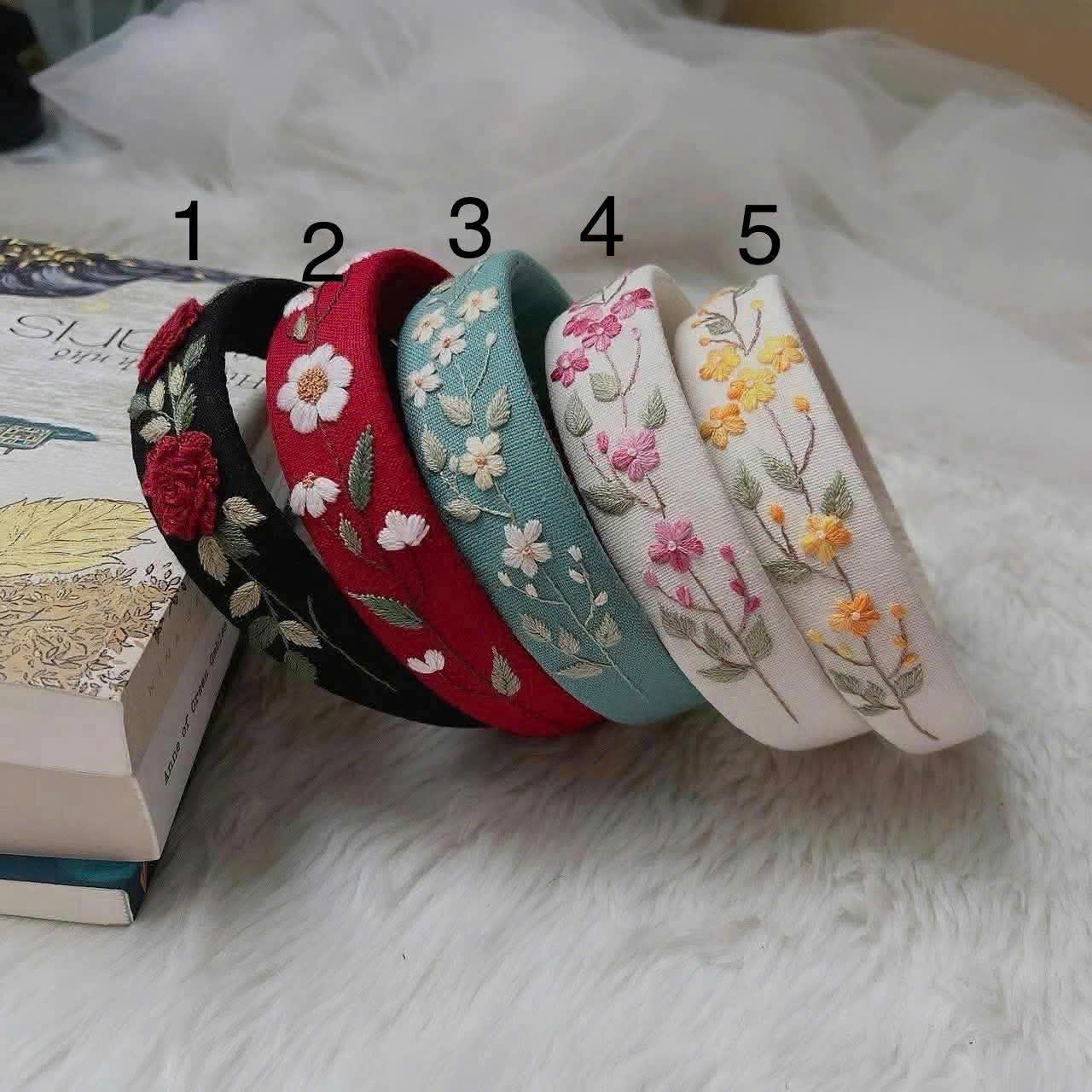
Wildflowers Embroidered Headband
If plastic bands tend to slip or press behind your ears, a fabric band may be worth trying. The Wildflowers Embroidered Headband is hand-embroidered with wildflowers on natural linen and is 1.2 in (3 cm) wide, with a soft, stretchy band.
How to Wear a Headband with Long Hair: A Step-by-Step Styling Guide
To wear a headband with long hair, add a little grip at your roots, place the band about an inch behind your hairline, and lift the hair just behind it to ease tension.
Styling long hair with a headband takes a little more than sliding it on. Because long hair carries weight, poor technique can flatten your hairline, bunch hair at your temples or let the band slip. Curious about why people wear them at all? Read what are headbands for to see their many uses.
Step 1: Prep Your Hair Texture and Set Your Parting
Headbands grip better on hair that has a little texture. Freshly washed, silky hair can be slippery, so a spritz of texturizing spray or dry shampoo near the roots adds some friction. Detangle your long lengths with a wide-tooth comb or paddle brush, working gently from the ends up to the roots.
Next, choose your parting before placing the band. A center part with a headband gives a balanced, bohemian look, a deep side part adds romantic, vintage asymmetry, and brushing hair straight back is a clean, casual option. If your hair is shorter, you can also read about styling headbands for short hair with a few simple tweaks.
Step 2: Find Your Placement Line Along the Crown
A good starting point is to place the band about an inch behind your front hairline. Placing a decorative band right at the forehead edge tends to flatten your face and can look severe.
From there, anywhere from about 0.5 to 1.5 inches behind your front hairline can work. When wearing headbands with long hair, check that the ends of the band sit behind your ears rather than pressing on the top of your ears.
Step 3: Choose Your Silhouette (Down, Half-Up, Ponytail, or Bun)
Once you know your placement line, decide how to handle the bulk of your long hair. For half-up styles, gather the top crown section with a small clear elastic or an embroidered claw clip before sliding the headband into place.
With high ponytails or messy topknots, secure the ponytail first and add the headband afterward. For a low nape chignon, you can slide the headband on first, then loosely tuck and twist your hair into place at your neck.
Step 4: Secure the Base and Ease Scalp Tension
If you are using a continuous stretchy cloth band, gently widen it with both hands, slide it down around your neck like a necklace, and pull the front edge up to your hairline. Then slide it back into your placement zone.
If you are placing a flexible curved band, align the tips behind your ears and push gently downward and slightly forward into your hair. Once it is seated, lift the hair directly behind the band a little with your fingertips. This small adjustment can ease root tension and restore some crown fullness.
Step 5: Frame the Face with Soft Tendrils and Finishing Touches
A rigid, slicked-back look can feel stark and formal. For a relaxed, lived-in cottagecore finish, use your thumb and index finger to pull a few soft tendrils free around your temples and the front of your ears. These loose face-framing strands soften the look.
If you have curtain bangs or side-swept fringe, keep them in front of the headband and place the band just behind where the bang section separates from the crown.
Style 1: Effortless Down with Natural Beach Waves
Long hair down in soft waves is a classic way to wear a botanical cloth headband. Use a wide curling wand or heatless overnight braids to add relaxed texture through your mid-lengths and ends, then comb the waves out with your fingers and part your hair down the center.
Slide a wide embroidered linen headband into place about an inch behind the front hairline and let your waves fall over your shoulders. If you like a deeper tone, you can see our handmade black headband with wildflower embroidery here.
Style 2: Polished Half-Up Half-Down with Hidden Grip
The half-up half-down style keeps long hair out of your eyes while still showing off your length. Section off the hair from the top of your ears up to your crown, then secure it at the back of your head with a small hair tie or an embroidered linen barrette. For a softer, dressier touch, you can also see our pearl headband with floral embroidery here.
Position your headband just in front of the half-up section. The gathered hair behind the band gives it something to rest against, which can help stop it from shifting backward.
Style 3: Casual Textured High Messy Bun
A textured topknot pairs well with a wide cloth headband. Flip your head upside down and gather your hair at the crown, then secure it in a loose, looped messy bun with a linen scrunchie, letting the ends fan out naturally.
Stand upright and slide a stretchy cloth headband up from your neck to rest just behind your front baby hairs. A wide band can help keep stray flyaways at your temples in check, while the bun lifts heavy hair off your neck. For active days, learn how to wear a headband for running so it stays comfortably in place.
Style 4: Low Romantic Nape Chignon
For a dinner or semi-formal event, a wide headband with a low nape chignon gives an elegant, graceful profile. Part your hair down the middle, slide your headband into place on the crown, and gather your hair at the nape of your neck. Twist the gathered length into a neat spiral coil and pin it against your head with bobby pins.
Alternatively, fold the twisted hair through an embroidered scrunchie for a relaxed roll.
Style 5: Boho Crown Braid Accent
Braids and headbands pair naturally for a countryside look. Divide your long hair into two equal sections over your shoulders and weave each side into a classic three-strand or soft fishtail braid, securing the ends with clear elastic bands.
Place your embroidered headband over your crown, with the lower ends right behind your ears where the braids begin. Leave the braids resting over your chest, or wrap them around the base of your skull and pin them flat into a milkmaid braid wreath.
Style 6: Sleek Low Ponytail with Wide Cloth Band
When you need a clean, structured look for work or a busy afternoon, pair a sleek low ponytail with a wide headband. Brush long hair toward the nape of your neck and fasten it at the base of your neck with a hair tie.
Slide your wide cloth headband into place, about an inch back from your forehead. The wide fabric can help smooth the front crown and cover cowlicks or morning frizz.
Studio Tips for Wearing Headbands with Long Hair
In our studio, we suggest sliding a headband on from your neck upward, anchoring slick hair with crisscrossed bobby pins, and taking the band off if it feels tight.
In our studio in Ho Chi Minh City, we spend our days embroidering linen headbands and other hair accessories by hand. Here are four tips we often share.
The Upward Slide Technique Put a continuous stretchy cloth headband on by pulling it over your head and down to your neck, then sliding the front edge up toward your hairline. Pushing a band straight down from the top of your head tends to flatten your crown, while sliding it up lifts your roots slightly and gives the band a little more to rest against.
The Invisible Bobby Pin Anchor If your fine, silky hair tends to push headbands backward, try a hidden criss-cross pin. Slide your headband into position, lift a small section of hair behind your ear, and slide two bobby pins diagonally across the lower cloth edge in an “X”, with the wavy side facing your scalp. They act as a hidden stop that can help keep the band from drifting backward.
Pairing Cloth Bands with Claw Clips For a half-up style with long, heavy hair, place your wide cloth headband first, then gather the top third of your hair and secure it with an embroidered claw clip just behind the back edge of the headband. The clip sits against the band and can help keep it from sliding backward.
Gentle Linen Spot Cleaning Do not put hand-embroidered linen headbands in a washing machine or soak them. If makeup or oil gets on the band, dab the spot lightly with a clean, damp cloth, avoiding hard rubbing across the embroidery, and let the headband air dry flat on a clean towel, away from direct heat.
Common Headband Mistakes to Avoid with Long Hair
Common headband mistakes include pulling hair too tightly beneath the band, pushing bands downward against root growth, and neglecting hair texture prep before styling.
Long hair adds weight, leverage and friction that shorter hair does not. Correcting these three common mistakes makes headbands easier to wear.
Mistake: Pushing the headband straight backward from your forehead Many people slide headbands straight back like an athletic sweatband, dragging all the front hair under the band. Instead, set your part first, then drop the headband onto your crown from above or slide it up from the nape of your neck. Once it is in place, gently pull a little root hair forward to restore movement and crown height.
Mistake: Pulling hair too tightly beneath the accessory Pulling your long hair tightly under a band puts steady tension on your scalp. The American Academy of Dermatology notes that hair pulled back tightly over and over can cause traction alopecia, a type of hair loss. Keep your band loose enough that it does not tug at your roots. If a headband pinches or your scalp feels sore, take it off. If soreness or headaches continue, see a doctor, and if you notice thinning, see a dermatologist. If a band feels tight around your ears, our tips on how to stop headbands from hurting may help.
Mistake: Wearing wide bands over dirty or completely flat roots A wide cloth headband can help hide second-day roots, but sliding a band over limp, oily hair often leads to slipping. To fix this, dust your roots with a little dry shampoo, arrowroot powder or texturizing spray before putting on your headband. The powder absorbs some surface oil and adds texture for the band to grip.
How to Wear Headband Styles: Frequently Asked Questions
Is it bad to leave a headband on your head all day?
It does not have to be, as long as the band is not tight and does not press behind your ears. A rigid or tight band can cause discomfort or headaches over a few hours, so choose a fit that feels easy and take the band off if it bothers you. If soreness or headaches continue after you take it off, see a doctor.
How do you keep a cloth headband from slipping off long hair?
To help a cloth headband stay put, start with textured hair rather than freshly washed, silky strands, and add grip with dry shampoo or texturizing spray at your crown. Place the band about an inch behind your front hairline. For fine or slippery hair, anchor the band behind each ear with two crisscrossed bobby pins hidden under your hair.
Should long hair be worn in front of or behind the ears with a headband?
Both options work, depending on the look you want. Tucking the ends of your headband behind your ears while your hair flows over your shoulders gives a clean, classic frame. Wearing a wide cloth band slightly over the tips of your ears gives a cozy, relaxed boho feel.
Can you wear a wide cloth headband with bangs and long layers?
Yes, a wide cloth headband works with bangs. With blunt or curtain bangs, position the front edge of the band where your bangs separate from the rest of your crown, and let the bangs fall forward across your forehead instead of tucking them under.
How do you style a headband with curly or thick long hair?
For curly or thick long hair, choose a wide cloth headband, about 1 to 1.5 inches across, since skinny bands can get lost in dense volume. Slide the headband on from your neck upward so you do not flatten your curls. Headbands go well with pineapple updos, high half-up buns or loose curls.
Elevating Your Long Hair Routine with Mindful Craft
Wearing a headband with long hair is mostly about placement, a little grip and a loose hold. At BabunobGem, we embroider our linen headbands by hand in small batches in our Ho Chi Minh City studio. Orders are usually prepared in 1–3 business days, delivery to the US is estimated at 10–14 business days with tracking, and you can return items within 30 days under our Return Policy.
New here? Get 10% off your first order
Join our list for new small-batch designs and restocks, or browse the collection now.
Note: Each piece is embroidered by hand, so stitches and colors can vary slightly from the photos. Fit and feel depend on head size, hair type and how you wear it. This guide is for general information only.