A Guide to Different Types of Headbands
Types of headbands range from rigid Alice bands to soft, stretchy fabric bands, and each one holds, feels and looks different on the head. This guide explains the main styles, materials and fits for women who want comfortable, handmade accessories, with practical tips from our BabunobGem embroidery studio.
Key highlights
- Compare hard plastic bases, soft stretchy bands, and athletic styles to find your ideal fit.
- Learn how materials like natural linen, silk, and velvet affect daily wear and comfort.
- Discover step-by-step methods to choose the right width and fabric for your specific hair type.
- Get practical studio tips on styling, storing, and caring for hand-embroidered pieces.
The Core Types of Headbands Explained
The main types of headbands include hard Alice bands made of plastic or metal, soft stretchy fabric bands, knotted styles, and moisture-wicking sports bands. Each type serves a distinct purpose, with variations in width, material, and embellishments dictating how they fit and function.
When exploring headband types, the foundation matters most. The base structure determines how the accessory rests against your head and interacts with your hair. In our studio, we often discuss the fundamental difference between rigid frames and flexible fabrics. Understanding these core categories is the first step in building a collection that you will actually enjoy wearing. Curious about their purpose? Our guide on what are headbands for covers everyday uses.
Hard Alice Bands
When exploring headband types, you will frequently encounter the classic Alice band. These feature a solid, rigid core made from either plastic or metal. Makers then cover this core in various fabrics like velvet, silk, or simple cotton. They hold their shape exceptionally well, making them a reliable choice for keeping thick, heavy hair pushed back from your face. However, if the inner curve does not match your specific head shape, the ends can press uncomfortably into the sensitive area behind your ears. If a band gives you a headache, take it off and give your head a break. If headaches continue after you remove it, talk to a doctor. Our look at when were headbands invented shows how these accessories have changed over time.
Soft Stretchy Bands
In contrast to rigid frames, soft stretchy bands are made entirely of fabric and rely on an elastic section to maintain tension. The elastic usually sits at the nape of the neck, allowing the accessory to adapt naturally to your head’s unique shape. Because there is no rigid frame, the band flexes with the shape of your head instead of holding a fixed curve. In our Ho Chi Minh City studio, our hand-embroidered linen headbands sit on a soft, stretchy band and are 1.2 in (3 cm) wide. That width leaves enough room for stitched roses, daisies and wildflowers. You can browse our embroidered headband designs with stitched flowers in one place.
Knotted and Turban Styles
Knotted and turban styles stand out due to their distinct visual volume. These designs feature a prominent knot, twist, or gathered fabric section right at the top center of the band. They add height to your hairstyle, making them a popular choice for elevating simple, everyday outfits. You can find the knotted detail applied to both hard plastic bases and soft elastic bands. A true turban style usually involves wider fabric that wraps around the head, while a knotted Alice band simply mimics the look. Understanding this difference helps you choose the right type of headband for your desired level of volume and coverage. Knotted and turban shapes echo vintage looks, and these retro headbands show how that style has evolved.
Athletic and Sports Bands
When your day involves physical activity, athletic and sports bands become essential. Designers create these specifically for movement, typically using moisture-wicking synthetic blends or highly breathable cotton materials. The goal is to manage flyaways and keep hair out of your face while you remain active. Our studio makes embroidered sports headbands with a stretchy, one-size-fits-most band. We decorate them with subtle botanical patterns, available across four designs and six band colors. This approach provides a functional accessory for workouts or gardening that still aligns with a nature-inspired, cottagecore aesthetic.
Tie-Back and Ribbon Bands
For those who struggle with standard sizing, tie-back bands offer a customizable solution. These consist of a long piece of fabric, often chiffon, silk, or linen, that you tie at the nape of your neck. This design allows you to control the exact tension, making it a highly adaptable type of headband. You can tie them into a neat bow or let the tails drape down your back for a romantic, vintage-inspired look. While they require a bit more effort to put on compared to elastic bands, the personalized fit makes them a favorite for people who frequently experience discomfort from pre-sized accessories.
| Style | Base Structure | Common Materials | Good For |
|---|---|---|---|
| Alice Band | Rigid plastic or metal | Velvet, silk, plastic | Quick styling for straight, thick hair |
| Soft Elastic Band | Fabric with elastic | Linen, cotton, jersey | Casual wear and relaxed, all-day fits |
| Knotted Band | Rigid or soft | Satin, cotton blends | Adding volume to flat or fine hair |
| Sports Band | Stretchy fabric | Spandex, cotton | Workouts, gardening, and active routines |
| Turban Band | Wide soft fabric | Knit, jersey, silk | Covering wider sections of hair |
| Embellished Band | Rigid | Faux pearls, beads | Special occasions and formal events |
| Tie-Back Band | Fabric ribbon | Chiffon, linen | Adjustable tension preferences |
| Comb Band | Toothed rigid base | Plastic, resin | Gripping fine or slippery hair securely |
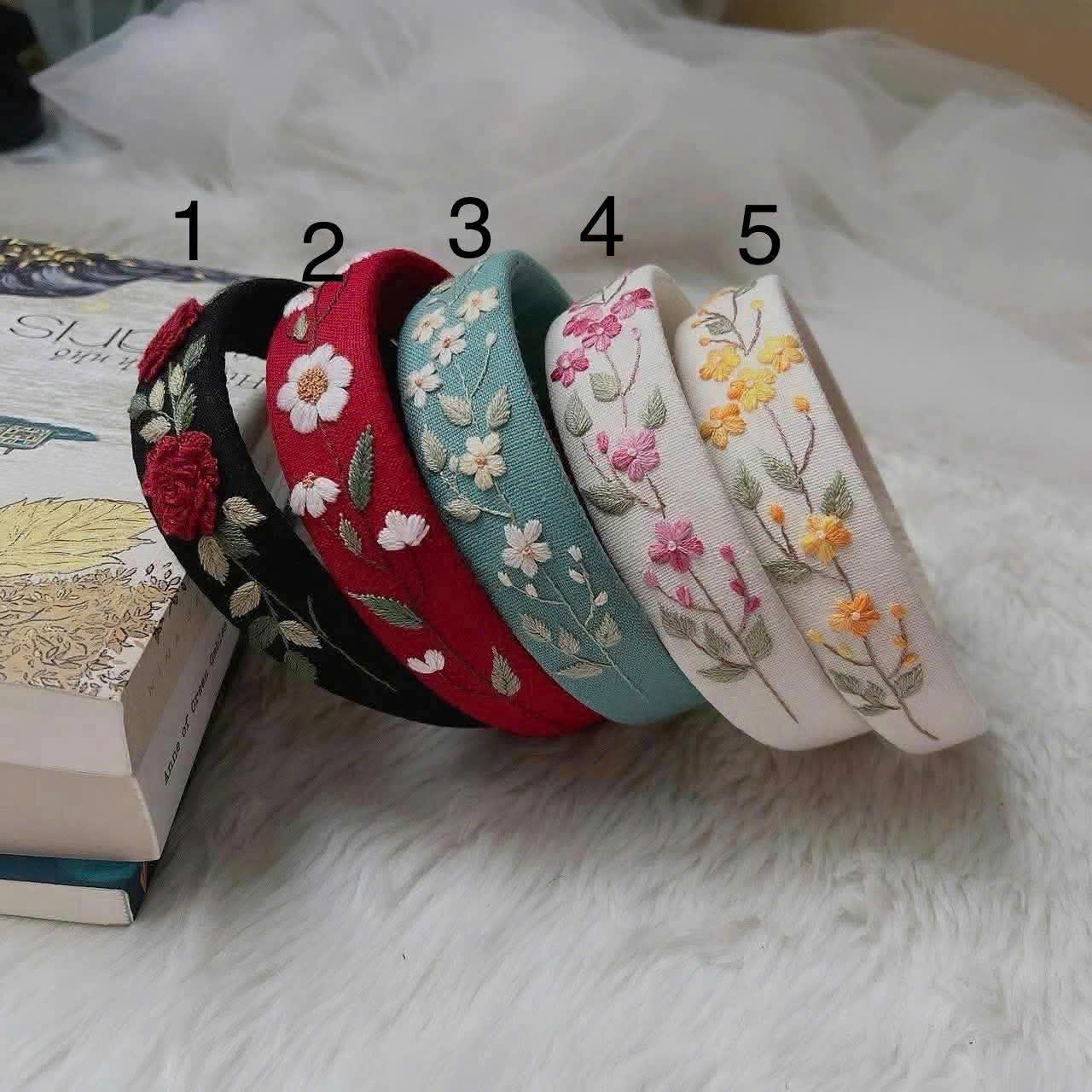
Wildflowers Embroidered Headband
If hard bands press behind your ears, a fabric band without a rigid frame is worth trying. This one is hand-embroidered with wildflowers on natural linen and sits on a soft, stretchy band.
How to Choose Between Different Styles of Headbands
To choose the right style, first assess your hair volume and texture, then match the material to your daily activities. Finally, pick a width and details that suit your face shape and personal style.
With so many different styles of headbands available, finding the right one requires a systematic approach. You need to balance aesthetics with practicality. Here is a step-by-step guide to help you navigate the options and select pieces that you will reach for time and time again.
Step 1: Assess Your Hair Type and Volume
The first step in navigating different styles of headbands is looking at your natural hair texture. Thick, curly, or highly voluminous hair often requires a sturdier base to hold the weight back effectively. Wide, structured bands or those featuring inner comb teeth work very well for this purpose. Conversely, if you have fine or thin hair, heavy embellished bands might slide down easily. A lightweight soft band or a slender Alice band provides a better grip without weighing your strands down. The American Academy of Dermatology notes that wearing hair pulled back tightly day after day can lead to a type of hair loss called traction alopecia. Choose a fit that feels secure but never tight, and see a dermatologist if you notice thinning.
Step 2: Consider Your Daily Activities
Your daily routine heavily dictates the type of headband you should reach for. If you spend long hours sitting at a desk or working from home, a soft linen band offers a relaxed, unobtrusive feel. For running errands, doing chores, or exercising, a stretchy sports band manages stray hairs effectively while you move. When attending a formal event, a wedding, or a dinner party, a structured piece featuring faux pearl beads or intricate hand embroidery elevates your outfit. Matching the accessory to your activity helps you stay comfortable and spend less time readjusting your hair.
Step 3: Select the Right Material
Fabric choice impacts both the visual appeal and the daily function of your accessory. Silk reduces friction, making it a gentle option for fragile or easily tangled strands. Velvet provides excellent natural grip, preventing the band from shifting on smooth hair. Natural linen, which we use extensively in our studio, offers a breathable, textured matte finish that beautifully suits cottagecore and boho aesthetics. Linen is lightweight, absorbs moisture well, and transitions easily through different seasons. Understanding how these materials behave helps you build a collection of headband types that work with your hair rather than against it.
Step 4: Match the Width to Your Face Shape
Width plays a significant role in how the accessory frames your face and interacts with your hairstyle. Very wide bands, typically over two inches, make a bold visual statement and work well for longer faces or highly voluminous hair. Medium widths, like our 1.2 in (3 cm) linen bands, offer a versatile middle ground. This width works with many face shapes and leaves room for decorative details without overwhelming your features. Thin bands, measuring under half an inch, provide a subtle touch of color or texture. They are easy to layer and work wonderfully for short haircuts or minimalist styles. Shorter cuts can wear them too, as our guide to headbands for short hair explains.
Step 5: Evaluate the Embellishments and Details
The final step in choosing between different styles of headbands is looking at the decorative elements. Embellishments dictate the vibe of the accessory. Faux pearl beads add a classic, refined touch suitable for formal gatherings. Hand-embroidered floral motifs, like the roses, daisies, and sunflowers we stitch in our studio, bring a warm, cottagecore feel to everyday outfits. When selecting embellished pieces, consider how they will interact with your hair. Smooth beads and flat embroidery threads are less likely to snag on your strands compared to rough rhinestones or sharp metal appliqués. Choose details that align with your personal style and daily practical needs.
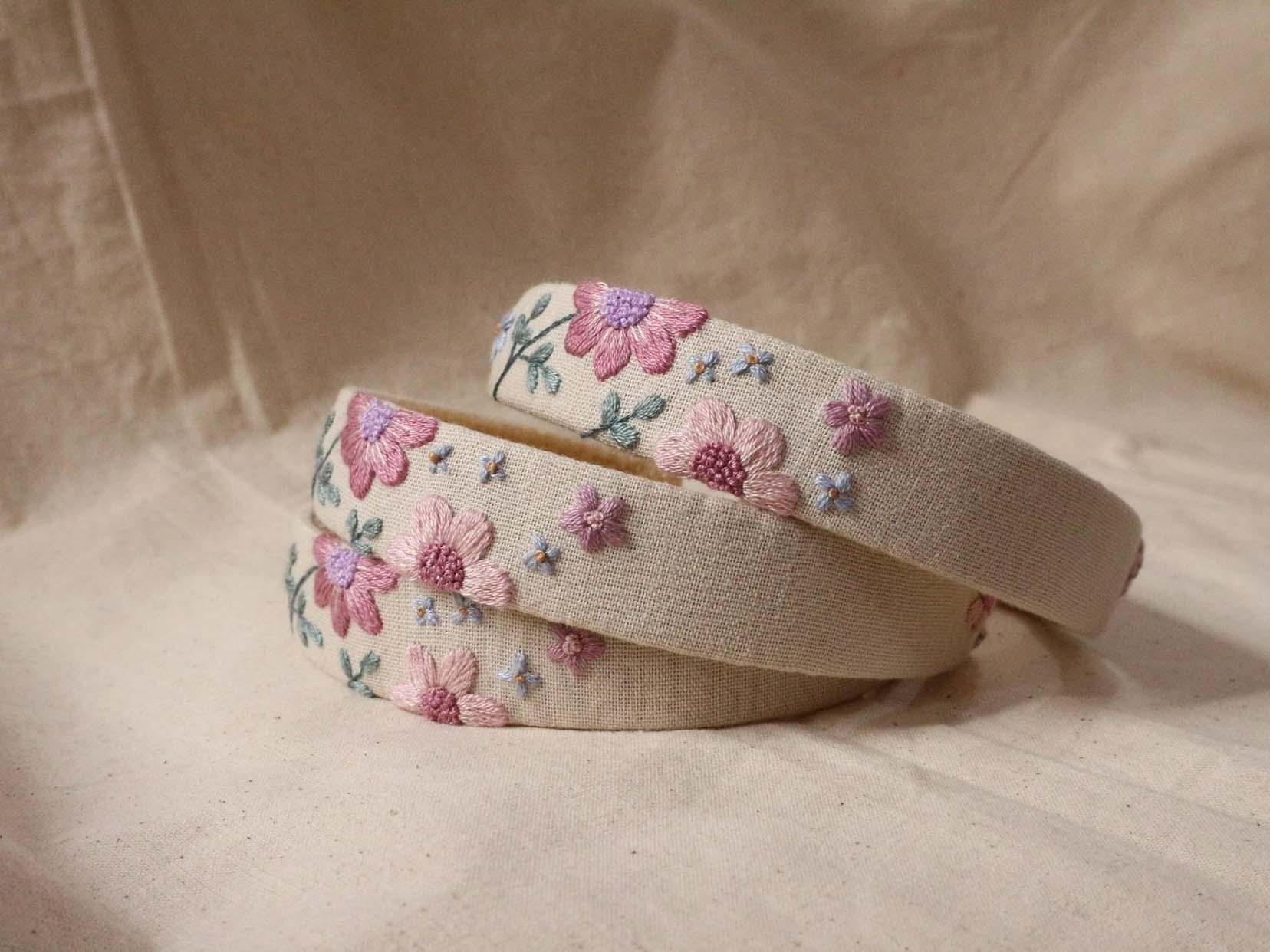
Pink Wildflower Embroidered Headband
Building a small collection of different headband types? US shipping is $7 for the first item, and each extra piece adds just $1 to your shipping total.
Studio Insights on Wearing Headband Types
To get the most out of your headbands, position them about an inch behind your hairline for a natural look, mix textures when layering accessories, and spot-clean fabric bands gently to preserve their shape and embroidery.
Creating hair accessories by hand gives us a close look at how different materials and structures behave in real life. Over the years of stitching and testing, we have gathered practical advice on wearing and maintaining various types of hairbands. Here are a few essential tips we often share with our customers to help them get the most out of their pieces.
Positioning for a natural look: Instead of pushing the band straight back from your forehead, try parting your hair first. Place the band about an inch behind your hairline, allowing a few face-framing pieces to fall forward naturally. This softens the overall look, frames your features nicely, and reduces tension on your front roots.
Styling with other accessories: You can easily combine different accessories for a cohesive, layered look. If you wear a floral embroidered headband, pair it with a simple linen scrunchie at the base of your neck. Keep the color palette similar—such as pairing a rust band with a natural cream scrunchie—to avoid visual clutter and maintain a balanced aesthetic. For a simple neutral look, you can see our black headband here.
Caring for hand-stitched fabrics: Soft fabric bands, especially those featuring hand embroidery, require gentle handling to maintain their shape. We recommend spot-cleaning the linen with a damp cloth and a drop of mild soap. Avoid soaking the whole band in water, as soaking can stretch the band and loosen the embroidery.
Storing to maintain shape: Never toss structured bands into a crowded drawer where heavy items can crush them. Store them on a dedicated stand or lay them flat in a sturdy box. For soft stretchy bands, keep them un-stretched in a breathable cotton bag. This prevents dust accumulation and preserves the elastic’s lifespan for longer wear. For simple storage ideas, see how to store headbands so they keep their shape.
Managing flyaways with intention: If you have a lot of baby hairs or flyaways, do not try to slick them all back under the band. Instead, use a lightweight styling cream to smooth the majority, and let a few natural wisps escape around your temples. This creates a softer, more effortless look that pairs beautifully with the rustic texture of natural linen and hand-stitched floral patterns.
Common Mistakes When Buying Types of Hairbands
Common mistakes include ignoring the base structure, which can cause discomfort, choosing the wrong fabric for the climate, and neglecting proper storage, leading to stretched elastic or damaged embellishments.
Even with a clear understanding of headband types, it is easy to make choices that lead to frustration. Many people end up with a drawer full of accessories they never wear because of minor fit or fabric issues. Here are the most frequent missteps we see and how you can avoid them.
Mistake: Ignoring the base structure. Many buyers focus solely on the outer pattern and ignore what is underneath. A rigid plastic base that is too narrow for your head can press into your temples or behind your ears after a few hours. The fix is to measure your head loosely and look for brands that specify their band dimensions. Alternatively, choose a soft, stretchy band that flexes with the shape of your head.
Mistake: Choosing the wrong fabric for the season. Wearing a heavy velvet turban in the middle of a humid summer can trap heat and cause scalp discomfort. Conversely, a thin chiffon tie might feel out of place paired with heavy winter coats. The fix is to rotate your collection seasonally. Use breathable natural linen or light cotton for warmer months, and save the heavier, insulating textiles for cooler weather.
Mistake: Treating hand-embroidered items like mass-produced goods. Machine-made accessories can often withstand rough handling and frequent washing, but small-batch, hand-stitched items need more care. Tossing them into a washing machine can ruin the threads and distort the fabric. The fix is to treat these pieces as delicate garments. Use gentle spot-cleaning methods and store them away from direct sunlight to prevent the thread colors from fading over time.
Mistake: Buying one size and expecting it to fit all. Head sizes vary, and a band that feels comfortable on a friend might feel tight on you. Assuming all headband types fit the same way often leads to wasted money. The fix is to pay attention to the band’s construction. Look for adjustable features, soft stretchy bands, or brands that provide clear measurements. Our embroidered linen headbands, for example, sit on a soft, stretchy band rather than a rigid frame.
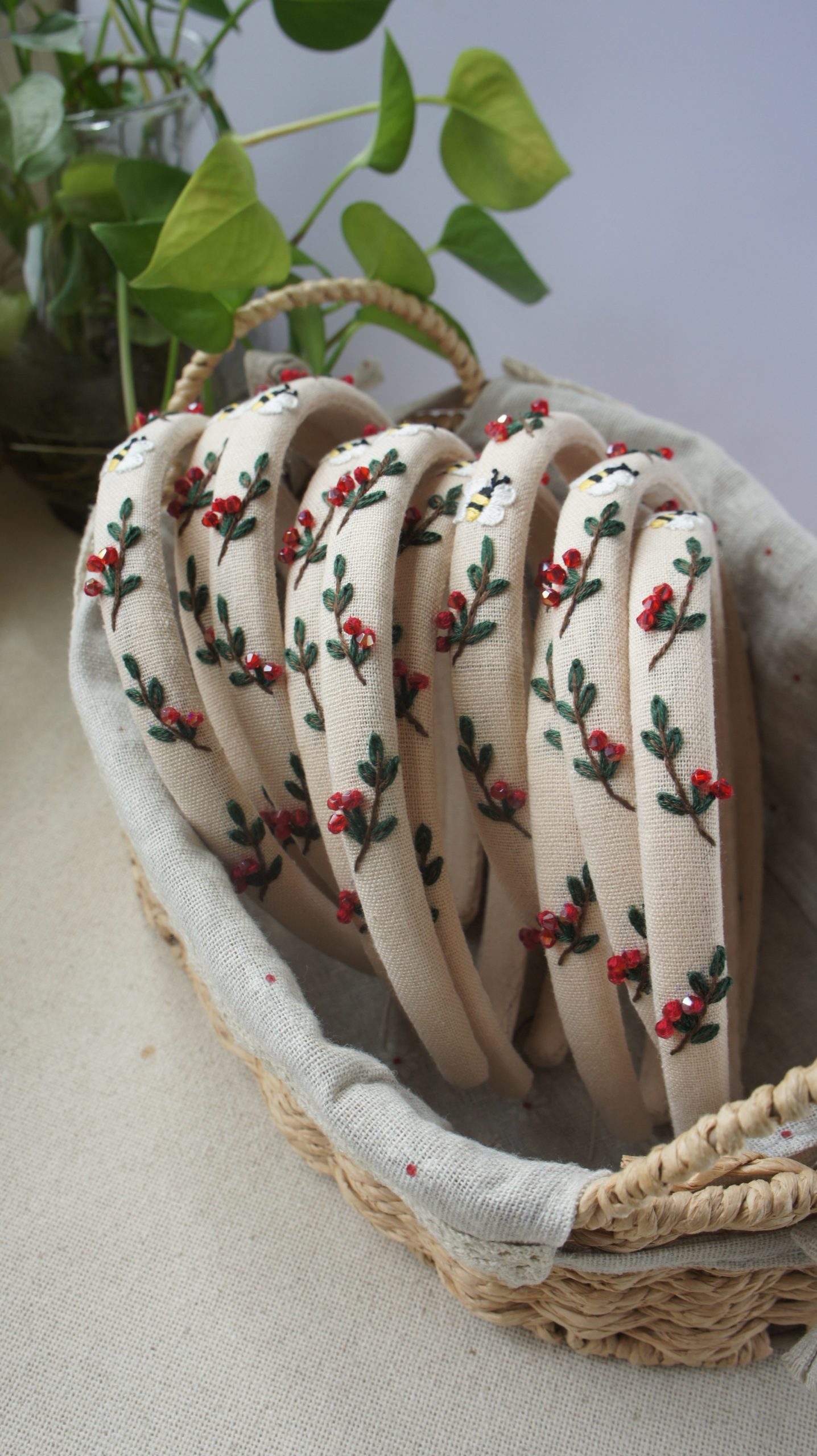
Every piece from our studio is embroidered by hand, so each one is slightly different. Orders are usually prepared in 1 to 3 business days and ship to the US with tracking, and you can return items within 30 days under our Return Policy.
Types of Headbands FAQ
What is the difference between a hairband and a headband?
In everyday conversation, people often use these terms interchangeably. However, a headband typically refers to a wider accessory worn across the top of the head to hold hair back or add a decorative element. A hairband can sometimes refer to a thin elastic loop used to tie hair into a ponytail, similar to a hair tie. When shopping for a specific type of headband, checking the product photos and dimensions will clarify exactly what you are getting.
How do I know which type of headband suits my face shape?
Generally, wider bands add volume and work well for longer or oval faces. If you have a round face, a knotted or turban style adds height at the top, creating a lengthening effect. Thin, delicate bands suit heart-shaped and square faces by adding a soft touch without overwhelming your features. The most suitable type of headband is simply the one that makes you feel confident and comfortable throughout your day.
Are soft stretchy bands better than hard plastic ones?
It depends entirely on your daily needs and hair type. Soft stretchy bands, like the linen ones we make, flex with the shape of your head instead of pressing at fixed points, and they are easy to pack. Hard plastic or metal bands give a firmer hold for thick hair but can press behind the ears if the curve does not match your head.
Can I wear an embroidered headband every day?
Yes, you can wear an embroidered piece daily, provided the base is comfortable. Linen is a sturdy natural fabric that handles regular wear with gentle care. To keep the embroidery looking fresh, avoid wearing it during heavy workouts where sweat might soak the threads, and store it properly when not in use. Rotating between a few different styles of headbands also helps extend their lifespan.
How do I keep a soft headband from sliding back?
Soft bands can sometimes shift if your hair is very smooth or freshly washed. To improve grip, try applying a little dry shampoo or texturizing spray to the roots where the band will sit. Placing the band slightly further back from the hairline and ensuring the elastic sits snugly at the nape of your neck under your hair also helps secure it in place.
Finding Your Signature Type of Headband
Exploring the different types of headbands allows you to build a collection that truly fits your lifestyle. Whether you need a stretchy sports band for an active afternoon or a hand-embroidered linen piece for a relaxed weekend, understanding the materials and structures makes all the difference. At BabunobGem, we focus on creating soft, small-batch accessories designed for daily wear. Take your time testing different widths and fabrics to discover what feels right for you.
New here? Get 10% off your first order
Join our list for new small-batch designs and restocks, or browse the collection now.
Note: Each piece is embroidered by hand, so stitches and colors can vary slightly from the photos. Fit and feel depend on head size, hair type and how you wear it. This guide is for general information only.