
How to Store Headbands: Organizing Ideas
How to store headbands properly comes down to matching your organizer to each band’s silhouette, whether you keep rigid crowns, wide wraps, or delicate fabric pieces. This practical guide shows accessory collectors how to keep pieces tidy, cut down on vanity clutter, and care for hand-stitched details like those made at BabunobGem.
Key highlights
- Match your storage method to the internal structure of each headband rather than grouping everything into one bin.
- Avoid stretching soft elastic or linen headbands over wide display cylinders, which can wear out the elastic.
- Separate delicate hand embroidery and faux pearl accents from metal teeth and claw clips to help limit thread pulls.
- Use shallow drawer dividers for daily textile bands and vertical holders for rigid alice bands and crowns.
Understanding Headband Storage Fundamentals
A practical way to store headbands is to divide your collection by structural rigidity rather than color or width alone. Rigid arches usually need upright or curved support to keep their form, while soft fabric pieces tend to do better in flat compartments that avoid stretching the elastic.
When organizing headbands, many people toss every piece into a single catch-all basket or vanity drawer. Over time, rigid plastic teeth snag delicate textiles, heavy frames crush padded crowns, and elastic backs lose their tension. Taking a moment to understand how various accessory materials interact under weight, friction, and humidity is the foundation of lasting organization. Different silhouettes have distinct structural vulnerabilities that require targeted storage solutions.
Material Vulnerabilities Across Different Band Styles
Rigid alice bands made of molded plastic or thin metal wire rely on a set curve to sit against your head. If forced into overcrowded bins, these frames can snap or bend permanently out of shape. Padded velvet and satin crowns feature soft foam padding beneath delicate exterior textiles. Heavy items placed on top can leave indentations and crush the fabric nap. Meanwhile, natural linen bands depend on breathable environments so the cellulose fibers stay smooth. Storing them under heavy items can lead to deep creases that are hard to smooth out. Each style stores a little differently, so it helps to know the types of headbands in your collection.
Display Systems vs Concealed Storage Organizers
Choosing between open display storage and concealed organization depends on your room layout and daily routine. Open tabletop organizers, such as acrylic bars, wooden towers, and wall-mounted racks, turn colorful headbands into visible room decor. They make grabbing a piece before leaving the house effortless. However, open shelving exposes accessories to airborne dust, bedroom pet dander, and ultraviolet light. Concealed systems, including shallow vanity drawers, lidded bins, and cloth boxes, protect textiles from light and dust, making them suitable for hand-stitched items and occasion wear.
| Headband Style | Structural Core | Primary Storage Risk | Recommended Storage Method |
|---|---|---|---|
| Rigid Plastic Alice Band | Molded plastic frame | Snapping under weight or torque | Upright acrylic holder or tiered rack |
| Metal Wire Headband | Flexible metal wire | Bending out of true curve | Hanging wall hooks or slotted trays |
| Padded Velvet Crown | Curved core with foam | Crushed nap and surface dents | Freestanding cylindrical bar or upright dividers |
| Soft Linen Stretchy Band | Stretchy fabric band | Overstretched elastic and thread snags | Flat compartmentalized drawer tray |
| Hand-Embroidered Band | Fabric with embroidery thread | Frayed embroidery floss and friction | Lined fabric organizer or individual tray |
| Knotted Crown Headband | Rigid inner band with knot | Flattened top knot and dusty folds | Open display stand or deep cubby |
| Athletic Turban Band | High-stretch knit blend | Lost elasticity and misplacement | Rolled vertically in honeycomb organizer |
| Embellished Faux Pearl Headband | Wire-wrapped beaded core | Loose wires and scratched faux pearl beads | Lined jewelry tray or individual pouch |
| Wide Bohemian Wrap | Unpadded woven textile | Creasing and tangled ends | Tiered hanger or shallow drawer tray |
Tension, Light Exposure, and Scalp Comfort
Improper storage can do more than dull the look of your hair accessories; it may also change how they feel when worn. Storing elastic bands around overly wide cylinders can stretch the elastic over time, leaving the band loose. When a band feels loose, people often tighten it or adjust it repeatedly. According to the American Academy of Dermatology, hair pulled back tightly over and over can cause traction alopecia. If a band feels too tight, take it off, and see a doctor or dermatologist if the soreness continues. Storing bands flat can help them keep their shape. If a band still feels tight when you wear it, read how to stop headbands from hurting.
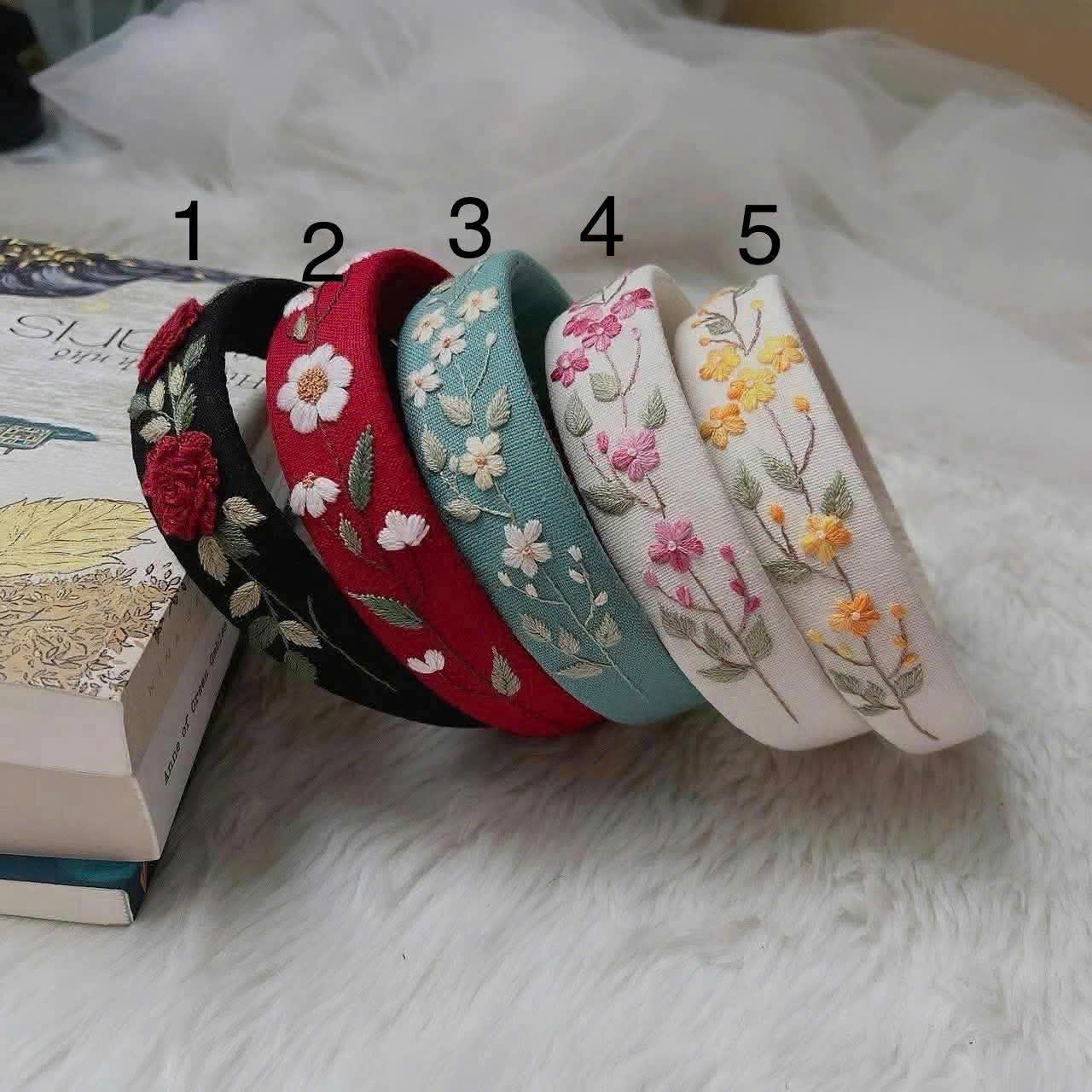
Wildflowers Embroidered Headband
A divided drawer tray is a simple way to keep embroidered headbands tidy. This one is hand-embroidered with wildflowers on natural linen, on a soft, stretchy band 1.2 in (3 cm) wide.
Step-by-Step Guide: How to Organize Headbands
To organize headbands systematically, separate your collection by core construction, measure your available storage footprint, and assign organizers that suit both hard shapes and soft textiles. This structured method can help cut morning clutter and fabric wear.
Creating an organized vanity does not require expensive remodeling. A dependable headband storage system balances quick visibility with physical protection. Whether you own five reliable everyday pieces or a growing collection of vintage-inspired designs, following an orderly step-by-step approach gives every item a place of its own. Here is how to organize headbands effectively from start to finish.
Step 1: Sort and Categorize by Core Construction
Begin by gathering every hair accessory from your vanity, bathroom counter, purse, and closet shelves. Lay them out on a clean, flat surface like a bed or table. Group them into three distinct piles: rigid arched bands (hard plastic, wire, and structured crowns), flexible fabric bands (soft linen wraps, knit turbans, and sports styles), and specialty embellished items (beaded, embroidered, or velvet pieces). Inspect each item for signs of wear, loose decorative stitching, or warped inner frames. Discard damaged pieces that cannot be repaired so you only organize what you genuinely wear. While sorting, you may enjoy reading what are headbands for to decide which pieces you really need.
Step 2: Measure Vanity, Drawer, and Closet Dimensions
Before purchasing organizers or repurposing household containers, carefully measure the spaces where you get ready. Check the height, width, and depth of your vanity drawers. Shallow drawers that measure 2 to 3 inches deep work well for flat dividers, while deeper drawers can accommodate vertical acrylic sorting bins. If your drawer space is limited, evaluate your tabletop and wall availability. An empty stretch of bedroom wall or the inside of a closet door offers vertical real estate that keeps surfaces completely clear of clutter.
Step 3: Match Headband Organizer Ideas to Each Style
Assign designated storage tools tailored to the physical needs of each category. For rigid plastic and metal alice bands, cylindrical acrylic holders, wooden dowel racks, or wall-mounted crossbars allow bands to slide on without distorting their arch. For soft, stretchy fabric bands—such as the hand-embroidered linen styles from BabunobGem measuring 1.2 in (3 cm) wide—use shallow acrylic trays or compartmentalized fabric bins where they can lie completely flat. Knitted sports headbands can be rolled neatly into honeycomb drawer dividers, keeping them visible without taking up excess room. You can see our embroidered floral headband collection here if you need ideas for what to organize.
Step 4: Arrange by Frequency of Use and Daily Routine
Organize your pieces based on how often you reach for them during your morning routine. Place your everyday neutral bands, casual cotton pieces, and daily work accessories in the prime storage zone—the front section of your vanity drawer or the easiest accessible tier of your tabletop display. Reserve higher closet shelves, lidded keepsake boxes, or back drawer corners for formal pieces, seasonal holiday designs, and delicate statement accessories. Organizing by daily flow prevents rummaging through specialty pieces when getting dressed in a rush. Keep the pieces you reach for most within easy reach, and see how to wear a headband for styling ideas.
Step 5: Establish Routine Maintenance and Spot Cleaning
An organized collection stays functional only when maintained consistently. Once a month, wipe down acrylic bars and wooden organizers with a microfiber cloth to remove settled dust and stray hair styling residue. For fabric and linen headbands, inspect the bands for makeup transfers along the inner lining. Spot clean dirty areas gently using a soft damp cloth, then let them air dry thoroughly before returning them to their compartments. Never place fabric headbands in a clothes dryer or washing machine, as agitation can distort the band.
Studio Tips for Long-Term Headband Care
Long-term headband care relies on shielding surface stitching from abrasive metal hardware, preserving relaxed elastic resting states, and controlling atmospheric moisture. In our embroidery studio, protecting textile integrity depends on thoughtful separation rather than tight bundling.
Handcrafting botanical accessories every day teaches practical lessons about material longevity. Natural textiles like linen and cotton threads require gentle handling to keep their dimensional textures intact. Putting simple habits like these into practice may help your accessories stay fresh-looking with regular rotation. Caring for them can be a fun habit, and you might wonder when were headbands invented along the way.
Protect hand embroidery from friction snags. In our studio, we store hand-stitched pieces flat with their decorative motifs facing upward. Never toss an embroidered band into a shared bin with claw clips, metal hairpins, or zippered cosmetic pouches. The metal teeth and hinge coils can catch on raised petals and pull embroidery floss loose. Lining your drawer trays with soft felt or smooth cotton provides an extra layer of defense against accidental thread snags.
Avoid constant tension on stretchy bands. A tip we often share is to avoid storing soft, stretchy fabric headbands wrapped tightly around wide display cylinders. Many display bars are sized for rigid crowns rather than stretchy bands. Keeping a stretchy fabric headband stretched over these wide bars can put constant strain on the elastic. Store stretchy fabric bands relaxed, laid flat, or gently rolled in small cubbies.
Isolate delicate faux pearl and beaded accents. Accessories accented with faux pearl beads or wire-wrapped detailing should never sit directly beside unpadded linen or silk wraps. The hard edges of bead settings and tiny wire twists can abrade neighboring textiles during drawer movement. We recommend assigning individual divided tray slots or small breathable cotton pouches to beaded items, which can help limit surface friction. You can see our pearl headband with floral embroidery here, a piece that benefits from gentle storage.
Pack for travel using interior nesting methods. When packing headbands for weekend trips, place rigid arches around the perimeter of your suitcase or nest them together inside a firm travel pouch. Fill the empty hollow beneath the arches with soft items like clean socks, scarves, or rolled cotton shirts. This interior support can help keep heavy luggage contents from crushing the band frames. Lay soft fabric headbands flat between folded shirts so they travel without creasing.
Common Headband Storage Mistakes to Avoid
Common headband storage mistakes include keeping stretchy fabric bands stretched over rigid display bars, piling heavy hair accessories atop soft fabrics, and exposing delicate threads to direct sunlight. Avoiding these habits can help limit warped frames, weakened elastic, and faded colors.
Even well-intentioned organizing habits can inadvertently damage delicate hair accessories over time. Identifying common pitfalls helps you set up storage that supports the shape and color of the pieces in your collection.
Mistake: Leaving elastic fabric bands stretched on rigid display tubes. Many people buy cylindrical headband holders and slide every accessory they own onto the tube, including wide fabric wraps and stretchy sports bands. While this looks neat on a dresser, holding elastic under continuous outward tension can wear out the elastic, leaving the band loose and misshapen. The fix: Reserve cylindrical tubes exclusively for rigid plastic and metal arches. Store all soft, stretchy fabric bands resting flat or loosely folded in divided drawer organizers. A soft, stretchy piece like our black headband with wildflower embroidery stays tidy when kept flat or loosely folded.
Mistake: Stacking heavy metal barrettes and claw clips on fabric headbands. Tossing all hair accessories into a single deep wicker basket or vanity drawer can lead to hardware abrasion. Heavy acetate claw clips, metal barrette springs, and rough hair ties can press into soft linen and velvet, leaving indentations and snagging embroidery floss. The fix: Separate hair accessories by tool type. Hang claw clips on an organizer strip or inside a dedicated basket, and reserve smooth-lined divided trays strictly for headbands.
Mistake: Storing natural linen and dyed threads near sunny windows. Placing an open headband stand on a sun-drenched vanity or bathroom window ledge exposes natural linen and embroidery floss to intense ultraviolet light. Prolonged sun exposure can weaken natural fibers and fade thread colors, so vibrant greens and warm florals may look duller over time. The fix: Position open display stands away from direct sunlight, or keep your favorite embroidered pieces protected inside closed vanity drawers and lidded boxes.
How to Store Headbands FAQ
What is a good way to store soft, stretchy fabric headbands?
A simple way to store soft, stretchy fabric headbands is lying flat or loosely rolled inside divided drawer trays or cloth bins. Avoid stretching them over wide cylindrical holders, which can weaken their stretch over time. Compartments about 3 to 4 inches wide can keep individual bands organized and easy to see.
How do you organize headbands without taking up vanity space?
If vanity tabletop space is limited, use vertical wall organizers, hanging closet systems, or drawer organizers. A hanging fabric organizer with clear vinyl pockets mounted behind a bedroom or closet door can hold many headbands without using any surface space. Alternatively, shallow dividers placed inside existing dresser drawers keep headbands out of sight and away from dust.
Can hanging headbands ruin their shape or elasticity?
Hanging rigid headbands by their arches on wall hooks or decorative pegs is usually fine because their molded frames can support their own light weight. However, hanging soft elastic headbands from narrow pegs can stretch the localized fabric where it makes contact with the hook. For elastic and knit bands, flat drawer storage is usually a better choice than hanging.
How should I store embroidered or beaded headbands?
Embroidered and beaded headbands require protection from friction and snags. Store them inside divided organizer trays lined with soft felt, cotton, or acid-free paper. Keep them separated from claw clips, metal pins, and rough jewelry hardware that could catch on decorative threads or scratch faux pearl bead coatings.
How do I keep headbands from collecting dust on open shelves?
To prevent dust buildup on open display bars, store seasonal or infrequently worn headbands inside clear acrylic drawers, lidded storage boxes, or closed wardrobes. For everyday bands kept on open tabletop racks, dust them weekly with a clean microfiber cloth or a soft clothing brush to maintain clean textiles.
Caring for What You Wear Every Day
A thoughtful storage routine can help keep the shape and stitchwork of your hair accessories looking tidy. At BabunobGem, we craft each piece slowly by hand in our small studio. Whether you organize with drawer trays or wall racks, taking care of your headbands helps them look fresh from one wear to the next.
New here? Get 10% off your first order
Join our list for new small-batch designs and restocks, or browse the collection now.
Note: Each piece is embroidered by hand, so stitches and colors can vary slightly from the photos. Fit and feel depend on head size, hair type and how you wear it. This guide is for general information only.