Headbands for Short Hair: Styling Guide
Hair headbands for short hair can change the look of a simple bob or pixie cut and help keep stray strands out of your face during daily tasks or exercise. This guide explores practical styling steps and material choices for women, with insights from our hand-embroidery studio at BabunobGem.
Key highlights
- Choosing the right width and a flexible fabric band makes a big difference when styling bobs and pixie cuts.
- Proper placement and hair texture preparation help manage flyaways at the nape of the neck.
- Stretchy bands offer a practical option for both everyday wear and fitness routines.
- Hand-embroidered botanical motifs add a slow-made touch to simple short hairstyles.
Understanding Hair Headbands for Short Hair
When choosing hair headbands for short hair, focus on flexible materials and appropriate widths that accommodate less hair volume without overwhelming your face shape. Stretchy fabric bands and narrow profiles often work better for bobs and pixies than heavy, rigid plastics.
Finding the right accessories for a shorter haircut involves understanding how different materials and structures interact with your hair. Unlike long hair, which provides a heavy anchor to hold accessories in place, short hair—such as a classic bob, a textured lob, or a cropped pixie—relies heavily on the natural shape of your head and the grip of the hair itself. When you have less length to work with, the accessory becomes a prominent focal point. Therefore, the proportion of the band relative to your face and haircut is a primary consideration. A band that is too wide can easily swallow a delicate pixie cut, while a band that is too thin might get lost in a thick, curly bob.
In our studio, we hand-embroider our headbands on natural linen, and they sit on a soft, stretchy band. For everyday wear, a width of about 1.2 inches (3 cm) is a middle ground between thin and wide bands. It is wide enough to display hand-embroidered motifs—like roses, daisies, sunflowers, lavender, lilies, wildflowers, or bees and berries—but narrow enough to let your short hairstyle shine. The base of the accessory also matters. A soft, stretchy band flexes with the shape of your head, which can help when you do not have the weight of long hair to keep a rigid plastic band from shifting.
When exploring options, you will encounter various styles, from knotted fabrics and wide wraps to thin metal bands and padded velvet. Each serves a different aesthetic and functional purpose. For instance, when looking for fitness headbands for short hair, the priority shifts toward moisture management and keeping layers out of the eyes. In these cases, a continuous loop of stretchy fabric is often the most practical choice. Understanding these core factors helps you build a collection of accessories that align with your daily routines, whether you are running errands, working in the garden, or heading to a yoga class. Headbands do more than hold hair back, as our guide on what are headbands for explains.
Comparing Headband Types for Short Hair
To help you navigate the different options available, we have broken down the most common types of headbands and how they interact with shorter hairstyles. This comparison looks at the structure, the ideal use cases, and the practical pros and cons of each style. If you want a wider view of styles, explore the types of headbands and how they differ.
| Headband Type | Good For | Pros for Short Hair | Cons for Short Hair |
|---|---|---|---|
| Stretchy Sports Band | Workouts, active days, casual wear | Flexes with head shape; can catch sweat at the hairline; often worn for fitness routines. | Can flatten volume at the crown if worn too high. |
| Linen Fabric Band (1.2 in) | Everyday styling, cottagecore aesthetics | Soft, stretchy band; a moderate width that works with many bobs; displays embroidery well. | Requires proper placement to avoid shifting on very fine hair. |
| Hard Plastic Alice Band | Quick styling, structured looks | Easy to put on; holds thick bobs back effectively. | Rigid shape may pinch behind the ears; can slide off flat heads. |
| Knotted Fabric Band | Adding height, statement outfits | Draws the eye upward; adds a focal point to simple pixies. | The knot can look disproportionately large on very short crops. |
| Wide Fabric Wrap | Bad hair days, keeping warm | Covers a lot of surface area; hides unruly cowlicks. | Can completely hide a pixie cut, overwhelming the face. |
| Thin Metal Band | Formal events, minimalist looks | Very subtle; easily hidden in textured lobs. | Offers minimal hold for heavy layers; can dig into the scalp. |
| Padded Velvet Band | Vintage styles, winter wardrobes | Adds volume and a classic, structured silhouette. | Heavy material can easily slip off without long hair to anchor it. |
| Silk or Cotton Scarf | Boho styles, relaxed looks | Customizable tension; a smooth fabric can be easier on fragile strands. | Requires tying skills; the knot at the nape can push short hair up. |
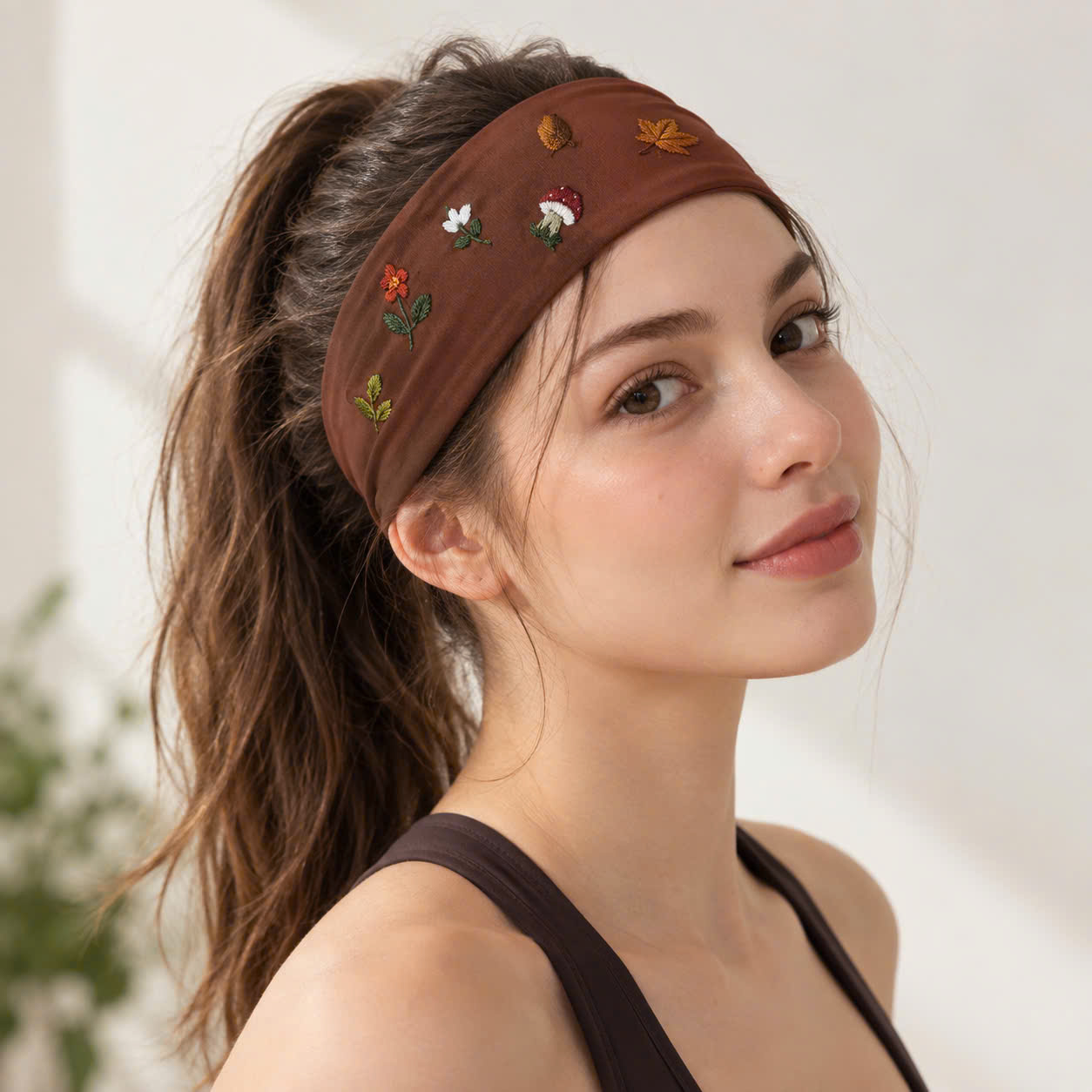
Autumn Woodland Sports Headband
If you struggle with loose strands falling into your face during a workout, a stretchy band can help manage those short layers. This piece features botanical motifs embroidered by hand, offering a practical option for your routine.
Step-by-Step Styling Guide for Short Hair
To style women’s headbands for short hair, start with unwashed or texturized hair for better grip, position the band about an inch behind your hairline, and use bobby pins or snap clips at the base if you need extra security for shorter layers.
Step 1: Prepare Your Hair Texture
The foundation of keeping any accessory in place on short hair is texture. Freshly washed, silky hair is naturally slippery, which makes it difficult for fabric or bands to find a grip. If you are styling a bob or a pixie cut, starting with second-day hair often yields better results. The natural oils at your roots provide a slight tackiness that helps the accessory stay put.
If you must style freshly washed hair, you can artificially create this necessary grip. Lightly mist a texturizing spray or a dry shampoo at the roots, focusing particularly on the crown and the areas just behind your ears where the band will rest. Use your fingers to massage the product into your scalp, creating a slightly rougher surface. For those with very fine or thin hair, a light dusting of styling powder can also add the necessary friction. This preparation step is especially helpful when you plan to wear the accessory for an extended period, as it can reduce how often you need to readjust.
Step 2: Position the Headband Correctly
Placement makes a big difference with headbands for bobs and pixies. A simple starting point is to place the front edge of the band about one inch behind your natural hairline. This lets a small amount of hair frame your face, which softens the look and can keep the style from appearing too severe. If you have bangs, you have two main options: you can either sweep them back entirely under the band for a clean, sporty look, or you can separate your bangs first, placing the band just behind them to let them fall naturally across your forehead. For more placement ideas, see how to wear a headband for different looks.
When positioning the band, pay attention to the angle. Instead of pushing it straight back, which can cause it to pop off the curve of your head, angle the sides slightly forward behind your ears. If you are using a soft, stretchy band, ensure the fabric is spread evenly and not bunched up, which can create uneven pressure. Take a moment to look in the mirror from the side profile; the band should follow the natural curve of your head without creating an awkward bump at the crown.
Step 3: Secure the Shorter Layers
One of the biggest challenges with short hair is dealing with the layers at the nape of the neck and the sides, which are often too short to be held back by the main accessory. Once your band is in place, you will likely notice a few stray pieces falling forward. This is where secondary accessories come into play.
To secure these shorter layers, you can use bobby pins or small clips. If using bobby pins, slide them in with the wavy side facing down against your scalp for a better grip. You can cross two pins in an “X” shape for extra security. Alternatively, small snap clips are a simple way to pin back side pieces while adding a matching touch. In our studio, we make sets of 6 snap clips covered in linen and embroidered with flowers, each measuring about 7 cm. These can be placed just above the ear or at the nape of the neck to pin back stray pieces.
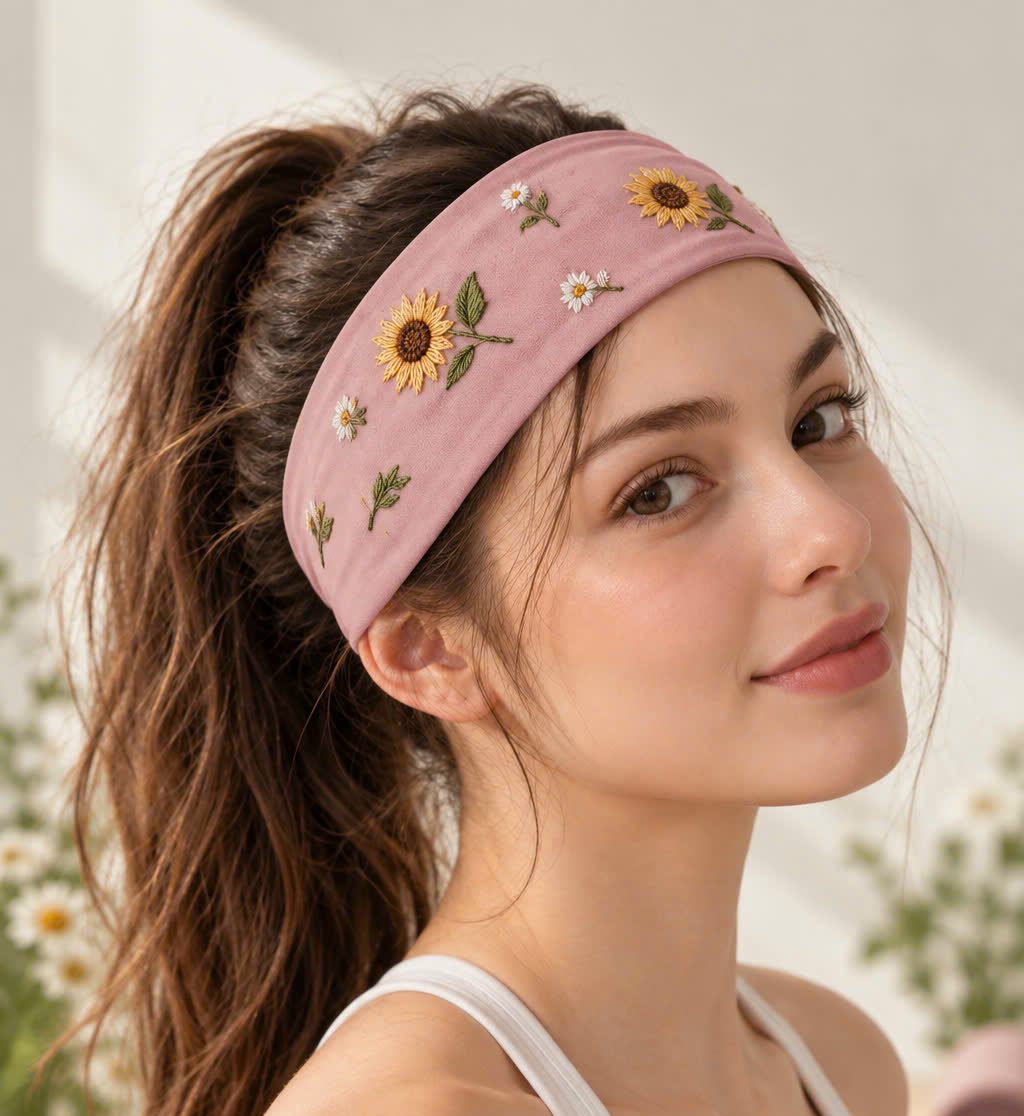
Adding a floral touch to your fitness routine is simple with our stretchy sports bands. When you order from our studio, US shipping is $7 for the first item and just $1 for each extra item in your cart.
Tips for Exercise and Workout Headbands for Short Hair
For a short hair workout, choose a stretchy, one-size-fits-most band and place it slightly lower on your forehead to catch sweat and hold back short layers.
Finding the right exercise headbands for short hair requires balancing functionality with your personal style. When you are running, practicing yoga, or lifting weights, you need an accessory that manages moisture and keeps your vision clear. Short hair presents a unique challenge during exercise because you cannot simply tie it back into a high ponytail or a messy bun. The layers around your face and neck are prone to sticking to your skin when you sweat.
A stretchy sports band is often a practical solution. Many are made as a continuous loop, with no clasp or knot to press into your scalp when you lie back on a yoga mat or a weight bench. Our studio makes embroidered sports headbands with a stretchy, one-size-fits-most band and botanical motifs, in 4 designs and 6 band colors. This allows you to maintain a cottagecore or nature-inspired aesthetic even while in your activewear. The key to using these effectively lies in how you wear and care for them.
Adjust placement for high-impact activities: When doing vigorous exercise, pull the front of the stretchy band slightly lower onto your forehead, right at the hairline. This lower placement can help anchor the band against the shape of your forehead so it is less likely to slide backward as you move, and it helps catch sweat.
Pair with a half-up style for bobs: If your bob is just long enough, try pulling the top section of your hair into a small half-up style using a scrunchie or a small claw clip. Then, place the sports band over the remaining loose hair. This combination gathers the heavier top layers while the band holds back the shorter pieces around your face and neck.
Care for your embroidered pieces gently: After a workout, your accessory will need cleaning. For hand-embroidered items, we recommend spot cleaning. Use a damp cloth to gently wipe the fabric, focusing on the areas that touched your skin, and then lay it flat to air dry naturally. This is the care we recommend for hand-stitched botanical motifs.
Coordinate with your activewear: You do not have to sacrifice your personal style at the gym. Match the band color to your workout gear. A simple black athletic outfit can be easily elevated with a band featuring hand-embroidered wild strawberries or tulips. To pair with an outfit, you can see our pearl headband here.
Common Mistakes with Womens Headbands for Short Hair
Common mistakes include choosing bands that are too wide for a pixie cut, wearing them too tightly, and placing them too far back on the crown, where they can slide off.
Even with the right accessory, styling short hair can sometimes lead to frustration if certain nuances are overlooked. Because short hair lacks the weight and length to hide styling errors, mistakes in proportion, tension, and placement are often more visible. Over the years of making hair accessories, we have noticed a few recurring issues that people face when trying to incorporate these pieces into their daily routines.
Understanding these common pitfalls can save you time and help you get the most out of your collection. Whether you are dealing with a band that constantly shifts, one that causes discomfort after a few hours, or an accessory that simply does not look right with your haircut, the solution usually involves a minor adjustment in how you select or wear the item.
Mistake: Ignoring proportions and overwhelming the haircut. A very wide fabric wrap might look chic on long, flowing waves, but on a cropped pixie cut, it can cover almost all of your hair, making it look like a bandage rather than an accessory. The fix is to choose a width that complements your hair length. A width of around 1.2 inches (3 cm) works with many short styles and leaves room for details like our hand-embroidered roses or daisies. For a vintage mood, you can explore these retro headbands and their classic shapes.
Mistake: Wearing accessories with too much tension. It is tempting to choose a very tight band, thinking it will hold short layers better. However, wearing hair pulled back tightly over and over can cause a type of hair loss called traction alopecia, as noted by the American Academy of Dermatology. The fix is to choose a soft, stretchy band that flexes with the shape of your head, and to rely on texture products for grip rather than sheer tension. If a band gives you a headache, take it off, and see a doctor if the headaches continue. If you notice thinning, see a dermatologist. If a band feels sore, our tips on how to stop headbands from hurting can help.
Mistake: Placing the band too far back on the crown. When you push a band too far back on a short haircut, it sits on the downward slope of the back of your head. Without long hair to weigh it down, the band can slide backward and pop off. The fix is to keep the band closer to the front, about an inch behind the hairline, where the natural curve of the head helps anchor it in place.
Mistake: Machine washing hand-embroidered accessories. We do not recommend putting your workout headbands for short hair in the washing machine with your gym clothes, because the agitation can loosen the embroidery. The fix is to always spot clean your embroidered pieces with a damp cloth and let them dry naturally.
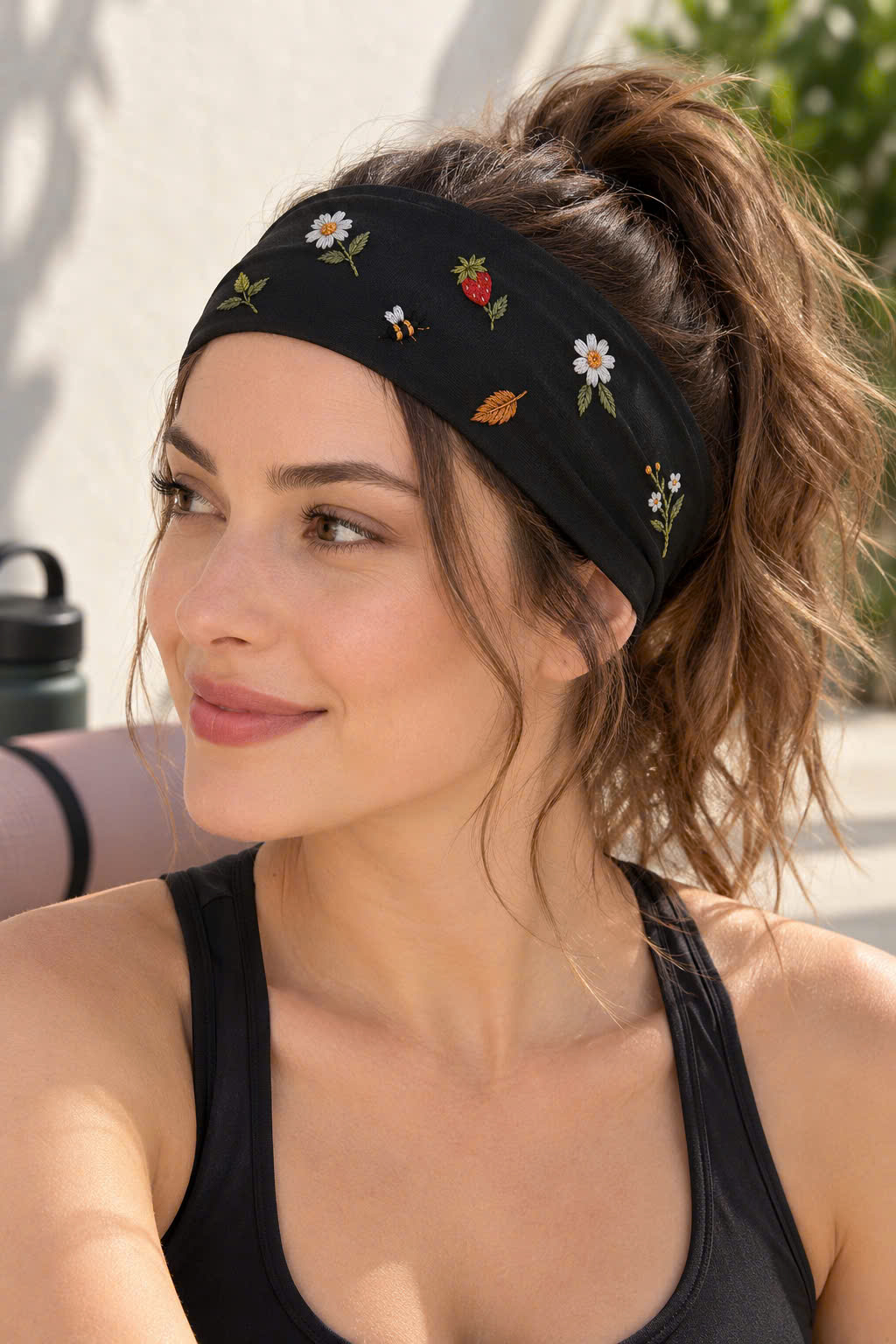
Wild Strawberry Sports Headband
Every piece is embroidered by hand in small batches in our Ho Chi Minh City studio. We ship your order with tracking to the US, and we accept returns within 30 days under our Return Policy.
Hair Headbands for Short Hair FAQ
Do headbands look good on short hair?
Yes, they can look excellent on short hair. Because short haircuts have less volume and length, an accessory serves as a strong focal point that breaks up the style and adds visual interest. The key is choosing the right proportion; a moderate width, such as 1.2 inches, is a good starting point for bobs and pixies.
How do I keep a headband from falling off my bob?
To help a headband stay put, start by adding texture to your hair with dry shampoo or texturizing spray, as freshly washed hair can be very slippery. Position the band about an inch behind your hairline rather than pushing it far back onto the crown. If you still experience slipping, use two bobby pins crossed in an “X” shape just behind your ears to anchor the fabric to your hair.
What are good exercise headbands for short hair?
For exercise, a stretchy sports band is a practical choice. Look for a continuous loop design, as this avoids hard clasps that can cause discomfort during workouts. A stretchy band can be pulled slightly lower on the forehead to catch sweat and help hold back the short layers around your face and neck while you move.
Can I wear a headband with a pixie cut and bangs?
Absolutely. When styling a pixie cut with bangs, separate your fringe first and let it fall forward. Then, place the band just behind the sectioned bangs. This technique helps keep the accessory in place while letting your bangs frame your face. You can also use small snap clips to pin back any side pieces that are too short to reach the main band.
How do I clean my embroidered sports headband?
Hand-embroidered items need gentle care. Do not put them in the washing machine. Instead, spot clean the fabric by gently wiping it with a damp cloth, focusing on the inside where it touches your skin. Afterward, lay the piece flat in a well-ventilated area to dry naturally.
Finding Your Everyday Hair Accessories
Styling hair headbands for short hair is all about finding the right balance of proportion, texture, and placement. Whether you are managing flyaways during a workout or adding a botanical touch to your daily outfit, a well-chosen accessory can make short hair easier to style. At BabunobGem, our mission is to create pieces that are made slowly and worn all day. Explore our small-batch, hand-embroidered designs to find a practical and beautiful addition to your routine. You can browse our full collection of embroidered floral headband designs whenever you want fresh ideas.
New here? Get 10% off your first order
Join our list for new small-batch designs and restocks, or browse the collection now.
Note: Each piece is embroidered by hand, so stitches and colors can vary slightly from the photos. Fit and feel depend on head size, hair type and how you wear it. This guide is for general information only.