Are Claw Clips Bad for Your Hair?
Are claw clips bad for your hair, or can they be a gentler option than tight elastics? This practical guide from BabunobGem explains how clip tension, size and placement affect your hair and scalp, and shares mindful styling habits that help American women wear claw clips with less strain.
Key highlights
- Claw clips tend to spread holding pressure across interlocking teeth, while a tight elastic concentrates it in one band.
- Damage is more likely with rough plastic seams, over-twisting wet hair, or forcing an undersized clip over thick sections.
- Alternating clip placement and loosening the base twist can reduce repeated strain on the same strands.
- Hair pulled back tightly over and over can cause traction alopecia, so keep the twist loose and take the clip out if your scalp hurts.
Do Claw Clips Damage Hair? The Mechanics of Clip Tension and Breakage
Claw clips are usually fine for your hair when worn loosely, because their interlocking teeth spread holding tension across a section of hair. A tight twist, a rough or undersized clip, or a very heavy clip can still cause breakage and scalp strain.
To understand whether claw clips can harm hair, it helps to know a little hair anatomy. Each strand has an inner cortex protected by an outer, shingle-like layer called the cuticle, which lies flat when hair is healthy. When an accessory compresses hair unevenly or drags across these scales again and again, the cuticle can lift and fray, and over time that friction can lead to split ends and breakage.
Unlike a hair tie, which squeezes the strands all the way around, a claw clip works like a cradle. Two rows of teeth interlock loosely around a gathered bundle of hair, and a spring holds the clip against your head. Because the holding force spreads over several contact points, it is often lower at any one spot than a tight elastic. How well this works still depends on the clip’s design and how you handle your hair before closing it.
Comparing Surface Friction: Are Claw Clips Better Than Hair Ties?
When comparing everyday hair accessories, women often ask: are claw clips better than hair ties for keeping ends healthy? Elastic bands often need several wraps around a ponytail to hold, which presses on one ring of hair. Pulling an elastic out can also drag across the strands and snap fragile hairs.
In contrast, a claw clip opens with a squeeze of the thumb tabs, so you can lift the teeth out of your hair without sliding anything down the length of your strands. For relaxed styling at your desk or on weekends, are claw clips better for your hair than elastics? Often, yes, as long as the twist is loose and the clip fits. A claw clip can leave fewer pinch marks than a tight elastic and avoids the friction of sliding an elastic off a ponytail.
Are Claw Clips Good for Your Hair? Breakage vs. Natural Shedding
It is common to worry when you take out a clip at the end of the day and find loose strands tangled in the teeth. This prompts the question: do claw clips damage hair or cause sudden strand loss? Often, what looks like alarming breakage is normal shedding, because most people lose some hair every day as follicles cycle through growth and rest phases.
When your hair is down, shed strands slide out unnoticed. In an updo they stay caught in the twist and all drop out when you open the clip. To tell shedding from breakage, look at the ends of the fallen strands. A shed hair usually has a tiny white bulb at the root end, while a broken strand has a blunt or jagged end and no bulb. If you are worried about how much hair you are losing, see a doctor or dermatologist.
Do Claw Clips Cause Hair Loss? Understanding Scalp Tension and Roots
Another common worry is: do claw clips cause hair loss around the temples or hairline? The risk usually comes from tension rather than from the clip itself. When you pull hair tight before securing it, the roots are under constant pull. Wearing hair pulled back tightly over and over can cause a type of hair loss called traction alopecia, as noted by the American Academy of Dermatology.
A claw clip does not need taut, slicked-back tension to stay in place, so a loose twist usually pulls less than a tight high ponytail or sleek bun. Still, clipping hair too tightly against the crown or wearing a heavy clip that sags can cause scalp tenderness. If you feel persistent pulling along your hairline, loosen the gathered section. If your scalp feels sore or you get a headache, take the clip out, and see a doctor or dermatologist if it continues.
| Accessory Type | Grip Mechanism | Things to Watch For | Recommended Everyday Use Case |
|---|---|---|---|
| Standard Plastic Claw Clip | Interlocking rigid plastic teeth with coil spring | Unpolished molding seams can snag strands | Casual daytime twists, house chores, casual updos |
| Embroidered Claw Clip | Interlocking teeth with a spring, like any claw clip | Check the teeth and spring for rough spots | Half-up styles and fine hair |
| Heavyweight Metal Claw Clip | Stiff metallic jaws with high-tension steel coil | Weight can pull on roots | Thick hair buns worn for short daytime intervals |
| Bare Elastic Band | Concentrated rubber core wrapped in synthetic threads | Tight wraps press on one ring of hair | High-impact workouts where clips may not stay secure |
| Seamless Ribbon Hair Tie | Knitted synthetic ribbon with wide circumference | Wider than a thin elastic, so it may dent hair less | Casual low ponytails and gentle hair gathering |
| Silk Scrunchie | Wide, gathered fabric tie | Any tie can pull if wrapped tightly | Loose low buns and ponytails |
| Natural Linen Bow Scrunchie | Gathered linen tie with a bow | Keep the wrap loose to avoid tugging | Cottagecore styling, loose braids, relaxed ponytails |
| Metal French Barrette | Metal base with a center tension arm that snaps shut | Pinching can occur if the clasp is overloaded | Side sweeps, half-up accents, securing neat bangs |
| Linen-Wrapped Snap Clip | Snap-closing clip wrapped in linen | Small sections only; overfilling can make it pop open | Pinning back stray face-framing layers, delicate accents |
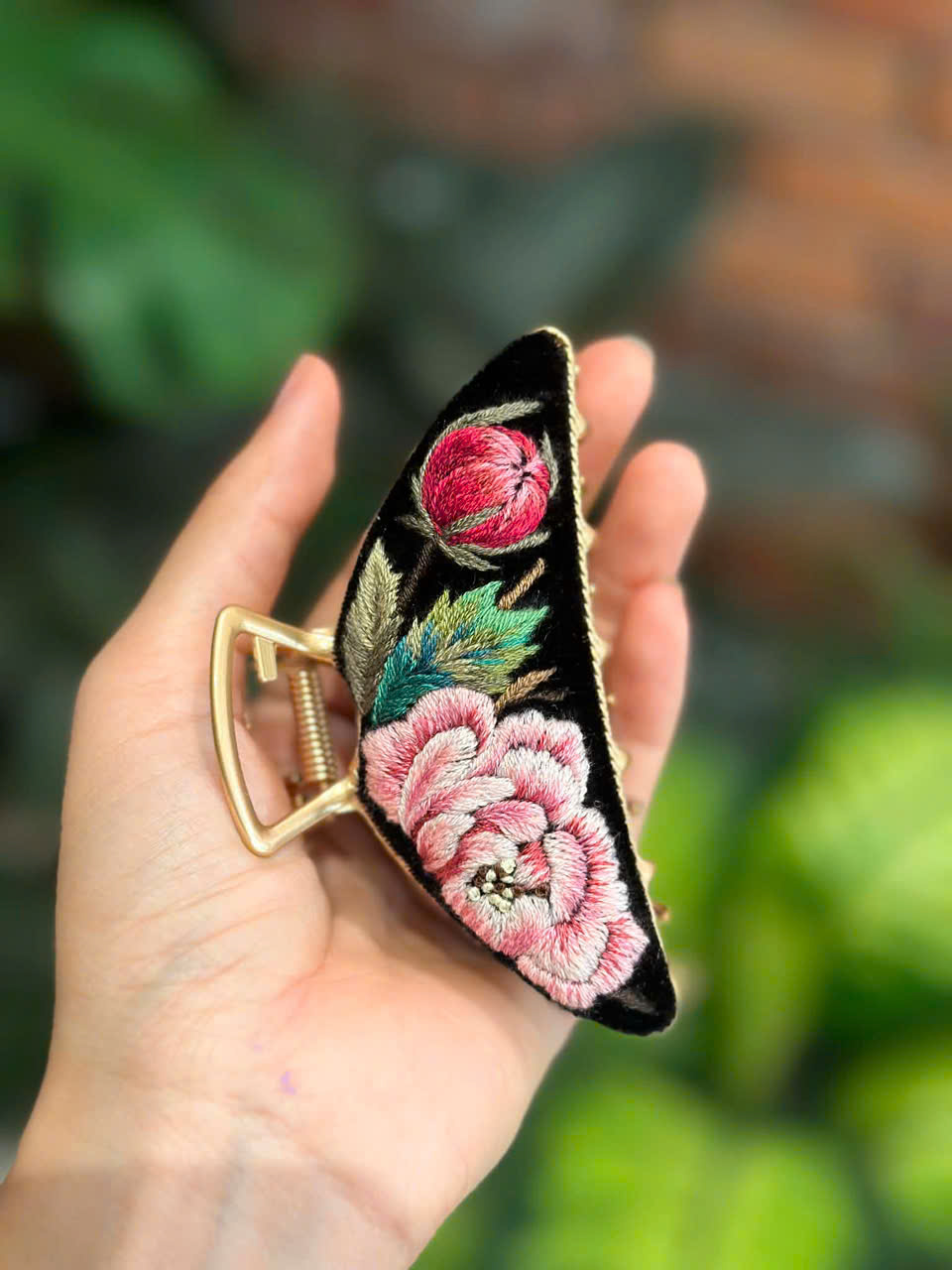
If hard plastic claws tend to tug on your fine hair, a different style may be worth trying. Our Embroidered Claw Clip has hand-embroidered floral stitching and suits half-up styles and fine hair.
How to Choose and Use Claw Clips Safely: A Step-by-Step Guide
To lower the chance of strand damage, pick a clip sized to your hair volume, leave your twist soft rather than taut, and avoid clipping soaking wet hair. Checking the teeth for rough molding seams helps too.
Used mindfully, a claw clip lets you sweep hair off your neck with less of the denting that elastics can leave. This step-by-step method covers how to check a clip, prep your hair and position the clip. Once you know the basics, these hair claw clip styles offer easy ideas to try.
Step 1: Size Matters: Are Claw Clips Better for Your Hair When Fitted Properly?
Matching the clip to your hair density is the first step. Fine or low-density strands can slip through wide-toothed, oversized clips, which often leads people to over-twist their hair or snap the clip shut repeatedly, putting more stress on fragile strands. For fine hair or half-up styles, a compact clip with closely spaced teeth can hold without heavy tension. Shorter hair can use a clip too, as these claw clip hairstyles for short hair show.
Conversely, thick, coarse or curly hair usually does better with deep-curved jaws and wide spacing between the teeth. Forcing a small clip onto a thick ponytail strains the spring, bends the teeth outward and crushes strands against the center seam. Choose a clip that holds all your hair without being forced shut. For thick or curly hair, you can see our embroidered large claw clip here.
Step 2: Inspect Inner Seams, Teeth Edges, and Metal Springs
Before using a new clip, take thirty seconds to inspect it. Inexpensive mass-produced plastic clips are often made in injection molds that can leave tiny, rough ridges along the inner edges of the teeth, and those ridges can snag hair when you open or adjust the clip. Run your thumb along the inner edge of each tooth; if you feel rough seams, buff them smooth or choose another clip.
Also check the coiled metal spring at the center hinge, and make sure the coil ends are tucked in rather than sticking out where stray hairs can catch. Clips made from smooth cellulose acetate or other polished materials tend to have fewer rough edges. Different clip shapes feel different, and our guide to the types of claw clips explains the main ones.
Step 3: Form a Loose, Gentle Twist Without Torsional Tension
How you handle your hair before closing the clip affects how much stress your strands take. A common error is gathering hair into a ponytail and twisting it as tightly as possible until the twist buckles back on itself. That puts extra strain on the strands and can leave them more likely to snap.
Instead, gather your hair at the nape of your neck and give it just one or two relaxed turns. Keep the base of the twist soft, with some room around the scalp, so the teeth can slide through the middle of the hair rather than clamping down on a tight, compressed cylinder.
Step 4: Anchor the Clip Teeth Horizontally Without Scalp Pinching
When placing the claw clip, avoid driving the teeth straight down into your scalp. Pressing rigid prongs into the skin can irritate it and bend the hair sharply at the root, which can lead to soreness. Instead, open the jaws wide, angle the clip horizontally along the curve of your head, and let the lower teeth slide under your relaxed twist.
Let the upper teeth close over the top of the hair. The clip should rest against the curve of your head, supported by your hair rather than pinching your skin. If you feel sharp pressure on your scalp, unclip it, fluff the twist with your fingertips and re-anchor it at a gentler angle.
Step 5: Rotate Daily Accessory Styles and Anchor Positions
Even a soft hair accessory can put repeated strain on the same strands if you wear it in the exact same spot every day. To spread the pressure out, vary your styles across the week. To rotate accessories, it helps to know hair clip names so you can find each style.
For example, wear a relaxed claw clip updo on Monday, a linen scrunchie in a low ponytail on Tuesday, and a hand-embroidered headband on Wednesday to keep face-framing strands back. In our studio, we like to rotate accessories so no single spot carries the pressure every day. Long hair needs a little planning, so these hair clips for long hair may offer helpful ideas.
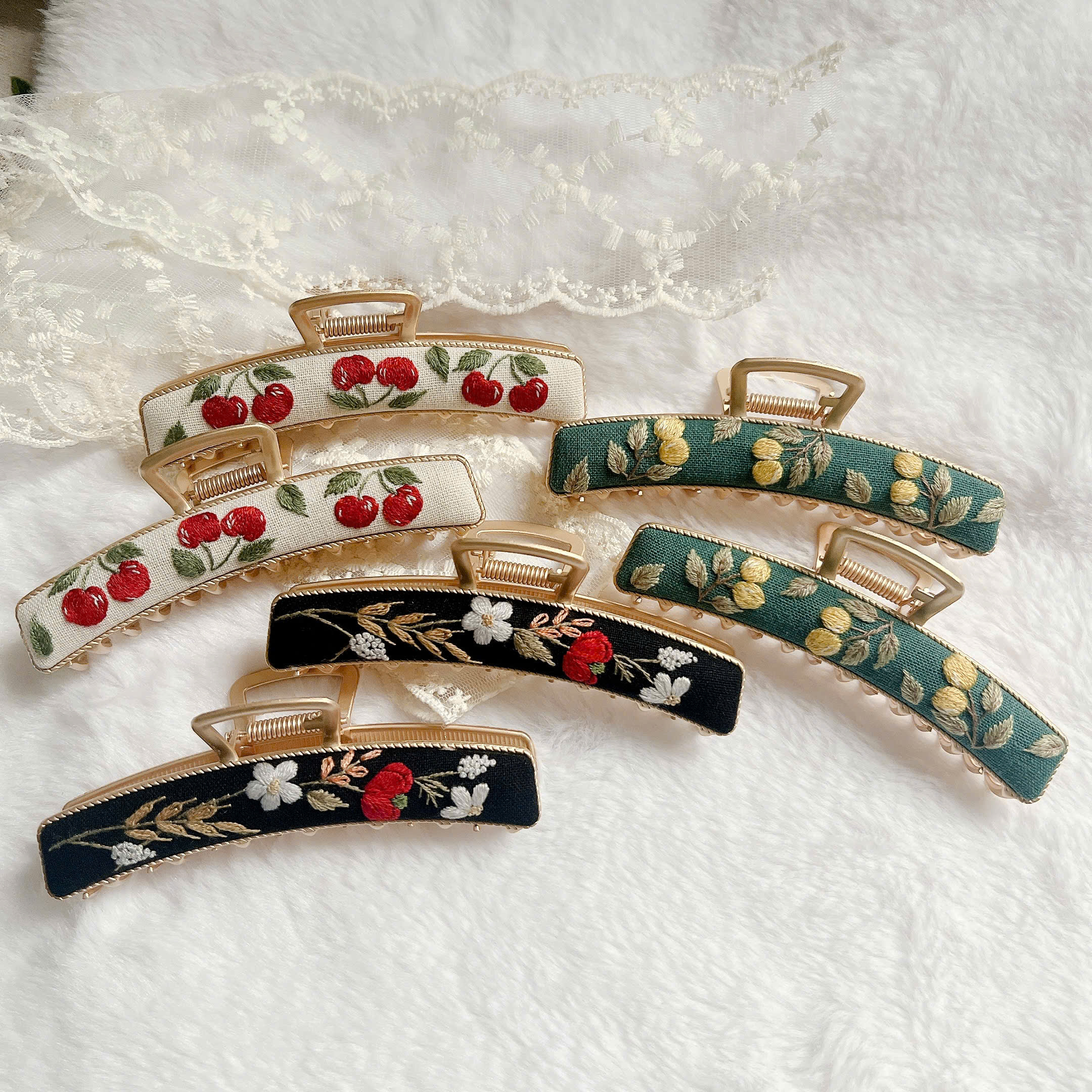
Building a small rotation of hair accessories? US shipping is $7 for the first item and $1 for each extra item, so you can pair this Long Embroidered Claw Clip with a few coordinating cottagecore pieces.
Studio Tips for Wearing Claw Clips With Less Strain
In our studio, we suggest anchoring the teeth into the body of your hair instead of pulling from the roots, checking clips for rough spots, and spot cleaning embroidered pieces with a damp cloth.
In our studio in Ho Chi Minh City, we spend our days working with natural linen, embroidery threads and hair accessories of all shapes. Here are four practical techniques we often share with women who want a mindful approach to daily hair styling.
Tip: Use a half-up anchor to hold fine hair without over-twisting. Fine hair tends to slide out of standard plastic clips. Rather than forcing all your hair into an overtight twist, separate the top half of your hair from temple to temple. Gather this top section loosely and fold it upward once before closing our Embroidered Claw Clip across the fold. The fold makes a shelf that supports the weight of the clip, so you do not need to pull hard at the hairline. Our hand-embroidered claw clips suit half-up styles and fine hair. You can see all of our hand-embroidered claw clips here if you would like to explore them.
Tip: Rest your crown by pairing a relaxed low clip with a headband. If your scalp feels tender after several days of high updos, give your roots a rest day. Gather your hair into a very low, loose twist at the base of your neck with a lightweight claw clip, so the crown is not pulled. To keep shorter front layers and baby hairs off your face, add a headband. Our hand-embroidered linen headbands are 1.2 in (3 cm) wide and sit on a soft, stretchy band, so you can keep a cottagecore look while your roots rest. For other relaxed options, you can browse our handmade hair clips in the shop.
Tip: Check the spring and hinge before you wear a clip. An exposed metal spring can snag stray hairs. When hair gets into the gap of an opening spring, closing the clip can trap and snap several strands at once. We recommend looking at the back of your clips regularly and choosing designs where the spring housing is covered or the hinge is tucked away.
Tip: Spot clean embroidered clips with a damp cloth. Hand-embroidered accessories need gentle care. We do not recommend soaking them or putting them in a washing machine. Instead, wipe the fabric lightly with a clean, damp cloth, dabbing at any dust or makeup residue. Then let the clip air dry fully in a shaded, well-ventilated space before you wear it again.
Common Claw Clip Mistakes and Practical Solutions
Common claw clip mistakes include clamping wet hair, forcing an undersized clip over dense hair sections, and leaning back against firm headrests while wearing a rigid clip.
Because claw clips are so convenient, it is easy to fall into hasty habits that put extra strain on your hair. Recognizing these mistakes makes it easier to adjust your routine.
Mistake: Securing soaking wet hair immediately after washing. Wet hair is more fragile than dry hair and stretches more before it snaps. When you gather heavy, wet hair and close a rigid claw clip over it, the weight of the water plus the clamping force puts extra tension on your roots, and the teeth can crush the strands, which can lead to frizz and breakage. Let your hair air dry or blow dry until it is mostly dry before putting it up in a clip.
Mistake: Overstuffing an undersized claw clip. When a clip is too small for your hair, the spring is stretched to its limit and the teeth cannot interlock properly. That creates uneven pressure points where the clip bites into small bundles of hair, which can crush strands and snap them at the twist line. If your clip keeps popping open or leaves deep dents in your hair, size up to a larger claw clip or switch to a half-up style to reduce the volume.
Mistake: Leaning against a hard headrest with a bulky claw clip. Wearing a hard plastic or metal claw clip at the back of your head in a car presses the teeth into your scalp and the hair trapped between them, which is uncomfortable and can strain your hair. When you are driving or traveling, take the clip out and switch to a scrunchie or a flat headband.
Each piece in our studio is embroidered by hand in small batches, so each one is slightly different. Orders are usually prepared in 1 to 3 business days and take an estimated 10 to 14 business days to reach the US, with tracking. You can return items within 30 days under our Return Policy.
Are Claw Clips Bad for Your Hair FAQ
Can claw clips damage your hair if worn every day?
Wearing a claw clip daily does not automatically damage hair if you use gentle habits. Problems tend to come from clamping at the exact same spot with a lot of tension, twisting strands too tightly, or using a clip with rough molding seams. To lower the risk, choose a clip with smooth edges, keep your twist soft, and shift the clip’s position a little each day. Alternating between claw clips, headbands and scrunchies also spreads the strain across the week.
Are claw clips better for your hair than traditional elastics?
In many cases, yes. A claw clip can be gentler than a tight elastic hair tie when you keep the twist loose and the clip fits your hair. An elastic concentrates its pull along one narrow band and can leave dent marks, while a claw clip spreads its hold across interlocking teeth. You also do not have to slide a claw clip down the hair to remove it, which avoids the dragging that can snap fragile ends.
Why does my scalp hurt after wearing a claw clip for a few hours?
Scalp soreness after wearing a claw clip often comes from too much tension or a clip placed where it pulls. A tight twist can pull on the roots, and a heavy clip sitting on top of the crown can drag downward on the hair around it. If your scalp feels sore, take the clip out and let your hair down for a while. If headaches or soreness continue after you remove it, see a doctor.
Do claw clips cause hair loss or bald spots?
The risk usually comes from tension rather than from the clip itself. The American Academy of Dermatology notes that hair pulled back tightly over and over can cause traction alopecia, a type of hair loss. To keep the tension low, avoid tight twisting, let the clip rest loosely against your hair, and take it out before you sleep. If you notice thinning or unusual shedding, see a dermatologist.
Which claw clip style is suited for fine, delicate hair?
Fine hair usually works well with lightweight claw clips that have closely spaced teeth and smooth contact surfaces. Heavy metal clips can slide down fine strands, which tempts you to clamp down tighter and strain your roots. Look for medium or compact clips with smooth edges, such as smooth acetate. Our hand-embroidered claw clips suit half-up styles and fine hair.
Mindful Styling and Small Details with BabunobGem
Choosing hair accessories is easier when you know what to look for in a clip and how to wear it. At BabunobGem, we make hand-embroidered accessories in small batches in our Ho Chi Minh City studio, working mainly on natural linen with cottagecore botanicals. Most items are under $25. Orders are usually prepared in 1 to 3 business days and take an estimated 10 to 14 business days to reach the US, with tracking.
New here? Get 10% off your first order
Join our list for new small-batch designs and restocks, or browse the collection now.
Note: Each piece is embroidered by hand, so stitches and colors can vary slightly from the photos. Fit and feel depend on head size, hair type and how you wear it. This guide is for general information only.