Types of Hair Elastics & Their Uses
Types of hair elastics range from basic seamless bands to silk and linen scrunchies, each serving a specific purpose in your daily routine. Whether you are styling fine strands or securing thick curls, this guide helps you navigate your options with practical insights from our BabunobGem embroidery studio.
Key highlights
- Understand what a hair tie is made of to help avoid snagging and breakage.
- Match different types of hair ties to your specific hair density, texture, and daily activities.
- Learn how to properly care for fabric-covered elastics, including natural linen and silk scrunchies.
- Avoid common styling mistakes that can lead to tension, snagging and discomfort.
Understanding hair tie types and materials
The different types of hair elastics include standard seamless bands, spiral coils, fabric-covered scrunchies, bungee cords, and decorative button ties. Most types combine a stretchy core, usually made of rubber or spandex, with an outer material designed to provide grip or reduce friction against the hair cuticle.
When exploring the vast world of hair accessories, the sheer variety can feel overwhelming. Many of us grab whatever is closest on the bathroom counter without considering how the mechanics of the band interact with our hair. To make informed choices, it is helpful to look at the anatomy of these everyday items. The core function of any tie is tension and hold, but how that tension is applied makes all the difference. By breaking down the components, you can start to see why certain bands leave deep creases while others glide off effortlessly at the end of the day.
A common question we hear is: what is a hair tie made of? Generally, it consists of two main parts. The inner core provides the elasticity and is typically made from extruded rubber, polyurethane, or woven spandex fibers. The outer casing is the protective layer that comes into direct contact with your hair. This casing can be woven nylon, cotton, natural linen, or smooth silk. The relationship between the core’s strength and the casing’s texture determines the category of the elastic and its ideal use case.
The standard seamless band
The standard seamless band is perhaps the most common item found in bathroom drawers across the country. These are usually made by weaving nylon or polyester threads tightly around a core of spandex or thin rubber. Because they lack a metal connector, they are significantly less likely to snag than older designs. They offer a firm, reliable hold that works well for basic ponytails and securing the ends of braids. However, because the outer casing is relatively thin and textured, they can create concentrated pressure points on the hair shaft, which often leads to the familiar ponytail crease after a few hours of wear. A standard band works well for everyday styles, including these fringe and ponytail hairstyles.
The fabric-covered scrunchie
Scrunchies take a standard elastic core and encase it in a generous tube of fabric. This design spreads the tension over a wider area of the hair, which can reduce creasing. The outer fabric plays a major role in how the scrunchie performs. Silk has a smooth surface that hair tends to glide over, which many people like for sleeping. Linen scrunchies, on the other hand, have a natural texture that tends to grip a little more, which makes them a lovely choice for daytime wear and relaxed, cottagecore-inspired styles. If your hair is fine, our tips on choosing a scrunchie for thin hair may help.
The spiral coil
Spiral coils, often resembling old telephone cords, are unique because they usually do not have a separate core and casing. Instead, they are molded from a single piece of smooth polyurethane or plastic. The spiral shape is designed to distribute pressure unevenly, which paradoxically helps to prevent a harsh, straight crease line in the hair. They are waterproof, making them a popular choice for swimming, showering, or sweaty gym sessions. While they are easy to clean, they can sometimes stretch out of shape over time, though they often shrink back when exposed to warm water.
The bungee band and button tie
Bungee bands are specialized tools often used by professional stylists. Instead of a closed loop, they consist of a piece of elastic with a hook on each end. You anchor one hook, wrap the elastic around the gathered hair, and secure the second hook. This allows for a tight, custom fit without having to pull the hair through a loop, which is incredibly useful for very thick or highly textured hair. Button hair ties focus on aesthetics. The button, often embroidered, adds a charming accent to half-up styles or the base of a braid. Our embroidered button hair ties are sold as a set. Elastics often finish a braid, and you can learn how to do a dutch braid on yourself here.
| Elastic Type | Core Material | Outer Casing | Good For |
|---|---|---|---|
| Standard Seamless | Spandex / Rubber | Woven Nylon / Thread | Everyday ponytails, securing braids |
| Silk Scrunchie | Elastic | Silk | Sleeping, relaxed ponytails |
| Linen Scrunchie | Elastic | Natural Linen | Casual daytime wear, boho styling |
| Spiral Coil | Polyurethane | None (Solid Material) | Swimming, gym, messy buns |
| Bungee Band | Thick Rubber | Nylon / Cotton | Thick hair, professional styling |
| Button Hair Tie | Elastic | Embroidered button | Half-up styles, decorative accents |
| Terry Cloth Band | Spandex | Microfiber / Cotton | Absorbing sweat during workouts |
| Metal-Clasp Tie | Rubber | Nylon (with metal) | Temporary holds (prone to snagging) |
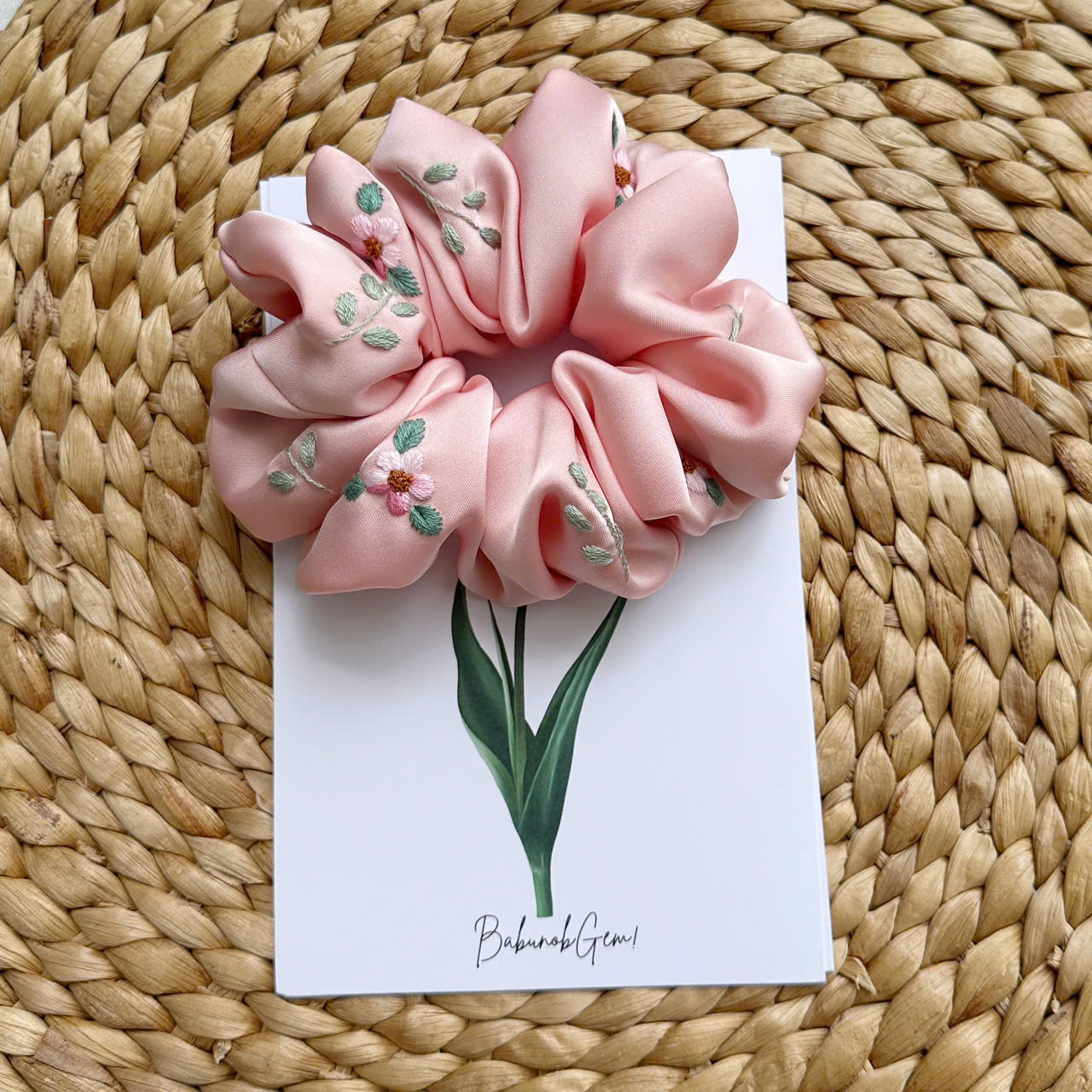
If standard bands leave creases or tug at your hair, a fabric-covered scrunchie is worth trying. The Wildflower Silk Scrunchie is hand-embroidered with wildflowers and comes in 6 colors, with a touch of cottagecore charm.
How to choose the right elastic: an A to Z guide
To choose among the kinds of hair ties, first assess your hair density, then match the elastic to your activity, and finally consider the aesthetic you want to achieve. Always prioritize a comfortable fit to avoid unnecessary tension on your scalp and hair follicles.
Building a functional collection of hair accessories means moving beyond a one-size-fits-all approach. Just as you would not wear winter boots to the beach, you should not use the same elastic for a high-intensity workout and a delicate sleep style. The goal is to have a curated selection of different types of hair elastics that cater to your specific needs throughout the day. By following a systematic approach, you can select pieces that suit your routine and your personal style.
Step 1: Assess your hair density and texture
The first step in choosing the right accessory is understanding the physical characteristics of your hair. Fine hair is generally more fragile and prone to breakage from friction. If you have fine strands, you may prefer smooth, fabric-covered options like silk scrunchies or very soft, seamless bands. Thick or heavy hair requires an elastic with a stronger core to prevent the style from sagging throughout the day. For thick hair, wide seamless bands or bungee cords offer the necessary support. Curly and coily textures often do well with smooth surfaces that are less likely to disrupt the curl pattern or cause frizz, which is why many people choose silk or satin casings. For a decorative braid finish, you can learn the beaver tail braid and secure it with a soft elastic.
Step 2: Match the elastic to the activity
Your daily routine dictates the level of hold and durability you need. For sleeping, the primary goal is protection. A loose, soft scrunchie can help limit tangling while you toss and turn, and it puts less pressure on the roots than a tight band. During a workout, you need a band that can handle sweat and movement. Spiral coils or terry cloth bands are excellent for the gym because they grip well and can be easily washed. For a standard workday or running errands, you might want a balance of comfort and style. This is where linen scrunchies, button ties, or soft fabric bands are worth considering for a relaxed everyday look. For a quick everyday look, you can try these twist ponytail styles with an elastic you already own.
Step 3: Consider the aesthetic and material
Once the functional needs are met, you can focus on the visual appeal. Hair accessories are a wonderful way to express personal style. If you gravitate toward a vintage, boho, or cottagecore aesthetic, natural materials like linen and cotton are ideal. Hand-embroidered details, such as small floral motifs, add a layer of craftsmanship and personality to an otherwise basic item. When choosing decorative pieces, consider how the colors and textures will complement your everyday wardrobe. A well-chosen embroidered scrunchie can serve as a focal point for a simple outfit, elevating a basic ponytail into a thoughtful style. To dress up a basic ponytail, learn how to do the ponytail braid with this tutorial.
Step 4: Evaluate tension and scalp health
The most critical step is evaluating how the elastic feels once it is in your hair. A common misconception is that a tighter hold is always better. In reality, excessive tension is detrimental. If you frequently wear your hair in very tight styles using rigid elastics, the constant pulling can lead to issues. According to the American Academy of Dermatology, wearing hair pulled back tightly over and over can cause a type of hair loss called traction alopecia. Opt for softer kinds of hair ties and choose a fit that feels secure but never painful, and see a dermatologist if you notice thinning. If you feel a pulling sensation at your roots, it is time to loosen the style or switch to a gentler accessory.
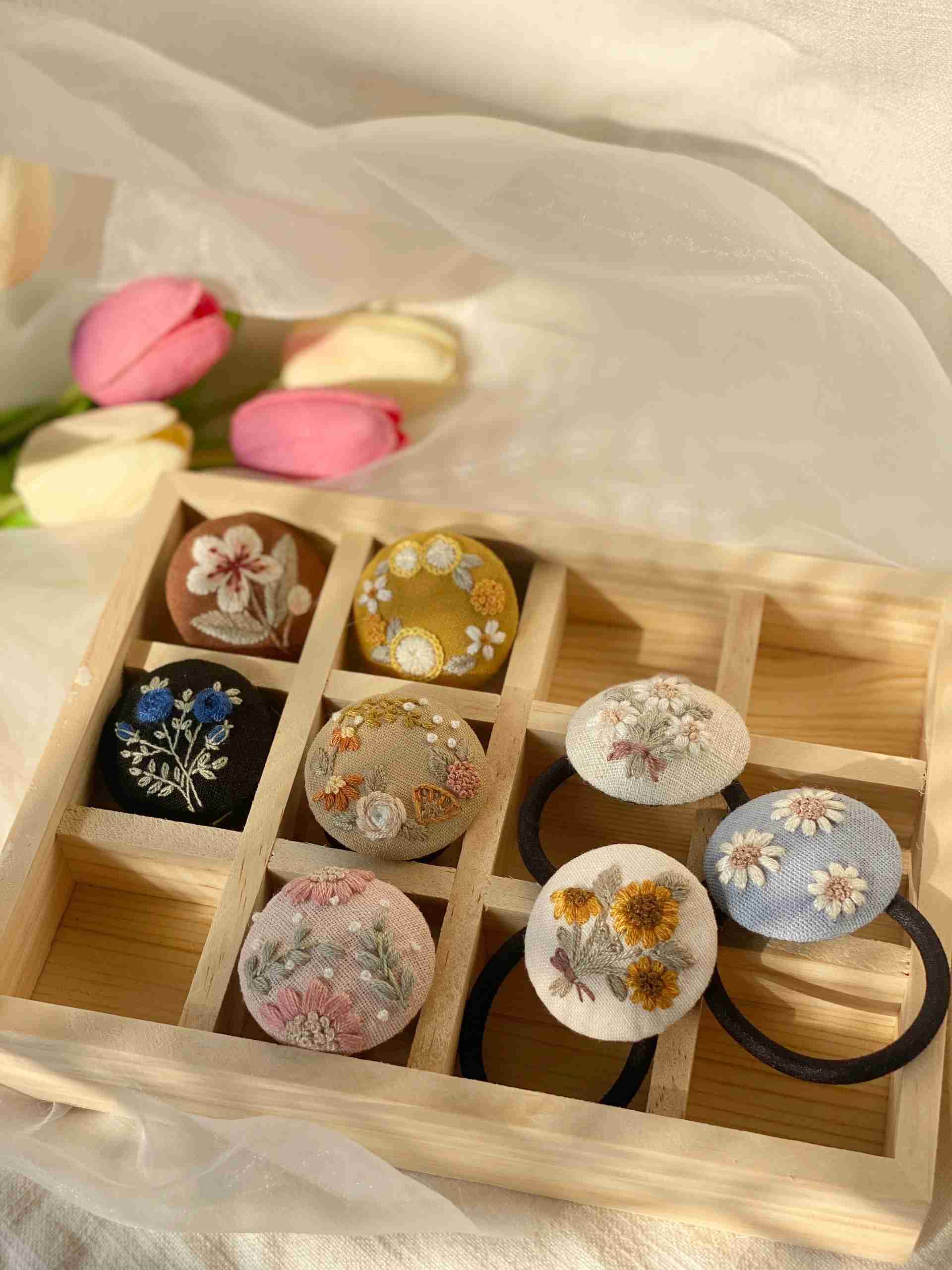
Building a collection of different types of hair elastics? When you order from our studio, US shipping is $7 for the first item and $1 for each extra item in your cart.
Experience: practical tips from our studio
To get the most out of your hair elastics, rotate them so no single band does all the work, spot clean fabric casings with a damp cloth, and use a basic hidden tie under decorative scrunchies if you have very heavy hair.
In our studio, we spend a lot of time working with different fabrics and threads. We see firsthand how materials behave when they are stretched and handled. Creating hand-embroidered accessories has taught us that a little mindful handling goes a long way, both for the item and for your hair. We often share these practical insights with people who are looking to transition away from disposable, mass-produced bands toward pieces that are made slowly and meant to be worn all day.
The double loop rule for silk: Because silk is naturally slippery, a silk scrunchie might feel like it is sliding down fine hair. A tip we often share is to gather your hair, twist the base of the ponytail slightly to create texture, and then apply the scrunchie with just two loops. Over-twisting the scrunchie into three or four tight loops puts unnecessary strain on the elastic and on your hair.
Spot cleaning natural fabrics: Embroidered linen and silk require a gentle touch. We recommend keeping them away from the washing machine. If your fabric-covered elastic gets a makeup smudge or absorbs sweat, simply spot clean the affected area with a damp cloth. Avoid scrubbing, and lay the accessory flat to air dry. This keeps the hand-stitched embroidery from being rubbed or soaked.
Rotating your elastics: Just like a good pair of shoes, a hair tie can wear out sooner if you use it every single day. Elastic can lose some of its stretch after being pulled over and over, so the band you reach for daily may give up first. Keep a small rotation of three or four different types of hair ties on your vanity. Switching them out spreads the wear across several pieces. When you want a change from a full updo, try this ponytail and hair down style.
The layering technique for heavy hair: If you have very thick, heavy hair and want to wear a decorative, embroidered scrunchie, you might find that the scrunchie alone doesn’t provide enough structural support. In this case, use a sturdy, seamless band that matches your hair color to secure the ponytail first. Then, wrap the decorative scrunchie loosely over the top. This gives you a firmer base, and the scrunchie sits on top without being overstretched. The same layering idea works for a relaxed look, as these messy ponytail hairstyles show.
Trust: common mistakes and how to avoid them
Common mistakes include tying wet hair with tight elastics, ripping ties out instead of gently unwinding them, and ignoring worn-out cores that force you to over-stretch the band. Avoiding these habits is easier on both your hair and the accessory.
Even with well-made accessories, improper use can lead to frustration and damage. Over the years, we have noticed that many hair care issues stem from a few deeply ingrained habits. Because hair ties are such a mundane part of our routines, we rarely think about the mechanics of how we apply and remove them. By identifying and correcting these common missteps, you can cut down on snagging and help your favorite accessories last longer.
Mistake: Tying wet hair with rigid bands. Hair is at its most fragile state when it is wet. It stretches more easily and is highly susceptible to snapping. Pulling wet hair into a tight ponytail or bun with a standard, rigid elastic creates immense tension on the weakened strands. If you must tie your hair while it is damp, always use a soft, fabric-covered scrunchie or a loose spiral coil, and keep the style as relaxed as possible until the hair is fully dry.
Mistake: Ripping elastics out of your hair. At the end of a long day, it is tempting to grab the hair tie and pull it straight down the length of your ponytail. This action creates severe friction, scraping against the hair cuticle and often pulling out healthy strands along the way. The fix is simple but requires a moment of patience: always take the time to gently unwind the elastic, loop by loop, exactly in the reverse order of how you put it in.
Mistake: Using elastics with exposed metal connectors. Older styles of hair ties often feature a small metal crimp that holds the loop together. This metal piece can catch individual hairs, leading to snags and breakage when you adjust your style. If you still have these in your drawer, it is worth phasing them out. Look for seamless bands or fabric-covered options where the join has no sharp edges to catch your hair.
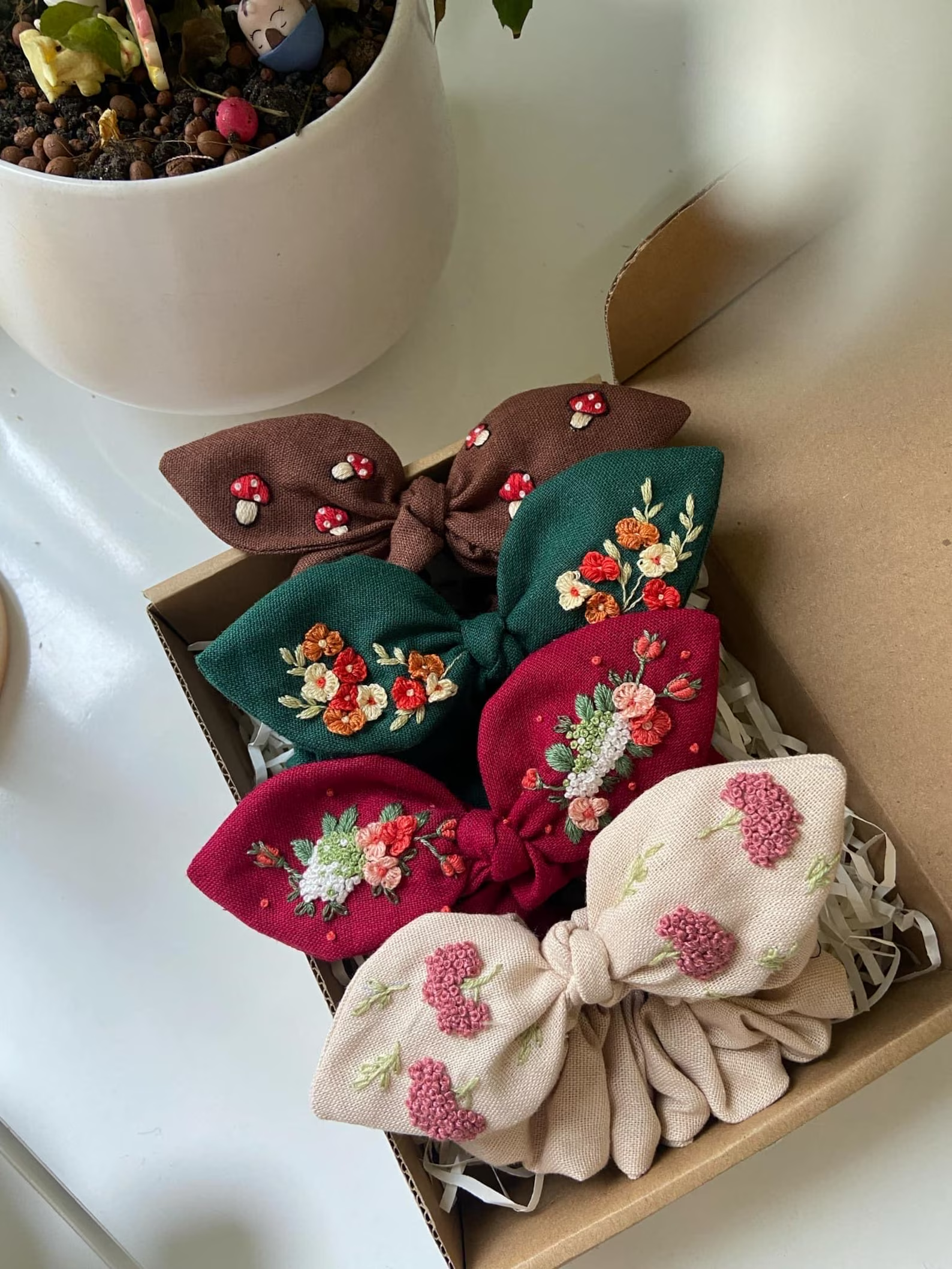
We make our linen bow scrunchies slowly by hand, so each one is slightly different. Orders are usually prepared in 1 to 3 business days and ship to the US with tracking, and you can return items within 30 days under our Return Policy.
Types of hair elastics FAQ
What is a hair tie made of?
A standard hair tie is typically made of an inner elastic core, which provides the stretch, and an outer casing that protects the hair. The core is usually constructed from extruded rubber, polyurethane, or woven spandex fibers. The outer casing can vary widely depending on the design. Basic bands often use woven nylon or polyester thread. Scrunchies use a larger tube of fabric, such as natural linen, cotton, or silk, to encase the elastic. The combination of these materials determines how much grip the tie has and how gently it interacts with your hair cuticle.
Which hair tie types work for thick hair?
Thick hair requires accessories with a strong, durable core that will not snap or stretch out immediately under pressure. Wide, seamless spandex bands are a reliable everyday choice. Bungee bands are also excellent for thick hair because they hook into place, allowing you to customize the tension without having to pull a massive volume of hair through a small loop. If you prefer a decorative look, layer a fabric-covered scrunchie over a sturdy seamless band so the band does the holding.
How many different types of hair ties should I own?
You do not need a massive collection, but a small rotation of three to four different types of hair elastics is usually plenty. A well-rounded set might include a few seamless bands for workouts or layering, a couple of silk scrunchies for sleeping, and a few decorative linen or embroidered ties for daytime styling. Rotating your accessories matches the tie to your specific activity and spreads the wear across several pieces.
Can the kinds of hair ties I use cause headaches?
If a hair tie or ponytail gives you a headache, the first step is to take it out and let your hair down. A rigid elastic, or a tie wrapped too many times, pulls tightly on your hair and scalp, so a looser style or a softer, fabric-covered option puts less tension on them. If headaches continue after you take the accessory out, talk to a doctor.
How do I care for embroidered hair ties made with fabric?
Embroidered accessories, especially those made with natural linen or silk, require gentle handling to maintain their shape and stitch work. You should never put them in a washing machine or dryer. Instead, if they become dusty or slightly soiled, use a damp cloth to spot clean the fabric gently. Avoid scrubbing the embroidered areas. Once clean, lay the accessory flat on a towel to air dry completely before using it again. This simple routine avoids soaking or scrubbing the hand-stitched details.
Building a thoughtful hair accessory collection
Navigating the different types of hair elastics comes down to understanding your hair’s needs and your daily routine. From silk scrunchies for sleeping to seamless bands for workouts, the right match depends on your hair and your day. At BabunobGem, we believe in creating accessories that are made slowly and worn all day. We hope this guide helps you build a collection of thoughtful, hand-embroidered pieces that you truly love.
New here? Get 10% off your first order
Join our list for new small-batch designs and restocks, or browse the collection now.
Note: Each piece is embroidered by hand, so stitches and colors can vary slightly from the photos. Fit and feel depend on head size, hair type and how you wear it. This guide is for general information only.