Are Cotton Scrunchies Good for Hair?
Are cotton scrunchies good for hair, or can the fabric dry out and snag fragile strands? This guide from BabunobGem compares cotton, silk and linen on moisture, friction and tension, so women who wear their hair up every day can pick the right fabric for their hair.
Key highlights
- Cotton scrunchies are usually gentler on hair than bare rubber elastics because fabric covers the band.
- Cellulose cotton fibers absorb moisture, which can dry out curly, bleached, or fine hair over time.
- Silk is generally smoother than woven cotton, so it tends to create less friction on the hair surface.
- Loose wraps and rotating where you place your accessory can reduce repeated strain on the same strands.
Are Cotton Scrunchies Good for Hair? Fabric Science and Hair Health
Cotton scrunchies are usually gentler than uncovered elastic bands, but cotton’s absorbency and textured fibers can cause friction and dryness on fragile hair strands.
To see whether a cotton hair tie suits your routine, it helps to know how fabric interacts with hair. Each strand has an outer protective layer called the cuticle, made of overlapping keratin scales that point toward the hair tip. When the cuticle lies flat, hair feels smooth, reflects light and holds moisture. When rough materials rub against the strand, those scales can lift, which can lead to tangles, frizz and breakage.
Bare rubber bands and thin elastics can pinch the strands directly, and pulling them out can snag or tug hair along with them. A typical scrunchie wraps an elastic band in a tube of gathered fabric, which can spread tension over a wider area and reduce the pressure that creates creases in the hair.
The Molecular Profile of Cotton Fibers
Cotton is a common natural fiber made mostly of cellulose. Under a microscope, cotton fibers look like twisted, flat ribbons with small surface irregularities. That structure makes cotton breathable for casual clothing, but it behaves differently against delicate hair:
- Moisture Absorption: Cotton absorbs liquid quickly. Over a day or night, it can draw natural oils and moisture away from your hair, which may leave dry-prone hair feeling drier.
- Mechanical Friction: A matte cotton weave has more surface texture than a smooth fabric. As hair moves against a cotton scrunchie, the fabric can rub the cuticle and roughen porous strands.
- Grip: On the positive side, cotton has some natural grip, so it can help hold slippery, straight hair in place during busy daytime routines.
How Hair Porosity Shapes Fabric Compatibility
Not all hair responds to cotton in the same manner. Low-porosity hair has tightly sealed cuticles that retain moisture effectively and resist surface abrasion. Women with thick, coarse or oily hair may find cotton scrunchies work fine for daytime tasks.
Conversely, high-porosity hair, curly textures, fine strands and chemically lightened hair tend to have more lifted or fragile cuticles. These hair types often do better with moisture retention and a smoother surface. When high-porosity strands rub against an absorbent cotton weave, the fabric can draw out moisture and add friction that leads to tangles. For these hair types, a smoother fabric such as silk may be a gentler choice. Curly textures have their own needs, so these hair ties for curls are worth a look.
| Hair Accessory Type | Material | Things to Watch For | Good For |
|---|---|---|---|
| 100% Cotton Scrunchie | Woven cotton | Absorbs oils, and the matte weave can drag on dry strands | Casual daytime wear on normal or resilient hair |
| Silk Scrunchie | Silk | Any tie can pull if wrapped tightly | Low buns and ponytails |
| Natural Linen Scrunchie | Natural linen | Keep the wrap loose to avoid tugging | Daytime updos and cottagecore styling |
| Cotton Velvet Scrunchie | Cotton with a dense pile | Dense pile can grip hair, so avoid tight wraps | Thick ponytails that need a firmer grip |
| Bare Elastic Rubber Band | Rubber or synthetic elastic | Can pinch and snag strands, especially when removed | Quick, occasional use rather than daily wear |
| Cellulose Acetate Claw Clip | Cellulose acetate | Check the teeth and spring for rough spots | Twist updos and half-up styles without band tension |
| Linen-Wrapped Snap Clip | Clip wrapped in linen | Small sections only; overfilling can make it pop open | Securing bangs and face-framing pieces |
| Hand-Embroidered Linen Barrette | Oval, linen-covered, embroidered rosette, about 3.5 × 1.5 in | Pinching can occur if the clasp is overloaded | Half-up styles and sweeping back side sections |
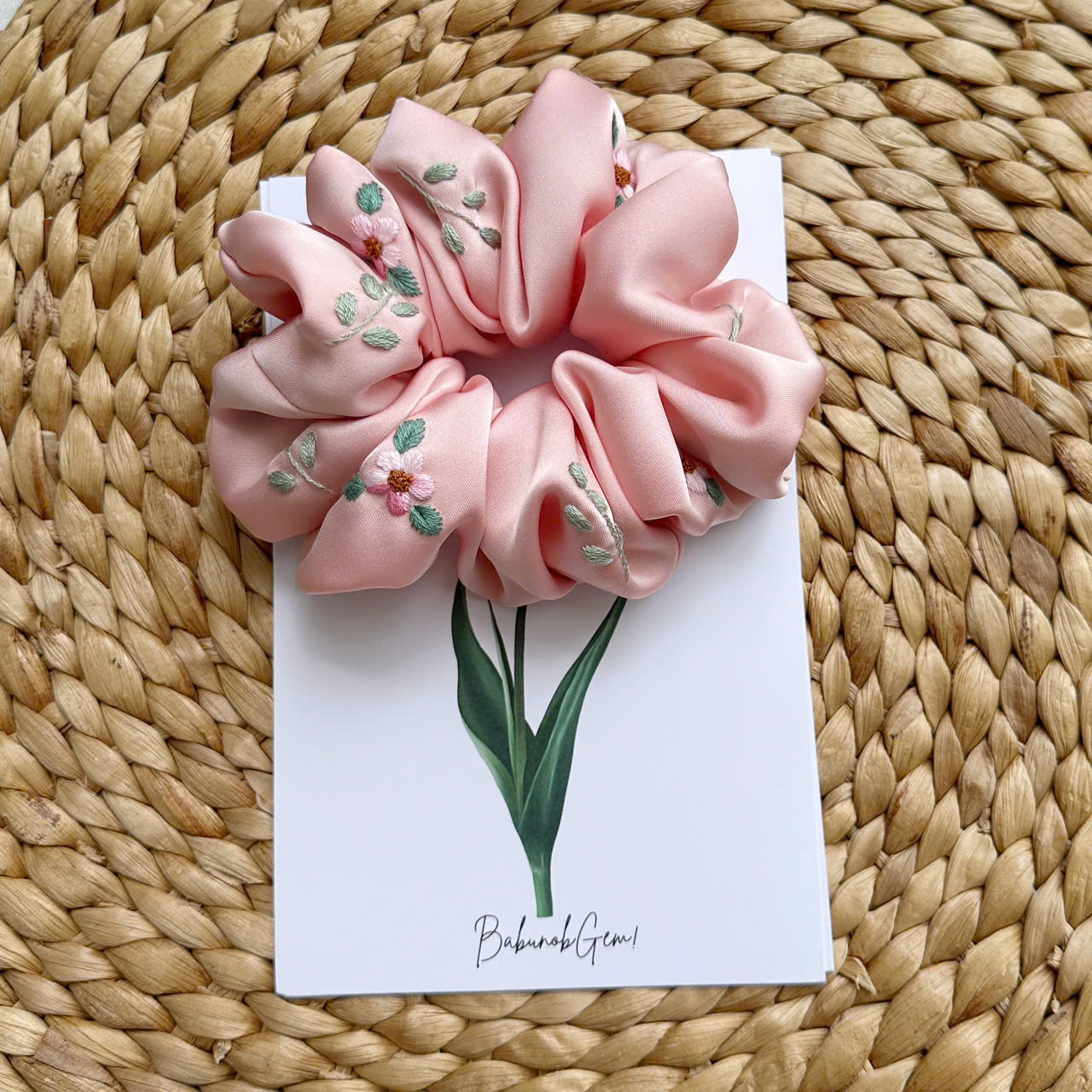
If cotton scrunchies leave your ends feeling dry or tangled after a long workday, a different fabric may be worth trying. Our Wildflower Silk Scrunchie is hand-embroidered with wildflowers in our studio and comes in 6 colors.
How to Choose the Right Hair Tie: Step-by-Step Selection Guide
To choose a hair tie that is kinder to your hair, match the fabric to your hair type, check how wide and loose the tie is, and match its hold to your daily activity.
Finding the right hair tie is not about finding a single universal accessory. Different days, hairstyles, and hair conditions call for distinct materials and construction methods. Follow this step-by-step process to build a small accessory collection that gives you options for different days and hair conditions.
Step 1: Assess Your Strand Diameter and Moisture Needs
Begin by checking your individual hair strands. Take a single shed strand and roll it between your fingertips. If you barely feel the strand, you likely have fine hair. Fine strands are thinner, so they can be more prone to friction breakage from heavy, coarse knits. A smoother, lightweight fabric may drag less on these delicate strands. If your strands are fine, this guide to a scrunchie for thin hair explains what to look for.
If the strand feels thick and distinct like a thread, you likely have coarse hair. Coarse strands tend to be more resilient and may need a firmer grip to stay contained. A cotton scrunchie or a linen scrunchie with a bow are two options to try for thicker ponytails.
Step 2: Match the Fabric Weave to Your Daily Activity
Consider what your day entails before selecting an accessory: For a playful throwback, you can try our 90s hairstyles with scrunchies and see how each fabric behaves.
- Rest and Sleep: When you sleep, hair shifts against your pillow, and a tie can tug as you move. Many people choose a smooth fabric such as silk at night; either way, keep the wrap loose or leave your hair in a loose braid.
- Active Daytime Errands: For working around the house, running errands or casual outings, a linen bow scrunchie or a cotton hair tie is a simple, relaxed choice.
- Professional and Semi-Formal Wear: Hand-embroidered silk scrunchies add botanical character to low buns, adding an understated handmade detail that can suit a workday or a family gathering.
Step 3: Check Inner Elastic Tension and Fabric Ruffle Volume
How gentle a scrunchie is on your hair can depend on how much fabric surrounds the elastic band inside it. When you stretch a scrunchie, the fabric should stay generously gathered. If a scrunchie uses too little fabric, the band can stretch it flat, and it may then pull on your hair much like a plain elastic.
Look for scrunchies with generously gathered fabric. More fabric around the band can help spread tension over a wider section of hair instead of a single narrow line. Wider gathers of fabric can sit comfortably on textured hair, as shown in this curly natural bun guide.
Step 4: Rotate Between Scrunchies, Clips, and Barrettes
Wearing a scrunchie in the exact same spot every day can put repeated stress on the same strands. Alternating your styling tools through the week can help spread that strain: To switch up your routine, learn how to do a dutch braid on yourself with a fabric tie.
- Day One: Gather hair in a low bun using a silk scrunchie.
- Day Two: Secure a casual half-up twist using an embroidered claw clip instead of a band.
- Day Three: Sweep back side sections with linen-wrapped snap clips (about 7 cm each) or an oval rosette barrette (about 3.5 × 1.5 in).
- Day Four: Wear a loose ponytail tied with a linen bow scrunchie.
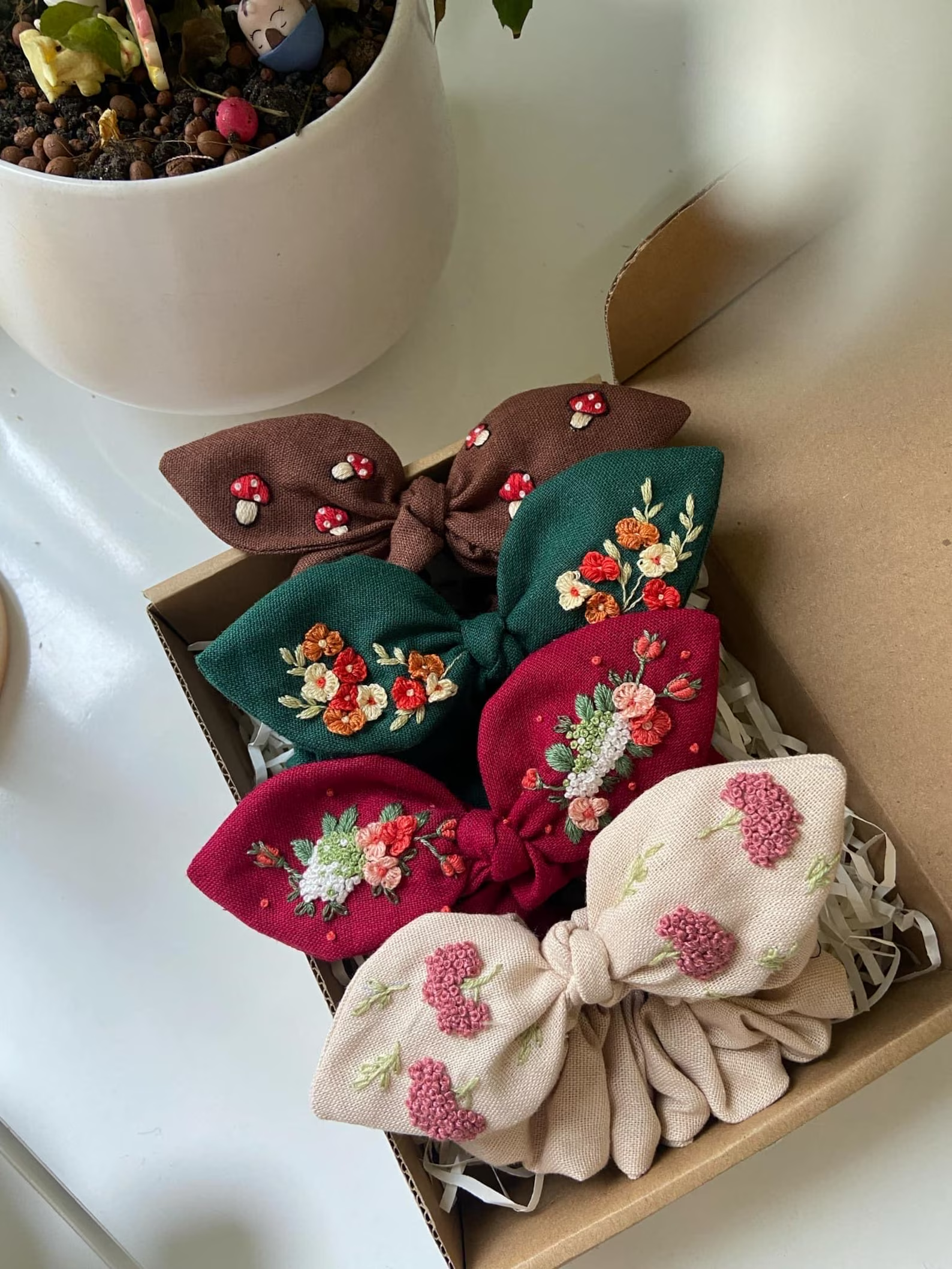
This hand-embroidered linen scrunchie with a bow adds a cottagecore touch to messy buns and braids. US shipping is $7 for the first item and $1 for each extra item.
Studio Tips for Styling Hair With Less Tension and Breakage
In our hand-embroidery studio, we suggest loose wraps, varied accessory placement and gentle spot cleaning to keep strain on your hair low and your embroidered pieces tidy.
Practice the two-loop guideline to avoid excessive scalp pull. When putting up your hair, wrap your scrunchie only twice. If you feel the need to twist it a third time to achieve a tight hold, your hair tie may be overstretched, or your hairstyle may be carrying too much weight for one accessory. A third wrap presses the fabric tightly into your hair and adds tension at the roots. If you need extra support, secure the base with a small claw clip first, then place your scrunchie loosely over the base as an accent. A loose scrunchie also suits a low updo, as you will see in our chignon bun hairstyle tutorial.
Unfurl rather than sliding accessories during removal. Breakage can happen when you take out a scrunchie at the end of the day. Pulling a hair tie straight down the ponytail can drag individual hairs against the grain of their cuticles, which can cause knots and snap fragile ends. Instead, locate the outer loops, unwind each wrap one at a time, and lift the scrunchie outward away from your head. This simple habit can help protect delicate ends, particularly on dry or processed hair.
Clean hand-embroidered accessories with mindful spot cleaning. Hand-embroidered pieces need gentle care. If your scrunchie picks up dust or natural oils, do not put it in a washing machine. Instead, wipe the fabric lightly with a clean, damp cloth, then lay the accessory flat on a towel to air dry away from direct heat.
Layer hair accessories to distribute hair density. If you have thick, heavy hair, relying solely on a scrunchie can drag down your scalp. In our studio, we often recommend pairing a half-up style anchored by an oval linen barrette (about 3.5 × 1.5 in) with a loosely gathered silk scrunchie at the ends. Spreading the weight of your hair between two anchor points can reduce strain on the front hairline and gives you a layered botanical look. Layering works nicely with plaits too, and our scrunchie for braids ideas show how to finish a braid softly.
Common Scrunchie Mistakes That Damage Fragile Hair
Hair tie damage often comes from tying wet hair, repeating the same high-tension style and rough machine washing, not only from the fabric.
Mistake: Tying cotton scrunchies around soaking wet hair. Wet hair is more fragile than dry hair and stretches more before it breaks. Cotton absorbs water quickly, so a cotton scrunchie around damp hair can stay damp and cling to the strands. As the hair dries it can tighten around the band, which may cause creases and breakage. Let your hair air dry or blow dry until it is mostly dry before putting it up.
Mistake: Wearing high, tight ponytails in the exact same spot daily. Pulling your hair back tightly day after day can strain the hair around the temples, crown and hairline. The American Academy of Dermatology notes that hair pulled back tightly over and over can cause traction alopecia, a type of hair loss. If your scalp feels sore or tender after you take your accessory out, the style may be too tight. Lower your ponytail, switch to a loose low twist and give your hair regular breaks. See a doctor or dermatologist if soreness continues or you notice thinning. If you wear bangs with a high ponytail, our fringe and ponytail ideas can help you balance the look.
Mistake: Agitating hand-stitched hair accessories in household washers and dryers. Machine washing and tumble drying put accessories through spin cycles, heat and harsh detergents, which can stretch the band, fray the fabric and snag decorative stitching. Once a hair tie loses its stretch, it tends to need tighter wrapping, which can strain your hair. Treat embroidered pieces gently: wipe them with a damp cloth and let them air dry naturally.
Each scrunchie is embroidered by hand in small batches in our Ho Chi Minh City studio, so each one is slightly different. Orders are usually prepared in 1–3 business days and take an estimated 10–14 business days to reach the US, with tracking. You can return items within 30 days under our Return Policy.
Frequently Asked Questions About Cotton Scrunchies
Are cotton scrunchies better for hair than regular elastic hair ties?
Often, yes. A cotton scrunchie is usually gentler than a bare elastic hair tie. Thin rubber bands concentrate tension on a narrow strip of hair and can snag or tug when you remove them, while a scrunchie wraps the elastic in a tube of fabric that can spread the pull over a wider area. Cotton has more surface texture than a smooth fabric such as silk, but it is usually a kinder daily choice than an uncovered rubber band.
Can wearing cotton scrunchies cause hair breakage or split ends?
Cotton scrunchies can contribute to minor breakage if wrapped too tightly or worn on dry, brittle hair. Because cotton cellulose absorbs moisture, it can draw natural oils away from fragile strands. Furthermore, the microscopic texture of woven cotton can create friction against open hair cuticles. To lower the chance of breakage, wear cotton scrunchies in loose styles, avoid wearing them on wet hair, and consider a smoother fabric such as silk if your strands are bleached, fine or prone to splitting.
Which is better for sleeping: cotton scrunchies or silk scrunchies?
Many people prefer silk for sleeping because it is a smooth fabric, while cotton has more surface texture. Your head shifts across the pillow all night, so any tie that drags on your hair can cause friction. Whatever fabric you choose, keep the wrap loose or leave your hair in a loose braid, and take out any tight tie before bed. If your hair feels tangled in the morning, try a smoother fabric or a looser style.
How do you clean a cotton scrunchie without damaging it?
Spot clean it. Wipe the fabric lightly with a clean, damp cloth, dabbing at any dirt or oil, and avoid soaking it or putting it in a washing machine, especially if it is embroidered. Do not wring it out, since twisting can stretch the band. Lay the scrunchie flat on a towel and let it air dry fully.
Do cotton scrunchies work well for thick, curly, or textured hair?
Cotton scrunchies can work for thick, straight or coarse hair during active daytime tasks. However, naturally curly and textured hair (types 3 and 4) tends to be drier because scalp oils take longer to travel down spiral hair shafts. The absorbent nature of cotton may dry out curls and lead to frizz and snagging. Curly and textured hair often does better with a smoother fabric such as silk and a loose wrap that does not flatten the curl pattern.
Finding Everyday Balance for Healthy, Mindful Hair Styling
Choosing a hair accessory is about balancing daily practicality with care for your hair. Cotton scrunchies are a casual, convenient choice, while smoother fabrics such as silk may suit more delicate strands. At BabunobGem, we embroider each piece by hand in small batches in our Ho Chi Minh City studio. Explore our botanical designs and pick the style that fits your routine.
New here? Get 10% off your first order
Join our list for new small-batch designs and restocks, or browse the collection now.
Note: Each piece is embroidered by hand, so stitches and colors can vary slightly from the photos. Fit and feel depend on head size, hair type and how you wear it. This guide is for general information only.