
Hair Ties for Heatless Curls Overnight
Hair ties for curls hold the ends of a heatless wrap in place overnight, and a wide, soft tie can help you avoid dents, creases and harsh tension. This guide from BabunobGem covers fabrics, loose wraps and a simple morning routine for women who set their curls without heat.
Key highlights
- How tie fabric and width can affect dents and ridge lines at the ends of your curls.
- A step-by-step method for securing heatless rods, socks and overnight wraps.
- A comparison of silk, linen, cotton and spiral coil ties for textured hair.
- Studio tips for anchoring curl ends and keeping tension low while you sleep.
Understanding Hair Ties for Curls and Overnight Styling
A good tie for heatless curls is wide, smooth and worn loosely, because thin, tight elastics can press a line into the hair as it dries. Wider fabric ties spread the pressure over more hair, which can help reduce dents while damp strands dry into place.
Heatless curling works by letting your hair dry in a curled shape, usually while you sleep. The tie that holds the end of your wrap in place matters, because a thin or tight tie can leave a dent or crease where it sits.
Thin elastics press on a narrow strip of hair, and hair that dries under that pressure can hold a dent. Choosing hair ties for curls that are wider and smoother may help keep your curls rounder from root to tip.
The Mechanics of Overnight Curl Setting Without Heat
When you wrap damp hair around a heatless rod or robe sash, it stays pliable until it dries. If the tie holding the tail end is too tight, the hair can dry with a crimp where the elastic sits. If the tie has too little grip, the wrap can loosen against your pillow as you move, and the waves can turn rough and frizzy by morning.
The goal is a tie that holds the ends in place without squeezing them. Wide scrunchies and soft fabric loops spread the holding pressure over a wider area than a thin elastic band does, so they are less likely to leave a line.
Material Breakdown: Silk, Linen, Cotton, and Spiral Coils
Fabric can change how your hair behaves overnight. Silk is a smooth natural fiber with low friction, so hair tends to glide across it more easily than across rougher fabrics. Many people choose silk to cut down on friction and flyaways, although results vary.
Linen is spun from flax fibers and has a natural, slightly textured weave. That texture can add a little grip on fine hair that slips out of slick fabrics. Cotton jersey is soft and flexible but absorbs moisture, which some people find drying on porous ends. Plastic spiral coils hold firmly and do not absorb water, though their molded seam edges can snag delicate or brittle strands if removed carelessly. Curious about cotton? See our answer to are cotton scrunchies good for hair.
Surface Area and Pressure Distribution on Curl Ends
Dents come down to pressure: the same pull over a smaller area presses harder. A standard rubber elastic concentrates its pull into a narrow line, which can press into soft, drying hair. A wide fabric band spreads the same pull over a larger area.
A wider band is less likely to leave a sharp line where the curl ends. That matters because the ends are the oldest part of your hair and can be fragile, and they can get squashed flat against a pillow overnight. If your hair is fine, our tips on choosing a scrunchie for thin hair may help.
| Tie Material or Type | Grip and Hold Level | Things to Watch For | Often Used With |
|---|---|---|---|
| Silk Scrunchie | Smooth, low-friction surface | Smooth fabric may slip on fine or slippery hair | Robe belt curls, heatless curling rods, loose pineapples |
| Natural Linen Scrunchie | Slightly textured weave that can add a little grip | Keep the wrap loose so it does not dent the ends | Heatless headband wraps, sock curls, multi-strand braids |
| Plastic Spiral Coil | Firm hold; does not absorb water | Wrapped tightly, it can leave ridges; seam edges can snag | High-density ribbon wraps, thick hair end-anchoring |
| Soft Cotton Jersey Tie | Soft, flexible stretch | Can absorb moisture and hair oils | Overnight crown twists, French pin wraps, soft rollers |
| Covered Elastic Band | Strong hold that presses on a narrow band of hair | Can leave a visible ridge line | Daytime ponytails; not advised for overnight curls |
| Fabric Ribbon Strip | Adjustable tension; no elastic | Can untie if you move around in your sleep | Rag roller sets, loose halo wraps, delicate wave preservation |
| Seamless Nylon Loop | Medium grip with smooth edges | Can stretch out after repeated damp use | Small heatless sections, mini sock curls, side twists |
| Satin Scrunchie (Synthetic) | Smooth glide; low friction surface | May slip off fine or freshly conditioned hair | Large barrel heatless rods, single unicorn wrap styles |
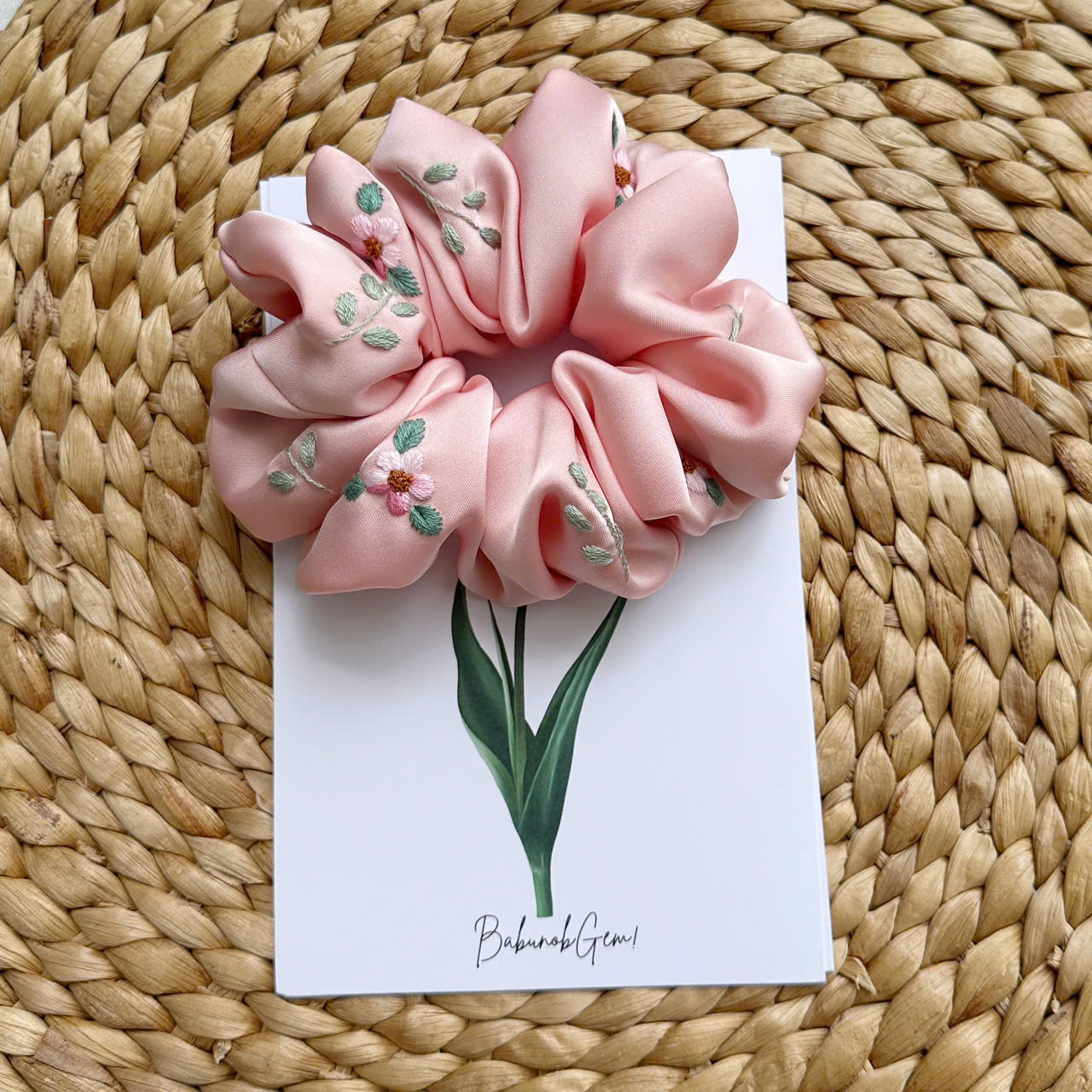
If tight elastic bands leave ridge marks in your overnight curls, a wider fabric tie may be worth trying. Our Wildflower Silk Scrunchie is hand-embroidered with wildflowers and comes in 6 colors.
How to Use Hair Ties for Curls: A Step-by-Step Overnight Guide
To set heatless curls overnight, wrap slightly damp hair evenly around your chosen curling tool and secure the ends with soft fabric ties. Folding the hair tips inward before sliding on the tie can help keep the ends smooth and free from bent creases.
Heatless curls depend on the right dampness, even sectioning and good placement of the ties. Whether you are using a foam ribbon, a bathrobe belt or long athletic socks, securing the ends well helps keep the wrap from uncoiling while you sleep.
Step 1: Prep Hair Moisture and Dampness Balance
Starting with the right moisture level matters. Hair should not be soaking wet when wrapped for overnight styling; very wet hair trapped inside a wrap may not dry completely overnight, which can leave waves collapsed and limp. Instead, aim for hair that is only slightly damp.
If you wash your hair before bed, rough-dry with a soft microfiber towel or air-dry until strands feel just cool and slightly damp to the touch. If starting with dry hair, lightly mist the mid-lengths and ends with clean water or an alcohol-free curl refresher spray. If your ends are dry, work a pea-sized amount of lightweight styling cream through them before wrapping.
Step 2: Section and Select Your Wrapping Method
Divide your hair into two symmetrical sections with a clean center part from your forehead down to the nape of your neck. For extra crown volume, some prefer a single “unicorn” placement where the curling rod sits centered from front to back over the head. Place your curling ribbon or rod across the top of your head, securing it temporarily at the crown with a claw clip.
Begin wrapping from the front hairline, picking up small one-inch to two-inch subsections of hair. Direct each strand over the rod, pulling it backward and around, gradually incorporating more hair with each turn in a fashion similar to a French braid. Keep the tension steady and moderate so the curl forms evenly against the cylinder. If you also braid your hair, you can read our guide to scrunchie for braids.
Step 3: Anchor the Ends With a Wide Tie
Once you reach the final two inches of hair near your shoulders, gather the remaining ends flush against the curling rod. Avoid wrapping the very tips tightly around the narrow tip of the tool, as this can create fishhooks, which are hair ends that bend sharply outward.
Take one of your chosen hair ties for curls and loop it over both the hair ends and the curling tool. Double the tie over once if necessary for a firmer hold, but avoid pulling it taut. The fabric tie should sit directly over the tail end, holding the hair tips against the rod without pinching them into a rigid fold.
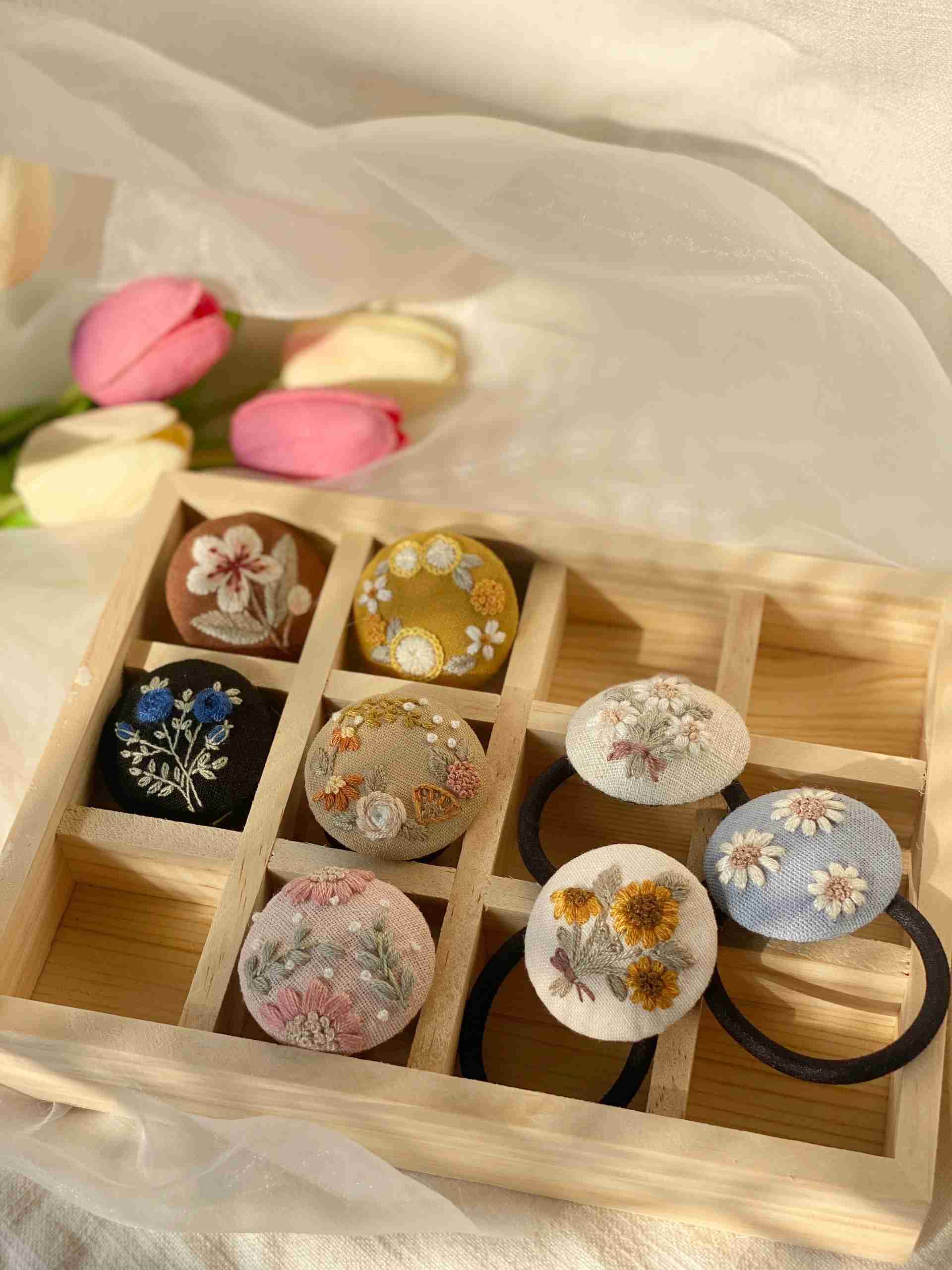
Setting curls in several sections takes a few ties. US shipping is $7 for the first item and $1 for each extra item, so adding a few pieces to one order is simple.
Step 4: Position Ties for Sleep Comfort and Reduced Friction
How you arrange your wraps can affect how comfortably you sleep and whether the ties get tugged loose during restless nights. If you sleep on your back, cross the two wrapped tails behind your neck and bring them up over your shoulders, or secure them gently across the crown of your head like a halo.
Side sleepers should ensure the secured ends point slightly backward behind the shoulders rather than resting flat against the cheek or ear. A smooth silk or satin pillowcase may reduce friction against the fabric scrunchies, which can help them shift less as you change position during the night.
Step 5: Morning Unraveling and Setting Routine
In the morning, check that your hair feels completely dry before touching the ties. If it still feels cool or damp, run a hair dryer on a low, warm setting over the wrap for a short time, then use a cool setting to help set the shape. In the morning, you can turn loose curls into a curly natural bun for an easy finish.
Carefully slide the hair ties downward off the curling rod rather than yanking them outward. Unclip the top anchor and gently lift the curling ribbon straight upward, allowing the spirals to release naturally around your shoulders. Avoid immediately brushing through the tight coils; let them rest for a few minutes to cool and settle, then rake through softly with your fingers or a wide-tooth comb. After you unwrap your curls, try this ponytail and hair down style to show them off.
Studio Experience: Practical Tips for Overnight Curl Retention
Match the tie’s texture to your hair, keep tension at the roots low, and fold the ends in before you tie them. Small changes like these can help your curls hold their shape without pulling on your scalp.
In our studio, we work every day with natural linen, embroidery thread and hair accessories of all kinds. Here are four tips we often share with women who set their curls without heat. Once your curls are set, you can also learn the beaver tail braid for a decorative finish.
The inward cuff-fold for blunt hair ends: Blunt-cut ends can slip out of scrunchies or splay into broom-like tips. Before applying your hair tie, fold the last inch of hair upward against the curling ribbon, forming a smooth U-bend rather than letting ends hang straight. Slip your scrunchie directly over this folded loop. Tucking the tips inside the fold can also keep them from rubbing directly against your nightclothes.
Pairing linen grip with silk smoothness: Fine, silky hair can slip out of silk wraps during sleep, while coarse hair can snag on rough synthetics. If your wraps keep unraveling overnight, try a linen scrunchie at the ends, since linen has a slightly textured weave that can add a little grip. A silk bonnet or wrap over the top can help cut down on friction at the crown.
The pineapple refresh technique for second-day curls: Preserving heatless curls across multiple days does not require re-wrapping your entire head every evening. Gather your remaining waves loosely at the very top of your crown in a classic pineapple style. Loop a wide scrunchie around the base once, and avoid double-twisting it tightly. This lifts your curls away from the pillow, which can reduce friction and root dents. For a relaxed second-day look, these messy ponytail hairstyles are worth a try.
Keeping tension low at the roots: Waking up with a sore scalp often means a wrap was too tight. The American Academy of Dermatology notes that hair pulled back tightly over and over can cause traction alopecia, a type of hair loss. Keep your wraps and ties slightly slack near the roots, loosen or remove a wrap that makes your scalp sore, and see a dermatologist if you notice thinning. Curls also work in an easy updo, as this hair tie for a messy bun tutorial shows.
Common Mistakes When Securing Heatless Curls Overnight
Common overnight curling mistakes include wrapping hair while it is too wet and using thin elastics or fasteners with exposed metal. Changing these habits can help you avoid dents, crimps and breakage.
Small errors in your nightly routine can undo hours of curl setting. Knowing where tension and moisture go wrong makes it easier to adjust your technique.
Mistake: Using thin rubber elastics or fasteners with metal joins. Uncovered rubber bands can drag against drying hair, and tiny metal clasps can snag and snap strands during removal. Left on overnight, narrow fasteners can leave ridge lines at the curl ends that are hard to smooth out. The fix: Swap thin elastics for seamless fabric loops or wide scrunchies, and slide them off slowly in the morning.
Mistake: Wrapping hair while completely saturated with water. Rolling hair that is dripping wet traps moisture inside the coiled wrap. Because air does not circulate well through tightly bound hair, strands may still be damp in the morning, and the curl can collapse into limp frizz once you remove your ties. The fix: Let your hair dry until it is only slightly damp before wrapping. It should feel cool and slightly supple, but not wet enough to leave water marks on your styling ribbons.
Mistake: Double-twisting ties excessively close to the scalp. Over-tightening ties near the temple or root base to keep wraps from shifting puts strain on your scalp and can distort the wave pattern right at eye level, leaving flat, jagged roots rather than soft volume. The fix: Anchor your styling tool loosely at the crown with a broad claw clip, and keep your hair ties to the bottom third of the wrap. If you feel throbbing, tightness or a sore scalp once you are in bed, loosen or remove the wrap. If headaches or soreness continue after you take off a tight accessory, see a doctor.
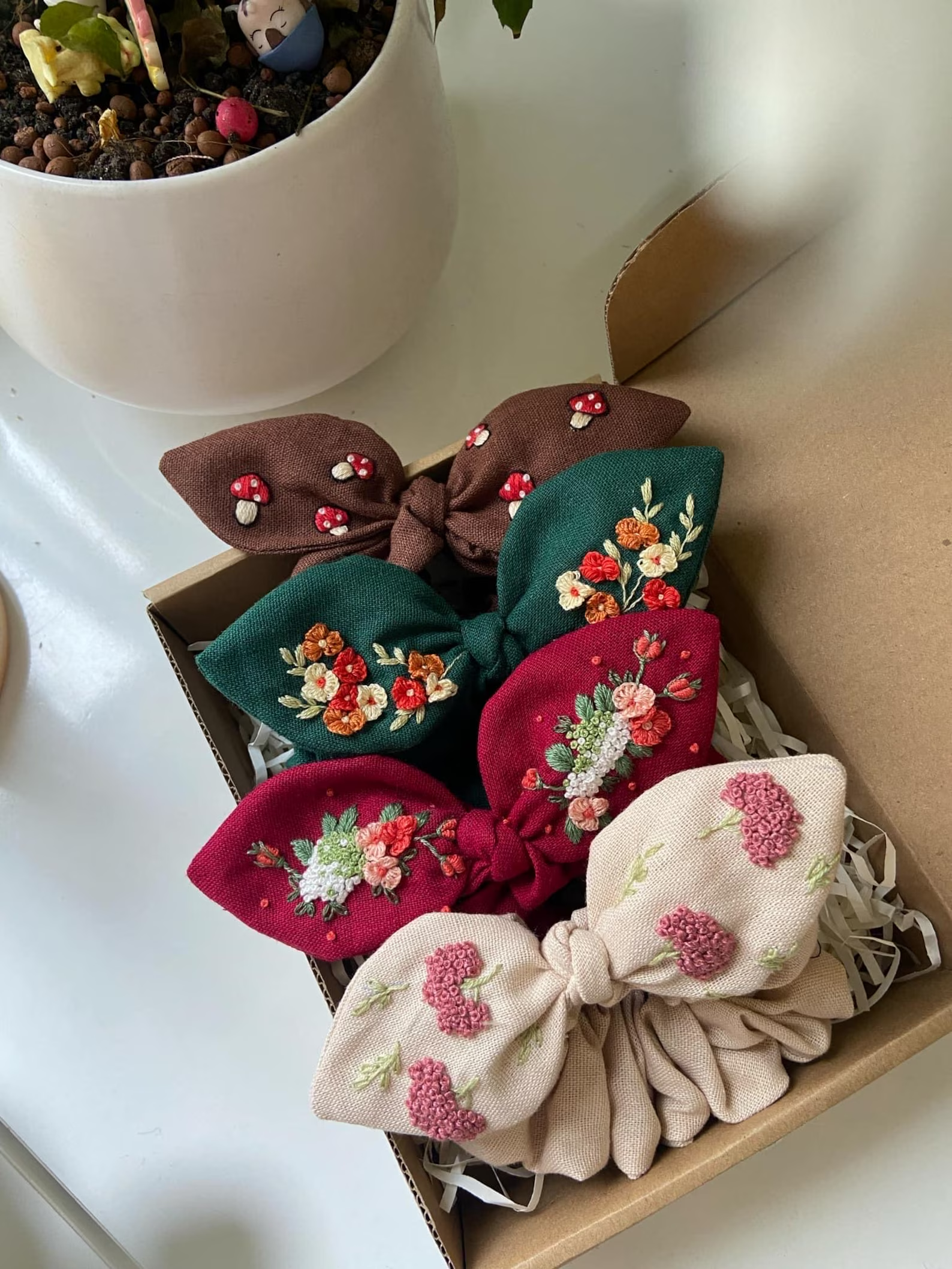
Each piece is embroidered by hand in small batches, so each one is slightly different. Orders are usually prepared in 1 to 3 business days and take an estimated 10 to 14 business days to reach the US, with tracking. You can return items within 30 days under our Return Policy.
Hair Ties for Curls FAQ
Can regular elastic hair ties ruin heatless curls?
They can. Thin rubber elastics press on a narrow strip of hair, and damp hair that dries under that pressure can hold a crease that stays visible for a while. A thin elastic can also drag across the strands when you slide it off, which may leave ends frizzy. A wide, fabric-covered scrunchie spreads the pressure over a larger area and is less likely to leave a line.
Is silk or satin better for securing curls overnight?
Both are smooth, low-friction fabrics. Silk is a natural fiber, while satin is a weave that is often made from polyester, which may feel less breathable and can build up static in dry air. Either can work for securing curls if you keep the wrap loose.
How tight should hair ties be when sleeping in heatless curl rods?
Hair ties should only be snug enough to prevent the hair wrap from unraveling during normal sleep movement. As a general rule, a scrunchie should wrap around the curling rod and hair ends one to two times at most. You should easily be able to slide a finger under the tie. If the tie feels constricting or squashes the hair ends completely flat, it is too tight.
Do spiral coil hair ties cause creasing in heatless waves?
Spiral coil ties spread pressure more evenly than thin rubber bands, so they are often less likely to leave deep lines. However, if you loop one several times over damp hair ends, the plastic ridges can leave an uneven wavy mark on the tips. If that happens, try a smooth fabric scrunchie instead.
How do I prevent my heatless curl ties from slipping off while I sleep?
If your ties slip off during the night, the fabric may be too slick for your hair, or your ends may be too fine or layered to hold. Try switching from slippery satin to a linen or textured cotton scrunchie, which can add a little grip. You can also tuck the hair ends upward into the center of the fold before securing, or wear a sleep bonnet over your wraps to help keep them in place.
Simple Overnight Routines with BabunobGem
Setting curls without heat takes a little patience and loose tension. When you choose hair ties for curls, look for a wide, smooth band and keep the wrap loose. At BabunobGem, we hand-embroider our accessories in small batches in our Ho Chi Minh City studio, mainly on natural linen. US shipping is $7 for the first item and $1 for each extra item.
New here? Get 10% off your first order
Join our list for new small-batch designs and restocks, or browse the collection now.
Note: Each piece is embroidered by hand, so stitches and colors can vary slightly from the photos. Fit and feel depend on head size, hair type and how you wear it. This guide is for general information only.