
How to Wear a Headband for Running
How to wear a headband for running involves positioning the fabric across your front hairline and anchoring it low under the occipital bone to manage sweat and stray strands. Created for active women seeking functional hair control, this complete guide from BabunobGem explores proper placement, running hairstyles, accessory layering, and fabric choices for different workouts.
Key highlights
- Position the front of the band across your hairline and the back below the occipital bone for an angled hold.
- Avoid pulling your hair into overly tight ponytails beneath the band to avoid putting extra strain on your scalp and hair roots.
- Layer your headband beneath sunglasses and wireless earbuds, which can help cushion plastic frames and ease pressure around the ears.
- Choose a fabric to suit your sweat level and workout intensity, such as technical knits for hard efforts or natural fibers for easy runs.
The Mechanics of Running Headbands: Fabrics, Grip, and Movement
A running headband tends to stay in place through a slight downward diagonal and fabric friction against the hair rather than horizontal tightness. Band width and fabric choice can affect how much it shifts when sweat reduces traction during your workout.
Running creates repetitive vertical oscillation with every footstrike. Each stride sends energy upward through the body, causing unsecured accessories to travel along the natural taper of the skull. Because the head narrows toward the neck, a band worn completely flat can tend to creep upward and off the crown. Headbands serve many purposes beyond running, as our article on what are headbands for explains.
Sweat introduces an additional physical variable. When perspiration gathers along the forehead, it creates a thin liquid barrier between your skin, hair cuticles, and the textile. Non-absorbent synthetic fabrics can hydroplane across this moisture layer if they lack sufficient surface texture. Understanding how textile structure and elastic tension interact helps you choose the right piece for your mileage.
Textile Fibers and Sweat Absorption
Different textile fibers handle running moisture and scalp contact in distinct ways. Synthetic knits such as polyester, nylon, and elastane blends pull liquid away from the skin surface through capillary action. These performance synthetics dry quickly during brisk runs, but dense synthetic fibers can sometimes feel slick against fine hair textures. You can see our embroidered running headband collection here for a soft, stretchy option.
Natural fibers such as cotton offer a different balance. They are absorbent and have a more textured feel than slick synthetics, which some runners prefer for easy jogs and warm outdoor walks, although absorbent fabrics can feel damp once they are soaked. If your forehead skin is sensitive, notice how a fabric feels as you warm up.
Band Width, Taper, and Pressure Distribution
The width of an athletic band determines how elastic pressure spreads across your temporal bones. Narrow elastic bands concentrate their pressure into a small strip, which some runners find uncomfortable on long runs. Wider bands spread that pressure over a larger area. If you are comparing widths, our overview of types of headbands shows other shapes too.
Tapered bands usually have a wider front section to gather bangs, transitioning to a narrower back section that sits in the natural dip at the neck. This design can help reduce bunching behind the ears when you tilt your head or look down at the running trail.
| Headband Style | Primary Material | Grip & Tension Profile | Typical Running Scenario |
|---|---|---|---|
| Wide Technical Band | Polyester and spandex knit | High elastic tension with smooth surface | High-intensity track intervals and tempo road runs |
| Tapered Athletic Band | Nylon and elastane blend | Contoured stretch with balanced hold | Half marathons and long endurance mileage |
| Embroidered Sports Headband | Stretchy band with botanical embroidery | Stretchy, one size fits most | Easy morning jogs, trail walking, and recovery miles |
| Silicone-Grip Strip Band | Polyurethane with silicone beading | Mechanical tackiness against hair cuticles | Windy outdoor runs and fast sprint sessions |
| Knotted Jersey Headband | Cotton and modal stretch jersey | Adjustable front drape with medium stretch | Park jogs, pre-run warmups, and post-run stretching |
| Thermal Ear-Warmer Band | Brushed thermal microfleece | Snug contour coverage around the ears | Freezing morning pavement runs and winter trails |
| Seamless Tubular Band | Microfiber circular knit | Low compression with multi-way stretch | Ultramarathon trail events and variable weather |
| Classic Terry Cloth Band | Knitted cotton terry loops | Thick volumetric absorption, low elasticity | Heavy perspiration sessions and indoor treadmill runs |
| Skinny Elastic Running Cord | Braided rubber and nylon thread | High localized tension on small contact area | Holding stubborn short bangs during short workouts |
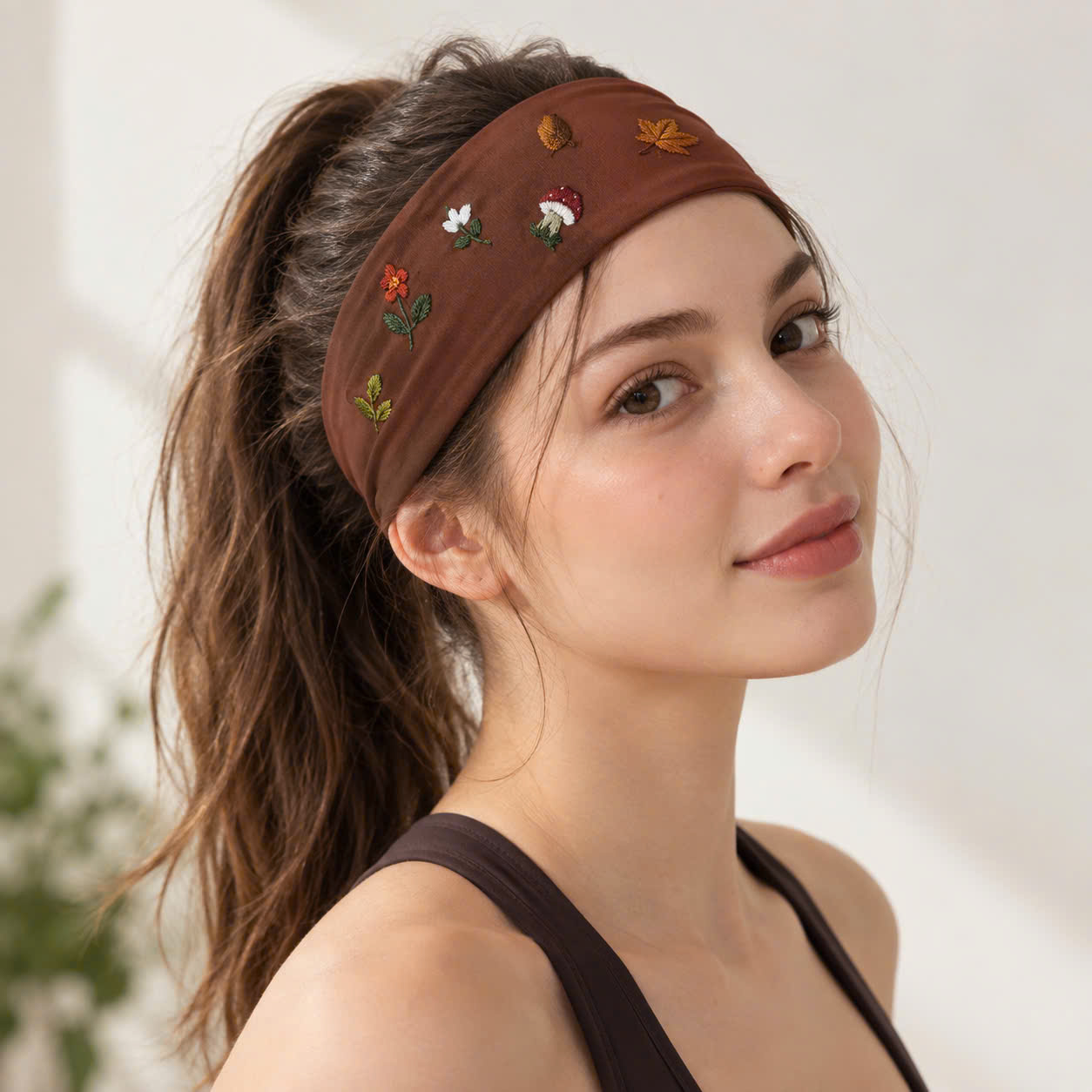
Autumn Woodland Sports Headband
Looking for a headband with a floral touch? Our sports headband features botanical embroidery on a stretchy band, with 4 designs and 6 band colors to choose from.
How to Wear a Headband for Running: Step-by-Step Placement Guide
Wear a running headband by placing the front edge directly over your hairline or slightly onto the upper forehead, then pulling the back band down below the occipital bone at your nape. This diagonal angle often helps the band stay in place as you move.
Mastering headband placement requires small adjustments before you take your first running stride. Slipping bands often happen because the accessory sits like a decorative halo. When placed flat across slick hair at the crown, a headband can drift backward as you bounce. Following a step-by-step sequence can help you find a balanced anchor point. For everyday wear off the trail, our guide on how to wear a headband covers more placements.
Step 1: Prep Hair and Disperse Scalp Tension
Begin with dry or slightly damp hair. Avoid applying slippery hair oils, leave-in silicone conditioners, or heavy serums along your hairline right before running, as these products coat the hair shaft and reduce textile traction. Brush hair backward following its natural growth pattern.
If you plan to tie your hair into a ponytail or bun, avoid pulling it back with excessive tightness at this stage. Pulling front hair taut creates an angled ramp that pushes elastic bands backward. Keep the root area relaxed so the fabric can grip individual strands naturally.
Step 2: Slide the Loop Down to Your Neck
Instead of pulling the headband downward over the top of your head, use the collar method. Pull the circular band down over your face and let it rest loosely around your neck like a necklace. Ensure the seam or elastic join sits squarely at the center back of your neck.
Putting the band on from the neck upward may help avoid dragging hair backward against its natural direction, and it can keep flyaways gathered when you lift the front edge into place.
Step 3: Pull the Front Band to Your Hairline
Take the front edge of the band with both hands and lift it upward across your face. Settle the bottom edge directly along your natural hairline, or approximately a half-inch below the hairline on the upper skin of your forehead.
This positioning often helps: placing the band slightly over the hairline lets the fabric touch both skin and hair roots, which adds friction and can keep the material from sliding down toward your eyebrows.
Step 4: Anchor the Back Under the Occipital Bone
Reach behind your head and slide the rear section of the headband downward toward the nape of your neck. Position the elastic band directly beneath the occipital ridge, the noticeable rounded bone shelf at the lower base of your skull.
By keeping the front section at brow level and the rear section tucked beneath the occipital ridge, the headband sits at a gentle diagonal. The occipital ridge can act as a natural stopping point that helps keep the back from riding up while you run.
Step 5: Integrate Earbuds, Sunglasses, and Hats
If you run with accessories, layer them thoughtfully to avoid pressure points behind your ears. Insert your wireless earbuds first, seating them firmly in the ear canal. Next, adjust the sides of your headband so they cover the top third of your ears, which helps keep earbuds in place.
Slide your running sunglasses on after the headband is set. Resting sunglasses arms on the outside of the headband fabric can cushion your temples against plastic stems. If your sunglasses slip when worn outside the fabric, slide the stems underneath the band, keeping the arms parallel to your temples.
Step 6: Test Movement with a Pre-Run Shake
Before heading out on your run, perform a ten-second dynamic movement test. Stand tall, jump lightly on both feet five times, and shake your head gently from side to side as if scanning for trail obstacles.
If the front band slides backward, pull the front hem slightly lower onto your forehead skin. If the rear elastic creeps upward, guide it further down toward the neck crease beneath the occipital bone. Fine-tuning placement while stationary saves you from making constant adjustments during your workout.
Running Hairstyles and Weather Layering Strategies
Match your headband placement to your hairstyle by anchoring high ponytails above the rear band and securing low braids directly beneath it. For changing weather, adjust fabric width to shield ears against cold gusts or expose the crown for summer heat dissipation.
Your hairstyle plays an active role in how an athletic headband behaves on the road. The placement of hair elastics, clips, and braided sections can either create helpful stopping points or push your headband out of alignment. Adapting your hair setup to your headwear can help balance the weight. For dressing up after your run, you can see our pearl headband here with a floral accent.
High Ponytails and Topknots
A high ponytail or messy topknot creates a natural barrier against backward band movement. Position your ponytail elastic high on the crown, well above the ears. When you put on your running headband, seat the rear band firmly beneath the ponytail base.
The ponytail base acts as an anchor shelf: the headband is less likely to slide upward because the gathered mass of hair blocks its path. This combination can work well for runners with long, heavy hair that tends to shift during hill repeats or speed sessions.
Low Nape Braid and Bun Placements
For runners who prefer low hairstyles to avoid bouncing, a French braid, Dutch braid, or low nape bun is an effective choice. When wearing a low bun, position your headband first, settling the rear elastic into the nape hollow, then gather your hair directly over the band.
Braiding hair along the scalp controls layers and shorter pieces that might otherwise escape the headband. The flat surface of a scalp braid provides a textured, stable foundation that can help reduce sideways shifting of smooth fabric bands.
Short Pixie Cuts and Bob Hairstyles
Running with short hair or a chin-length bob presents unique challenges because there is no ponytail anchor to stop band travel. For short styles, rely entirely on the diagonal angle between the upper brow and the occipital bone.
Choose a soft, stretchy headband wide enough to cover loose bangs and cowlicks without flattening your hair. If side fringe pieces slip free, tuck them gently under the band above the temple rather than pulling them backward with tight bobby pins. You can also see our black headband here, a soft and stretchy floral-embroidered piece for casual days.
Summer Heat vs Cold Wind Adaptations
In hot and humid weather, many runners prefer to keep the scalp ventilated. Wear your headband across the forehead if sweat tends to drip into your eyes, but leave the crown of your head open so heat can escape.
During cold fall and winter runs, pull a wider or thermal headband down so it covers both ears completely. This can shield your ears from chilly headwinds without covering the top of your head, which some runners find gives a comfortable balance on long runs.
Running Caps and Visor Combinations
Pairing a headband with a running hat or sun visor can help with glare and sweat. Slip your headband into place first across the brow. Next, place your running cap or visor over the head, allowing the front brim to rest just above the headband hem.
This layering can keep the hard plastic band of a visor or the inner band of a cap from rubbing directly against your forehead.
Studio Tips for Active Wear and Hair Comfort
Gentle care for hand-embroidered pieces and relaxed hair tension are two simple habits to try. Small adjustments to band tension, ear placement, and cleaning routines can make a difference.
Working with hair accessories in our studio has shown us that small details matter during movement. Whether you wear simple athletic bands or detailed embroidered pieces, a few practical habits can be kind to both the fabric and your hair.
A Gentle Diagonal Often Helps: Many runners find that a headband worn flat like a crown tends to slide upward along the skull’s taper. Try a slight angle instead, running from the brow down toward the nape under your occipital bone.
Tension Relief for Delicate Follicles: When pulling your hair into a ponytail to wear with a band, leave a little slack around the temples. Constant pulling from both a tight hair tie and a snug band can strain roots. Hair pulled back tightly over and over can cause traction alopecia, so easing the tension is a simple habit to try. If a band feels uncomfortable, our tips on how to stop headbands from hurting are worth a read.
Spot Cleaning Hand-Embroidered Athletic Pieces: After sweaty runs, avoid throwing handcrafted pieces into vigorous washing cycles. We recommend wiping the band gently with a soft damp cloth to remove sweat salts and dirt, then laying it flat to air dry away from direct heat. After washing, you can keep your bands tidy with our guide on how to store headbands.
Earbud and Eyewear Alignment: If your ears feel sore during long runs, place your headband over your ears first, then slip your sunglasses arms on the outside of the fabric. This layer of textile can cushion the sunglass stems against your head and ease pressure behind the ears. If soreness continues, take the accessories off and see a doctor.
Common Running Headband Mistakes and How to Avoid Them
Common headband issues often come from placing the band too far back on the crown, tying hair too tightly underneath, or choosing rigid materials. Adjusting these can reduce shifting and temple pressure during a run.
When an accessory fails during a workout, runners often assume their head shape is incompatible with headbands. In reality, small adjustments to placement, tension, and material choice can ease many common complaints.
Mistake: Placing the band too far back on top of your head. When you position the headband entirely behind the front hairline across the slick crown, it lacks a physical stop. As your head moves, hair strands act like ball bearings, causing the band to roll backward and pop off. The fix: Bring the front edge down so it rests across your hairline or slightly onto the upper forehead skin.
Mistake: Pulling hair too tightly beneath the band. Pulling hair taut before sliding a headband into place adds tension at the temples. Hair pulled back tightly over and over can cause traction alopecia, a type of hair loss, as noted by the American Academy of Dermatology. The fix: Loosen the crown hair slightly, allowing soft natural drape around the temples before positioning the band. If your scalp feels sore or you notice thinning, take the band off and see a doctor or dermatologist.
Mistake: Using rigid plastic or non-stretch accessories for running. Hard plastic headbands or stiff frames can press on the temples and do not flex as you move or breathe heavily. The fix: Choose a flexible, stretchy fabric band that moves with you.
How to Wear a Headband for Running FAQ
How do I stop my headband from slipping off while running?
Position the front edge of the band across your hairline or slightly onto your forehead, rather than on top of slick hair. Angle the back of the band downward so it rests underneath the occipital bone at the nape of your neck. This diagonal alignment uses your skull structure to hold the band in place.
Should a running headband cover your ears or sit behind them?
Covering the top of your ears can add a little extra hold and may help keep earbuds steady on regular runs. In cold weather, many runners pull the band fully over both ears for warmth. In hot weather, you can push the sides back behind your ears to let more heat escape.
Can wearing a tight headband for running cause headaches?
A band that feels too tight can be uncomfortable, and some people notice pressure or aching around the temples. If that happens, take the band off, try a wider, softer one, and check that your hair is not tied too tightly underneath. If headaches or pain continue, see a doctor.
How do I wear a running headband with bangs or short layers?
Slide the band down around your neck first, then draw it upward over your face. This sweeps bangs and front layers flat against your forehead. Settle the front edge over the roots of your bangs so the fabric traps flyaways smoothly without requiring tight metal clips.
How should I wash a running headband after a workout?
For hand-embroidered or delicate fabric bands, gently spot clean the fabric with a soft, damp cloth to lift sweat and salt deposits. Lay the headband flat on a clean towel to air dry away from direct heat and sunlight. Avoid machine washing or machine drying.
Finding Your Stride with BabunobGem
Finding the right rhythm on your runs starts with small details like placement and tension. At BabunobGem, our small Ho Chi Minh City studio creates botanical hand-embroidered hair accessories in small batches, made slowly to accompany your active days. Orders are usually prepared in 1–3 business days, and US delivery is estimated 10–14 business days, with tracking. Returns within 30 days under our Return Policy.
New here? Get 10% off your first order
Join our list for new small-batch designs and restocks, or browse the collection now.
Note: Each piece is embroidered by hand, so stitches and colors can vary slightly from the photos. Fit and feel depend on head size, hair type and how you wear it. This guide is for general information only.