Retro Headbands and 80s Style Ideas
Retro headbands bring iconic volume, playful textures, and effortless nostalgic charm back into modern daily wardrobes. In this guide from BabunobGem, we share simple, practical ways to style retro accents without costume excess or flat crowns, with tips on fit and fabric for busy workdays and weekends.
Key highlights
- How twentieth-century fashion eras inspire modern retro headbands, from mod-style bands to bold 80s sporty and preppy looks.
- A step-by-step method to balance hair volume, face-framing fringe, and placement angles for a natural 80s headband look.
- Material comparisons exploring natural woven linen, synthetic rib knits, velvet, and structured plastic alice bands.
- Practical tips on ear comfort, gentle tension management, spot cleaning embroidered linen, and going easy on your hair.
Defining the Retro Headband Aesthetic: Eras, Silhouettes, and Textures
A retro headband refers to any modern hair accessory designed with visual cues, shapes, and proportions from signature twentieth-century eras, particularly the graphic 1960s, bohemian 1970s, and voluminous 1980s. Wearing these bands today means pairing vintage silhouette cues with natural textiles such as linen for balanced everyday outfits.
Hair accessories often reflect broader fashion trends, shifting between sleek minimalism and dramatic personal expression. When people search for a headband retro design today, many are not after an identical historical reproduction. Instead, they often want the character, color palettes, and volume associated with past decades, reinterpreted for contemporary life. Hair accessories serve many roles, as our article on what are headbands for explains.
Understanding where these silhouettes come from can help you choose pieces that suit your face shape and personal style rather than looking like an uncoordinated costume. Our history article answers the question when were headbands invented, if you enjoy the backstory.
The Evolution: 1960s Mod, 1970s Folk, and 1980s Volume
Retro headbands often draw on three decades, each with a distinct look: Each era favored different shapes, and our guide to types of headbands compares them side by side.
- The 1960s Mod Wave: Clean, geometric, and structured. Wide, flat alice bands in patent leather, vinyl, or stiff cotton are often linked with this look. Worn pushed back behind neat bangs or framing sleek bouffant shapes, they are generally associated with crisp graphic lines and contrast.
- The 1970s Folk and Disco Transition: Fashion in this decade is often described as leaning toward natural, folk-inspired looks, with softer hairbands. Woven macramé ribbons, soft jersey wraps, and floral bandanas are commonly associated with this look, tied low across the forehead or threaded loosely through feathered waves. Disco-inspired styles added metallic sheens and draped turban wraps.
- The 1980s Explosion of Energy: The 1980s are often remembered for a bold mix of sporty, preppy, and romantic floral looks. Big, voluminous hair was common, and wider, padded bands helped balance teased crowns and perm curls.
Key 1980s Headband Silhouettes
To recreate an authentic 80s headband look, it helps to understand the diverse sub-styles that emerged throughout that vibrant decade:
- The Wide Aerobics Sweatband: Often linked with aerobics and dance fitness trends, wide terrycloth or rib-knit bands were worn across the upper forehead or right at the hairline. They pushed hair upward, showing off big curls and side ponytails.
- The Preppy Padded Alice Band: Associated with classic preppy style, the padded velvet or grosgrain band added height at the crown. It kept smooth, layered bobs tidy while creating a longer silhouette.
- The Scrunchie and Gathered Fabric Band: Fabric-wrapped bands with gathered ruffles bridged athletic convenience and playful accessorizing. These pieces added soft gathered texture to a look.
- The Romantic Country Folk Band: Romantic, cottage-inspired looks are often linked with the 1980s too, with floral prints and prairie-style dresses. Hand-embroidered wildflowers, natural linens, chintz calico prints, and soft botanical bands offered a gentle counterpoint to electric neon aerobics.
Material Matters: Natural Linen Versus Synthetic Spandex and Rigid Plastics
Material can influence how a retro headband rests on your head. Some vintage-style bands use synthetic polyester, acrylic blends, or hard molded plastics. These materials can create bold shapes, but some people find them scratchy or tight behind the ears.
Modern artisan interpretations often use natural fibers such as woven linen. Linen has subtle surface slubbing and a tactile matte finish that pairs with everyday denim, knit cardigans, and cotton blouses. A linen band on a soft, stretchy base can give some of the visual presence of an 80s fabric wrap.
| Style Category | Era Inspiration & Silhouette | Typical Materials | Modern Styling Approach |
|---|---|---|---|
| Wide Aerobic Sweatband | 1980s athletic forehead wrap with bold horizontal band | Terrycloth, rib knit, synthetic elastane | Casual loungewear, gym workouts, messy high buns |
| Classic Alice Band | 1960s slim structured arch placed behind crown | Molded plastic, satin casing, grosgrain ribbon | Office tailoring, center-part bobs, low ponytails |
| Padded Crown Band | Late 1980s high-profile padded band adding height | Velvet, padded batting, brocade fabric | Structured blazers, wool coats, formal occasions |
| Gathered Ruffle Band | 1980s gathered scrunchie-style ruched fabric | Chintz cotton, synthetic satin, washed poplin | Casual weekend denim, soft waves, half-up twists |
| Folk Floral Linen Band | 1970s–1980s romantic cottage revival with botanical art | Natural woven linen, cotton embroidery floss | Midi dresses, knit cardigans, relaxed textured braids |
| Wide Mod Headband | 1960s wide flat crown band worn behind full fringe | Stiff cotton twill, faux leather, vinyl | Graphic eye makeup, straight blowouts, A-line skirts |
| Folded Bandana Wrap | 1970s folk tied headband resting low on brow | Printed cotton calico, silk twill | Summer picnics, beach outings, loose bohemian waves |
| Turban Knot Band | 1970s disco twist with gathered center knot | Textured jersey, ribbed modal, lightweight lamé | Evening dinners, curly hair updos, wide-leg trousers |
| Slim Botanical Band | Vintage-inspired floral accent | Embroidered linen, soft stretchy band | Daily workwear, soft half-up hair, relaxed daytime looks |
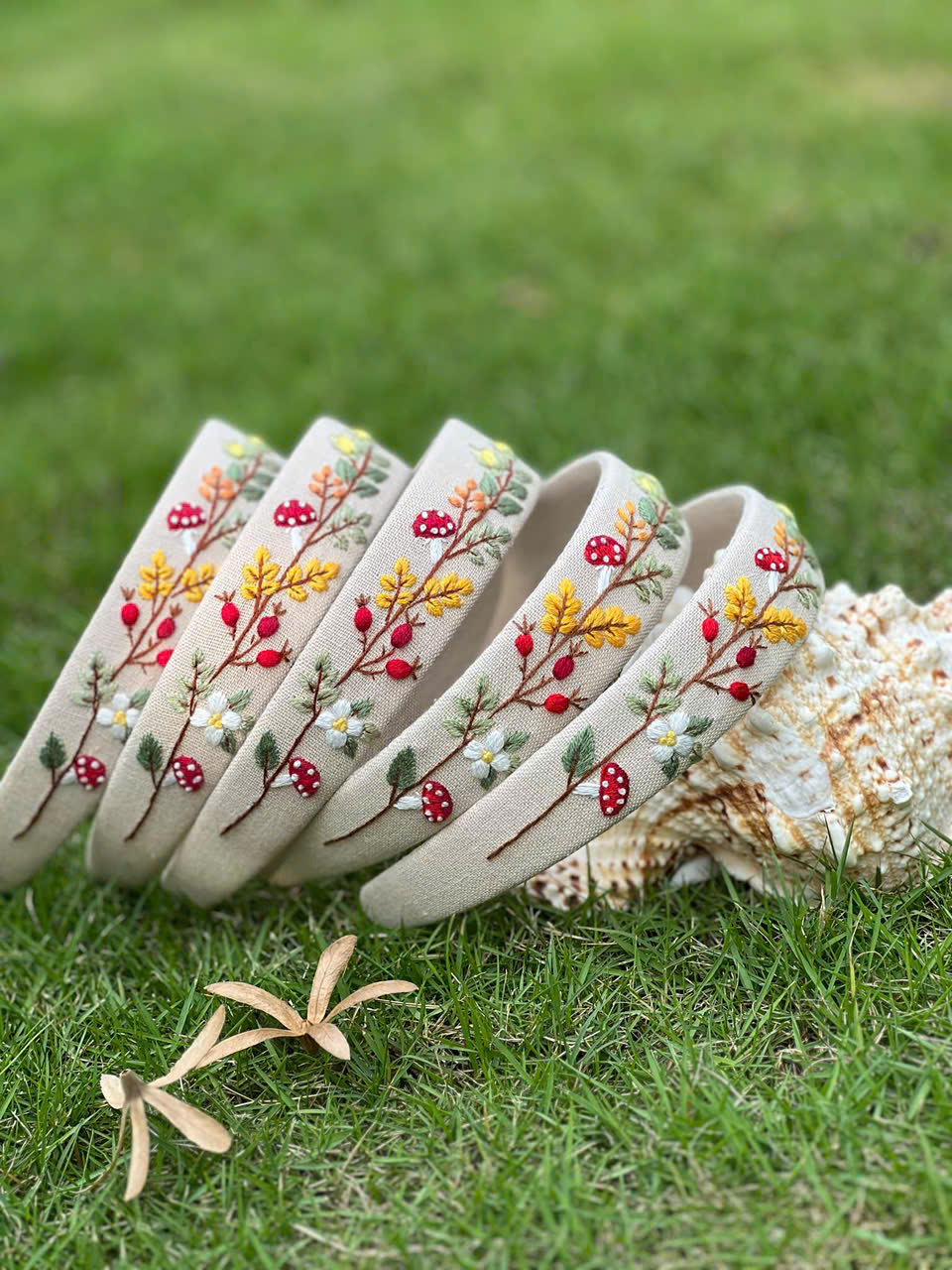
A single embroidered band is an easy way to try a retro look without costume shine. This design is hand-embroidered on natural linen, on a soft, stretchy band 1.2 in (3 cm) wide.
How to Style an 80s Headband Look: Step-by-Step Styling Guide
To style an authentic yet modern 80s headband look, start by adding soft crown texture to your hair, position a wide fabric band either across your hairline or an inch behind your fringe, and balance the nostalgic accessory with grounded, contemporary wardrobe staples.
The key to wearing vintage hair accessories in daily life is proportion. In many 1980s looks, headbands were meant to be seen, acting as deliberate visual anchors rather than hidden functional clips. By following these steps, you can capture some of that bold confidence while keeping your hairstyle natural and easy to wear for work or leisure. Our tutorial on how to wear a headband walks through more placement ideas for everyday outfits.
Step 1: Build Soft Volume and Texture Without Excessive Teasing
1980s-inspired styling often leans on body, lift, and movement. If your hair is pressed bone-straight, a wide retro headband can look stark or visually overpowering. Instead, prepare your hair by encouraging natural dimension:
- For wavy and curly hair: Apply a lightweight curl cream or foam, then diffuse or air-dry to preserve bounce and natural separation. Avoid smoothing creams that deflate crown volume.
- For straight and fine hair: Lightly mist a sea-salt spray or texturizing spray through mid-lengths and roots before rough blow-drying upside down. You can also sleep in loose, soft braids to achieve subtle, brushed-out waves.
- Gentle root lifting: Instead of harsh backcombing with a fine-toothed comb—which can snag and snap hair shafts—use your fingers to massage a dusting of texturizing powder directly into your crown roots. This can give vintage-style lift with less knotting.
Step 2: Choose Your Placement Angle: Forehead Wrap Versus Crown Arch
Placement defines whether your hairstyle reads as sporty retro, classic preppy, or romantic folk. Try both core placement angles to see which suits your forehead height and hairline:
- The Low Athletic Forehead Placement: Position the band directly across the upper edge of your forehead, right at the roots of your front hairline. This mimics the classic 1980s aerobic and dance look. It can pair nicely with high messy buns, loose curls, or side-swept bangs that peek out above the band.
- The Classic Crown Arch: Slide the band over your head and rest it approximately one to two inches behind your natural hairline. Gently push it forward a millimeter to allow hair at the crown to lift slightly behind the band. Let face-framing fringe, curtain bangs, or wispy baby hairs fall freely in front.
A band around 1.2 in (3 cm) wide gives a lighter take on the retro look than the widest 80s styles.
Step 3: Pair Your Headband Retro Style with Everyday Hairstyles
A retro headband can work with several hair arrangements. Consider these pairings:
- The Textured Half-Up Crown: Gather the top section of hair from your temples to the crown. Secure it loosely at the back with a small clip or soft tie, leaving lower layers cascading over your shoulders. Slide the headband in place just in front of the gathered section for instant retro dimension.
- The Relaxed Mid-Height Ponytail: Sweep textured hair into a casual ponytail resting midway between your crown and the nape of your neck. Pull a few soft tendrils loose around your temples and ears before setting the headband. The band frames your face while the ponytail keeps hair off your neck.
- The Romantic Loose Waves: Wear your hair down, parting it either in the center for a 1970s boho inflection or deeply to one side for an asymmetrical 1980s homage. Position your fabric headband to hold the sides back while the lengths fall freely.
- Short Bobs and Pixie Cuts: Short hair can gain dramatic vintage definition from a fabric band. Push the band behind your front fringe, allowing the textured layers at the top and back to brush outward naturally.
Step 4: Balance Nostalgic Accessories with Contemporary Outfits
To avoid looking like you are wearing a retro costume, pair vintage-inspired hair accessories with clean, modern garments. Let the headband act as a thoughtful accent rather than one piece of an entirely dated ensemble:
- Pair a colorful floral embroidered band with a neutral oversized cotton button-up, relaxed straight-leg denim, and leather loafers.
- If you wear an 80s-inspired power blazer with structured shoulders, opt for an understated headband in natural cream, green, or black linen rather than bright synthetic neon.
- Let textures harmonize: woven linen accessories can look lovely alongside chunky cable-knit sweaters, cotton sundresses, and washed canvas jackets.
Step 5: Keep Fabric Headbands in Place Without Too Much Tension
A common problem with retro bands can be slippage, particularly on silky or freshly washed hair. Instead of buying smaller, tighter bands that exert excessive pressure on your temples, secure fabric bands mechanically:
- Position the stretchy base of the band underneath the occipital bone at the lower nape of your neck, rather than letting it ride high on the back of your head.
- If the band tends to shift forward during movement, anchor it using two standard bobby pins placed behind your ears. Slide each pin in across the lower edge of the band, catching a small section of hair underneath.
- Make sure the band is snug enough to stay in place without pinching your temples or dragging hair roots backward.
Studio Tips for Styling and Caring for Retro Fabric Bands
Caring for fabric retro headbands involves avoiding over-stretching, keeping embroidery looking fresh through gentle spot cleaning, and positioning the band so it does not press behind the ears.
In our studio, we hand-embroider botanical motifs onto natural linen bands. These are general tips for wearing and caring for handmade fabric accessories. You can see our embroidered headband styles here whenever you want a handmade retro accent.
A Quick Check for Ear and Temple Comfort: When putting on any fabric headband, avoid pulling the lower sides tight against the back of your ears, where the skin can be sensitive. Try leaving a little room between your earlobe and the band edge. If a band feels sore or tight, take it off, and see a doctor or dermatologist if it continues.
Store Fabric Bands Flat: Hanging headbands on narrow hooks or stretching them over a wide display head can pull them out of shape over time. To help keep their shape, store your fabric bands flat inside a shallow vanity drawer, or nest them loosely together inside a cotton dust pouch away from direct sunlight. For more tidy storage ideas, read how to store headbands so they keep their shape.
Spot Clean Embroidered Linen Gently: Hand-embroidered linen accessories should never be tossed into a washing machine or left submerged in hot water. Machine washing or soaking can distort delicate needlework. If hair products or foundation transfer to the fabric edges, spot clean with a clean, lint-free cloth dampened with cool water. Dab the spot gently without scrubbing, and lay the piece flat on a dry towel to air dry.
Curate Cohesive Texture Sets: If you enjoy layering hair accessories, coordinate materials instead of matching loud patterns exactly. Pair a floral linen retro headband with a neutral linen scrunchie around your wrist, or secure stray side bangs with an embroidered linen-covered snap clip in a complementary tone. This creates an artistic, collected aesthetic that feels intentional.
Common Mistakes When Styling Retro Headbands and How to Fix Them
Frequent retro headband mistakes include wearing rigid plastic arches that press behind the ears or at the temples, pulling hair excessively tight at the roots, and clashing too many loud vintage elements within a single outfit.
Vintage accessories should bring joy, nostalgia, and ease to your styling routine. If an accessory gives you a headache or tugs at your hair, take it off and rest your scalp. Avoiding these three common mistakes can help keep your hair comfortable and your outfits balanced.
Mistake: Wearing Rigid Plastic Bands That Pinch at the Temples: Some retro-style bands use hard, inflexible plastic with teeth that can press at the temples or behind the ears, and a band that is too tight can lead to headaches. If you ever experience headaches or scalp tenderness while wearing hair accessories, take the band off and let your scalp rest, and see a doctor or dermatologist if it continues. For daily wear, consider a flexible fabric band on a soft, stretchy base.
Mistake: Pulling Hairlines Too Taut for Aerobic-Style Looks: Recreating sleek 1980s workout looks by scraping hair tightly backward under a tight band can put strain on the hairline. According to the American Academy of Dermatology, hair pulled back tightly over and over can cause traction alopecia. To go easy on your hair, let your front hairline stay relaxed, let soft tendrils frame your face, and choose a headband that does not pull your roots backward. If your scalp feels sore, take the band off, and see a doctor or dermatologist if it continues.
Mistake: Overloading an Outfit with Competing Retro Details: Wearing an 80s headband look alongside neon leg warmers, heavy shoulder pads, oversized metallic jewelry, and heavy crimped hair can turn an everyday ensemble into a costume party outfit. The fix is thoughtful contrast. Choose one nostalgic focal point—such as a hand-embroidered botanical headband—and pair it with understated, modern garments like classic high-rise trousers, a clean white tee, or a cozy wool sweater. Let your handmade accessory provide the vintage warmth while the rest of your outfit remains effortless. You can see our black headband with floral embroidery here, a simple accent for retro outfits.
Retro Headbands FAQ
What defines an authentic 80s headband look?
An authentic 80s headband look is defined by visible accessory width, hair volume, and confident placement. Rather than blending into the hair, 1980s-style headbands are usually worn as a main style accent. Signature elements include wide elasticized fabric wraps, padded preppy arches, athletic sweatband placement across the brow, and voluminous hair textures such as soft waves, bouncy curls, or elevated crown layers framed by fringe.
How can I keep a fabric retro headband from slipping backward?
Fabric headbands slip backward when hair is overly silky or when the band sits too high on the back of the head. To help keep it in place, position the stretchy base low at the nape of your neck, beneath your occipital bone. Add light texture to your hair using a sea-salt spray or dry texturizing powder before wearing. For slippery hair, insert two bobby pins in an upward X-shape across the lower edge of the band behind your ears.
Can I style a retro headband if I have short hair or curtain bangs?
Yes. Short cuts like pixies, bobs, and lobs can look great with retro headbands because the band adds separation and visual interest. When styling with curtain bangs or a blunt fringe, place the headband approximately one inch behind your fringe line. Allow your bangs to sweep across your brow while the band controls the crown layers behind them.
What is the difference between genuine vintage and a retro headband?
In fashion terminology, “vintage” usually refers to an authentic item made in an earlier era, often with original tags, construction methods, and materials from that period. “Retro” usually refers to newly made pieces designed to echo the silhouettes, motifs, and charm of past decades.
Why choose a natural linen retro headband over synthetic athletic materials?
Synthetic rib-knit and polyester bands are common in sporty retro styles. For everyday wear, some people prefer natural linen for its textured weave and subtle artisanal slubbing. Paired with delicate hand embroidery, a linen band gives a vintage-inspired look that works with casual and dressier outfits.
Bringing Vintage Charm to Modern Hair with BabunobGem
Rediscovering retro headbands brings warm nostalgia and effortless personality to everyday hair routines. At BabunobGem, our small studio in Ho Chi Minh City embroiders each headband slowly on natural linen, celebrating botanical charm in small batches. Most items are under $25. Orders are usually prepared in 1–3 business days. US delivery is estimated at 10–14 business days, with tracking. Returns within 30 days under our Return Policy. Have fun mixing eras and making the look your own.
New here? Get 10% off your first order
Join our list for new small-batch designs and restocks, or browse the collection now.
Note: Each piece is embroidered by hand, so stitches and colors can vary slightly from the photos. Fit and feel depend on head size, hair type and how you wear it. This guide is for general information only.