Guide to Hair Clips for Long Hair
Hair clips for long hair need enough size and grip to hold the weight of a full updo, and the right pick depends on how thick and long your hair is. This guide helps women with long hair choose clip sizes and styles, with practical tips from our BabunobGem embroidery studio.
Key highlights
- Why clip size, teeth spacing, and hinge strength matter for heavy hair.
- How to choose between claw clips, oval barrettes, and snap clips based on your texture.
- Step-by-step styling techniques for fine or thick long hair, with less tension on your scalp.
- Common mistakes that lead to broken accessories and how to avoid them.
Understanding hair clips for long hair
Hair clips for long hair usually need wider teeth spacing, stronger hinges, and larger capacities to hold the extra weight and volume. Choosing the right accessory involves matching the clip’s mechanism and material to your specific hair texture and daily styling needs.
Long hair carries significant weight and volume. When gathered into a twist or a bun, it creates a dense mass that standard, mass-produced clips often struggle to contain. The hinge of a claw clip takes the brunt of this pressure. If the cavity inside the clip is too small, the hair pushes outward, stressing the plastic and the metal spring until the accessory eventually breaks. Finding the best hair clips for long hair means looking for designs that offer enough depth to encapsulate your strands comfortably.
The spacing of the teeth is another crucial factor. Wide-spaced teeth usually work better for thick, wavy long hair because they let the strands settle deep into the clip, spreading the bulk evenly. Conversely, narrow, closely spaced teeth are better suited to fine long hair, as they give more points of contact to grip smooth strands and help keep the accessory from sliding down your head.
Materials also play a significant role in how an accessory functions. Hard, brittle plastics can snag or snap easily under pressure. Accessories covered in fabric, such as natural linen, have a softer look than bare plastic or metal. At BabunobGem, we work primarily with natural linen, embroidering botanical patterns by hand to create pieces that feel as thoughtful as they look.
Beyond aesthetics and durability, there is a health aspect to consider. The weight of long hair combined with a tight clip can cause discomfort. Pulling the hair taut at the roots day after day is worth avoiding. According to the American Academy of Dermatology, wearing hair pulled back tightly over and over can cause a type of hair loss called traction alopecia. If you feel a headache coming on or your scalp aches, take the accessory out and let your hair down. If symptoms persist, consult a healthcare professional. For a closer look at everyday wear, read our answer to are claw clips bad for your hair.
| Accessory Type | Ideal Hair Texture | Recommended Size | Styling Purpose |
|---|---|---|---|
| Large Claw Clip | Medium to thick | Larger, with a deep cavity | Full French twists and updos |
| Oval Barrette | Fine to medium | Around 3.5 x 1.5 inches | Half-up styles and securing layers |
| Snap Clip | Many textures | Around 7 cm | Pinning back bangs or face-framing pieces |
| Flat Claw Clip | Medium to thick | Larger, with a flat profile | Lying down, yoga, or low-profile twists |
| Linen Scrunchie | Many textures | Varies by design | Ponytails and loose buns |
| Jumbo Bobby Pin | Thick and heavy | Jumbo, longer than a standard pin | Anchoring heavy chignons and buns |
| Banana Clip | Curly or wavy | Long, curved shape | Cascading ponytails that distribute weight |
| French Hair Pin | Medium to thick | Medium to long | Securing twisted buns without hinges |
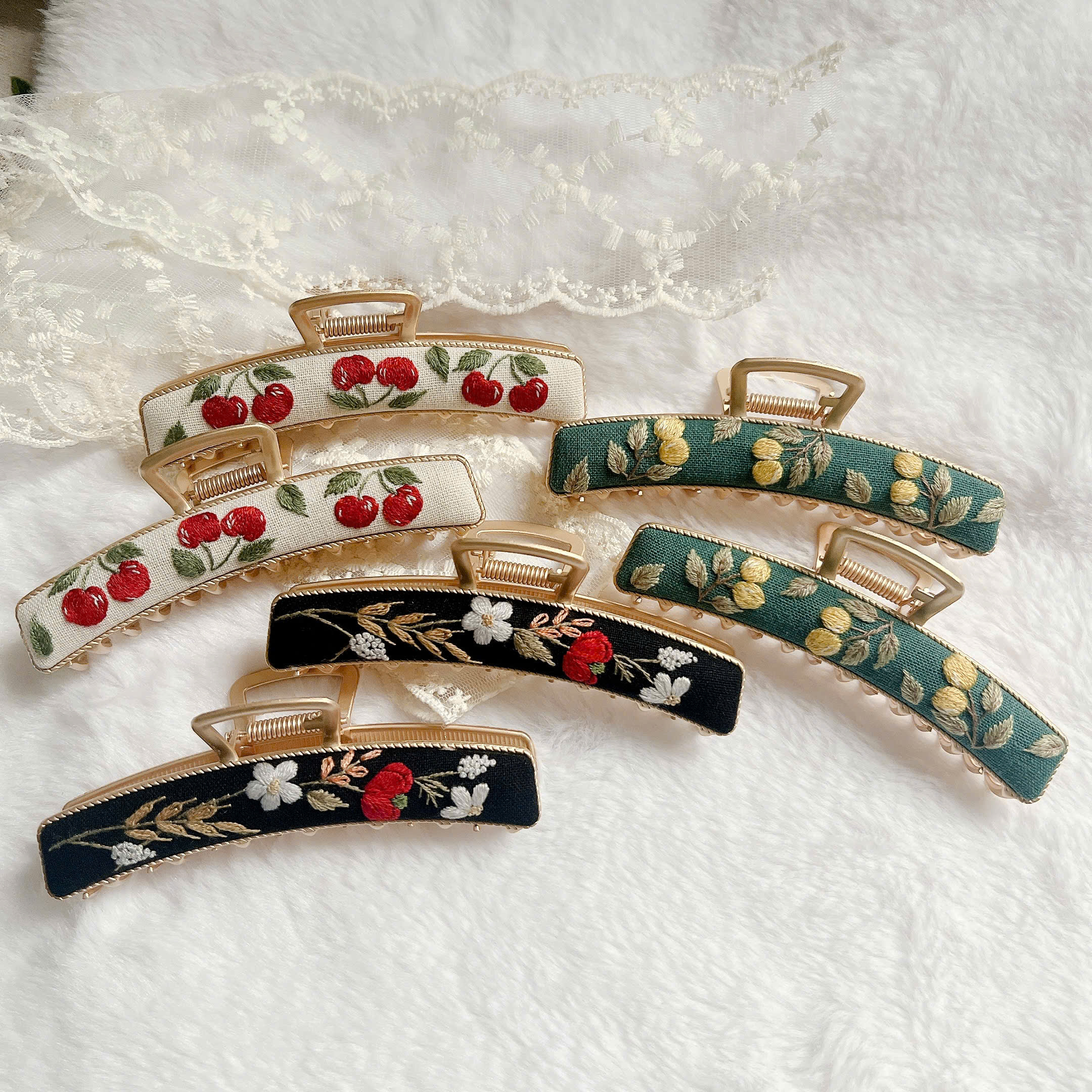
If plain plastic clips feel generic, this hand-embroidered claw clip adds floral stitching to your look. It suits half-up styles and fine hair.
How to choose and style clips for long hair
To choose and style clips for long hair, first assess your hair’s density to determine the necessary clip size, then select a mechanism that matches your desired updo, and finally prepare your hair with a gentle twist to distribute the weight evenly.
Step 1: Assess your hair length and density
Long hair is not a single category. You must evaluate whether your strands are fine, medium, or thick before selecting an accessory. Fine long hair can easily slip out of heavy, oversized accessories, making a medium-sized claw clip or a linen-covered oval barrette a more practical choice. Thick long hair, on the other hand, demands maximum capacity. You need a clip with a deep inner cavity and a robust spring to encapsulate the sheer volume of hair. Understanding your density helps you avoid buying accessories that either slide down your head or snap under pressure. For fuller hair, you can see our embroidered large claw clip here to compare size and depth.
Step 2: Select the appropriate clip mechanism
Different styles require different tools. If your goal is to get all your hair off your neck for a busy afternoon, a large claw clip is a quick, simple option. The interlocking teeth grip the twisted hair. If you prefer wearing your hair down but want to keep it out of your face, an oval barrette works well for a half-up style. For securing small, stubborn layers or growing-out bangs, a set of snap clips, each about 7 cm, lets you pin small sections without overwhelming your look. If you want to see more shapes in action, browse our guide to hair claw clip styles.
Step 3: Choose the right materials
The material of your hair accessory impacts both its longevity and how it interacts with your strands. Hard, brittle plastics can snag or break easily. Accessories covered in fabric, such as natural linen, have a softer look than bare plastic or metal. In our studio, we wrap oval barrettes and snap clips in linen and embroider them by hand with flowers, including roses on the barrettes. This adds a cottagecore look to a practical accessory. If you enjoy barrettes, these barrette hairstyles offer simple ways to wear them with long hair.
Step 4: Prepare the hair with a balanced twist
Proper styling technique is just as important as the clip itself. Gathering your hair too tightly concentrates all the weight on a small section of your scalp, which can lead to discomfort. When you clip long hair, ensure the tension is even. Gather your hair loosely at the nape of your neck. Twist the length of your hair upward, keeping the tension consistent. Folding the twisted hair back down against your head creates a solid, balanced base for the clip to anchor into, distributing the weight across a larger area.
Step 5: Position and secure the accessory
Once your hair is twisted into place, open the clip fully. Press the teeth against your scalp on one side of the twist, then scoop the hair into the cavity as you close the clip over the other side. The teeth should interlock smoothly without you having to force the hinge shut. If the clip feels strained or cannot close completely, you are trying to hold too much hair. In this case, switch to a larger clip or change your style to a half-up look to reduce the volume.
Building a small collection of handmade accessories? US shipping is $7 for the first item and $1 for each extra item.
Studio tips for wearing hair accessories for long hair
Our studio recommends the double-clip method for very heavy hair, a little texture on freshly washed strands so clips grip better, and spot cleaning embroidered linen accessories with a damp cloth.
Use the double-clip method for heavy hair: If a single large claw clip struggles to hold your waist-length, thick hair, try dividing the work. Twist the bottom half of your hair and secure it with one clip, then twist the top half and secure it with a second, coordinating clip. This distributes the weight evenly and creates an intricate, layered look without putting undue stress on a single accessory.
Add texture for a better grip: Freshly washed long hair is often very smooth, making it difficult for any clip to maintain a grip. We recommend applying a light dusting of dry shampoo or a texturizing spray to the mid-lengths and roots before styling. This gives the teeth of a claw clip or the clasp of a barrette something to hold onto, which can help keep the accessory from sliding down your head as the day goes on.
Mix and match accessory types: You do not have to rely on just one type of clip. A practical tip we often share is to use a sturdy, plain hair tie or a linen scrunchie to secure a ponytail or bun first. Then, use an embroidered oval barrette or a decorative claw clip simply as an accent piece over the base. This gives your style a secure base while letting you show off your favorite handmade pieces without relying on them for structural support. Learning hair clip names makes it easier to mix and match accessory types when you shop or describe what you want.
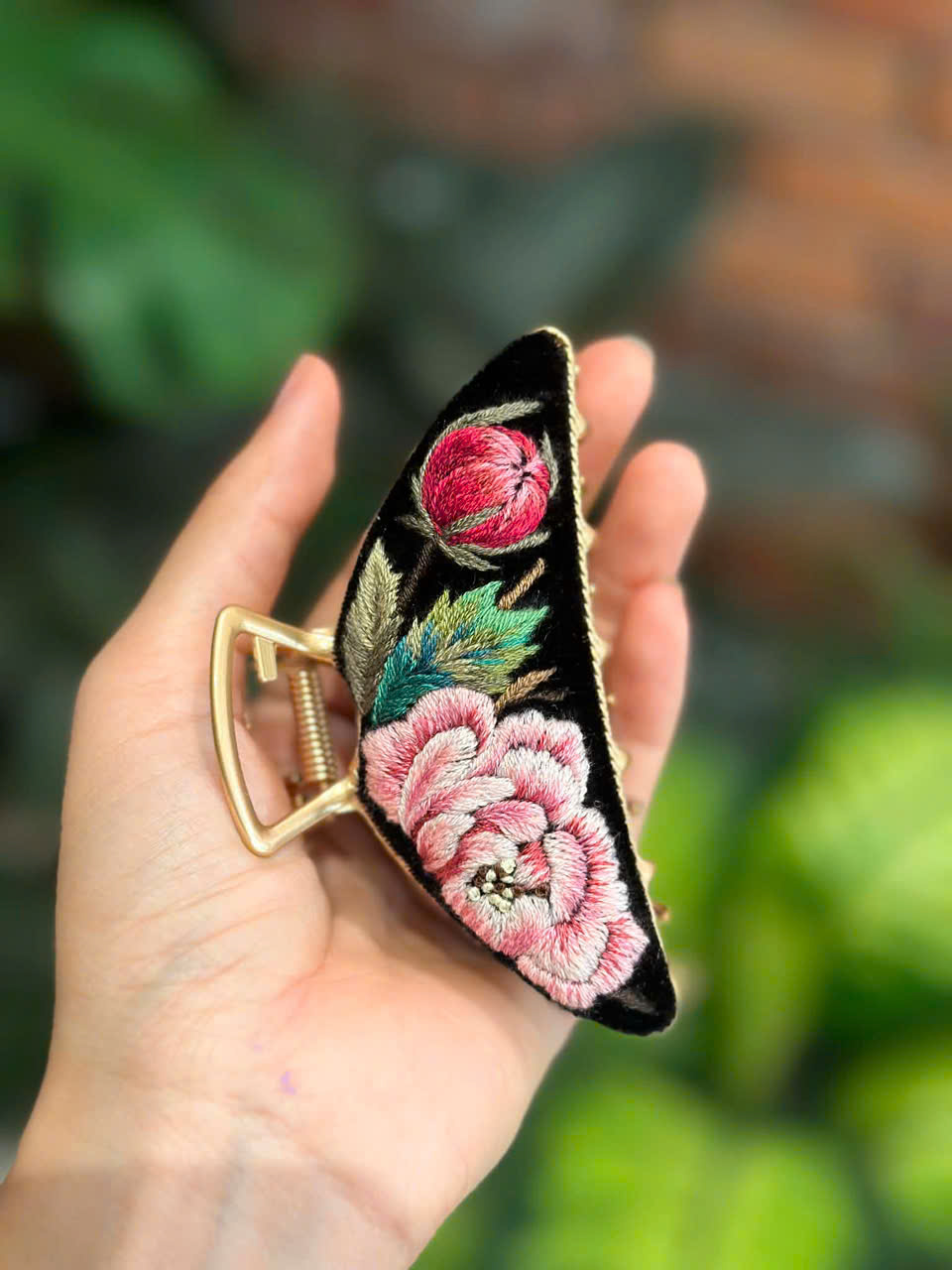
Care for your embroidered linen gently: Hand-embroidered accessories require a mindful approach to cleaning. Because each piece is stitched by hand, we do not recommend putting them in a washing machine. We advise spot cleaning the linen fabric with a soft, damp cloth. Gently dab any marks and leave the clip in a well-ventilated area to air dry completely before you wear it again. You can see our embroidered pink hair clips here, made by hand with soft botanical stitching.
Common mistakes with long hair clips for styling
Common mistakes include forcing too much hair into a small clip, pulling the hair too tightly at the roots, and storing handmade accessories improperly, all of which can lead to breakage or ruined clips.
Mistake: Forcing too much hair into a small clip. When you try to cram thick, long hair into a clip that lacks the necessary depth, the pressure pushes outward against the hinge. This is a common reason plastic and acrylic clips snap unexpectedly. The fix is to always check the capacity of the accessory. For full updos, choose a larger claw clip with a deep cavity that closes over your twist without forcing the hinge. If you only have a smaller clip on hand, opt for a half-up style instead of trying to secure all your hair at once. If your hair is shorter than expected, these claw clip hairstyles for short hair show how to scale the same ideas down.
Mistake: Pulling the hair too tight at the roots. Gathering long, heavy hair tightly against the scalp and clamping it down creates a lot of tension. Over the course of a day, this concentrated weight pulls on your roots and can lead to discomfort. The fix is to adopt a looser styling approach. Gather the hair gently, allowing a little slack at the roots. Let the clip support the weight of the twist rather than relying on the tension of your scalp.
Mistake: Improper storage of handmade items. Tossing linen-covered barrettes or hand-embroidered snap clips into a crowded drawer or the bottom of a heavy purse is a quick way to ruin them. The clasps can get bent, and the embroidery threads can snag on other objects. The fix is to store your accessories thoughtfully. Keep them flat in a dedicated box, or clip them onto a hanging ribbon in your closet to maintain their shape and protect the botanical details.
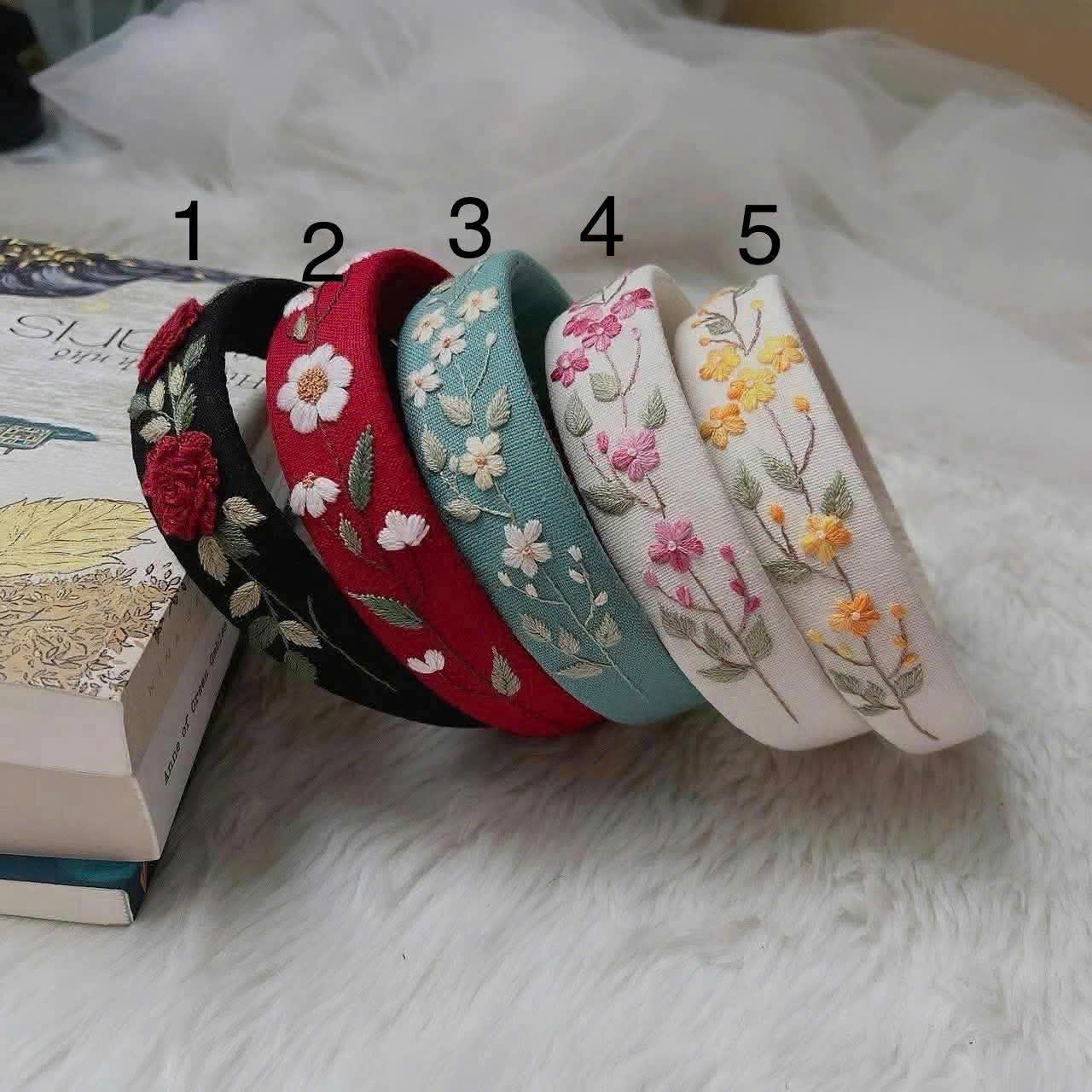
Wildflowers Embroidered Headband
Every piece is embroidered by hand in our studio, so each one is slightly different. Orders are usually prepared in 1 to 3 business days and ship to the US with tracking, and you can return items within 30 days under our Return Policy.
Hair clips for long hair FAQ
What size claw clip do I need for long hair?
For a full updo, look for a larger claw clip with a deep cavity: the thicker your twist, the more room the clip needs to hold it without putting excessive strain on the hinge. If you have fine long hair, a smaller clip might work, but the depth of the teeth still matters for a secure hold. The clip should close over your twist without forcing the hinge.
Are barrettes or claw clips better for long fine hair?
It depends on the style you want to achieve. A long straight hair clip or oval barrette, such as our linen-wrapped ones at about 3.5 by 1.5 inches, is a tidy way to hold back the top section for a half-up style. Claw clips are better for gathering all your hair off your neck into a twist, and our hand-embroidered claw clips suit half-up styles and fine hair. Both have a place in your collection.
How do I keep a heavy hair clip from sliding down?
Slipping usually happens when the hair is too smooth or the clip is too heavy for the amount of hair it is holding. You can improve the grip by lightly teasing the section of hair where the clip will sit, or by applying a texturizing spray to the roots. Alternatively, secure the style with a small, clear elastic first, and anchor the clip directly above or over the elastic for extra support.
Can tight hair clips cause hair damage?
Yes, consistently wearing any hair accessory too tightly can cause issues. Pulling long hair taut and securing it with a heavy clip concentrates the weight on a small section of your scalp. Over time, this tension can lead to discomfort, and hair pulled back tightly over and over can cause traction alopecia, a type of hair loss. It helps to gather the hair loosely and let the clip support the weight. If a style hurts, take it down, and see a doctor or dermatologist if the discomfort continues.
How do I care for hand-embroidered linen clips?
Linen is a natural fabric that requires gentle care, especially when it features hand embroidery. If your clip gets dirty, spot clean the fabric using a soft, damp cloth. Do not submerge the clip in water or put it in a washing machine, as soaking can damage the clip and loosen the embroidery. Always let the accessory air dry completely in a well-ventilated area before wearing it again.
Finding your next favorite clip
Choosing the right hair clips for long hair involves understanding your hair’s texture and selecting accessories with the proper capacity. Whether you need a large claw clip for a quick updo or a linen-covered barrette for a half-up style, it helps to pick pieces that suit your hair and your routine. At BabunobGem, our hand-embroidered accessories are made slowly in small batches, with a botanical touch for your everyday routines. You can browse all of our handmade hair clips here whenever you feel like adding something new.
New here? Get 10% off your first order
Join our list for new small-batch designs and restocks, or browse the collection now.
Note: Each piece is embroidered by hand, so stitches and colors can vary slightly from the photos. Fit and feel depend on head size, hair type and how you wear it. This guide is for general information only.