Elegant Barrett Hairstyles for Women
Barrette hairstyles are simple ways to pin hair back while adding a handcrafted accent to everyday looks, from half-up twists to low chignons. This guide from BabunobGem shows women how barrette clasps work, how to style six step-by-step looks on different hair lengths and how to avoid common mistakes.
Key highlights
- How common barrette clasps work and which hair textures they tend to suit.
- Six step-by-step barrette hairstyles ranging from romantic half-up twists to low chignon accents.
- Simple studio tricks, such as a hidden mini elastic, that give a barrette something to grip.
- Common mistakes to avoid, including overfilling the clasp, pulling too tightly and clipping damp hair.
Mechanics of Barrette Hairstyles: Clasp Types and Hair Textures
Barrette hairstyles go more smoothly when the clasp size matches your hair density, so the clip can close cleanly instead of popping open or sliding down.
It is common to feel frustrated when trying hairstyles with barrettes, because a single clasp type cannot suit every hair density. A barrette relies on clamping force, friction between the clasp arms and the amount of hair held in the frame. When the hair section is too thick for the frame, the clasp can bend or pop open. When the section is too thin, polished metal can slide down the hair. You can browse all of our handmade hair clips in one place, from barrettes to snap styles.
Understanding your hair texture helps you choose the right accessory. Fine hair is thinner, so there is often less natural friction for a clip to grip. Coarse or thick hair has more bulk, which pushes back against the clasp spring. Wavy and textured hair often grips a clip well, but it may need a wider clasp opening so the clip does not catch on the curl pattern.
Clasp Mechanisms Explained
A classic French barrette closes with a spring arm that holds a section of hair against the frame. Automatic clasps use a spring-loaded hinge that snaps shut with a single squeeze. While convenient, automatic clasps can have rigid interior gaps that pinch fine hair or fail to grip smaller gathers. Not sure what each clasp is called? Our list of hair clip names can help you shop and style.
Flat snap clips close with a curved metal plate that pops flat, holding a section of hair against the head. Fabric-covered barrettes, such as hand-embroidered oval designs, add texture and a handcrafted look to the hardware. The table below is a general guide, and individual clips vary.
| Clasp Mechanism | Hair Density | Styles to Try | How It Closes |
|---|---|---|---|
| French Tension Clasp | Medium to Thick | Half-up sweeps, thick twists | Spring arm closes over the hair |
| Oval Linen-Wrapped Barrette (about 3.5 × 1.5 in) | Depends on section size | Half-up twists, side pins, chignons | Oval frame wrapped in linen |
| Automatic Spring Clasp | Thick and Coarse | Low ponytails, folded French pleats | Spring-loaded, squeeze to open |
| Snap Clip (about 7 cm) | Fine to Medium | Fringe tucks, temple side sweeps | Snaps shut flat |
| Curved Ponytail Barrette | Dense, Curly, Wavy | Nape gathers, base ponytail hold | Curved frame for gathered hair |
| Mini Snap Accent Clip | Very Fine, Short | Braid accents, face-framing sections | Small snap closure |
| Hinged Alligator Clasp | Fine to Medium | Side sweeps, layered accents | Toothed jaws on a hinge |
| Claw Clip Hybrid | Medium to Thick | Casual twist tucks, messy buns | Spring hinge with curved teeth |
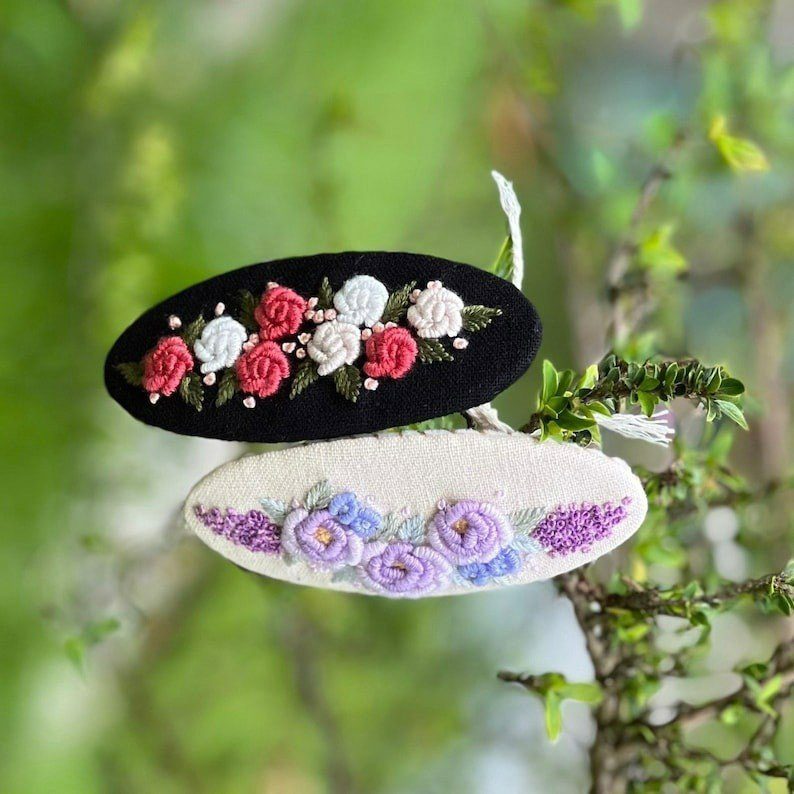
If plastic clips keep slipping or pulling, an embroidered barrette may be worth a look. This oval barrette is wrapped in linen, hand-embroidered with rosettes and measures about 3.5 × 1.5 in.
Step-by-Step Guide: 6 Elegant Hairstyles with Barrettes
To create elegant barrette hairstyles, prepare your hair texture first, section strands cleanly, and position the clip horizontally or at an angle across the hair grain.
Barrette hairstyles can suit both relaxed morning routines and special gatherings. Good styling relies on preparation rather than on clamping strength alone. If your hair is freshly washed and slippery, a light dusting of texture powder or dry shampoo can give the clip more to grip. Below are six versatile styles to try.
Step 1: The Romantic Half-Up Twist
The half-up twist remains a staple among barrette hairstyles because it sweeps hair away from your face while leaving length visible. Begin by sectioning hair from above your ears toward the crown on both sides. Gently twist each side inward toward the center of your head, creating two soft rolls that meet at the back. Instead of gathering all the underlying hair, cross the left twist over the right twist.
Slide an oval barrette, such as our Oval Rosette Barrette, beneath the crossed section where the twists overlap. Make sure the clasp catches a small anchor of hair underneath so the barrette has something to rest against, then close the clasp. This arrangement lets the barrette sit over the twisted rolls instead of relying on one thin section of hair. You can see our pink hair clips here, including the embroidered oval barrette used in this style.
Step 2: The Low Textured Nape Ponytail
A low ponytail secured with an embroidered accessory offers a refined alternative to everyday elastic bands. Start by smoothing your hair toward the nape of your neck using your fingers to preserve natural wave or curl texture. If you have fine hair, secure the ponytail base with a small, clear mini elastic first. This creates a dedicated foundation so your barrette does not bear the entire weight of your hair. If your ponytail is long and full, this guide to hair clips for long hair offers more ideas.
Position a barrette directly over the clear elastic so that it hides the band. If your hair is thick, gather only the upper part of the ponytail inside the clip, allowing the lower layer to sit naturally beneath the frame. This technique helps avoid overfilling the clasp while still giving the polished look of a fully bound ponytail.
Step 3: The French Twist Accent
The French twist is a classic updo that pairs well with textile hair pieces. Gather your hair at the nape as if forming a low ponytail, then twist the length upward toward the crown. Fold the twisted column inward against your head, tucking the ends cleanly underneath the roll or letting them feather out for a relaxed look. For another relaxed way to wear an updo, you can try these hair claw clip styles.
Secure the interior roll with a few basic bobby pins to support the updo structure. Once the twist is stable, slide an embroidered linen barrette vertically or slightly angled along the outer seam of the twist. Because the pins carry most of the updo’s weight, the barrette can act as a decorative focal piece instead of doing all the work.
Step 4: The Side-Swept Pin-Back
The side sweep is an accessible option among hairstyles with barrettes and can work on many lengths, including bobs and lobs. Create a clean, deep side part using a tail comb. Comb the side with less hair smoothly behind your ear, following the natural curve of your cheekbone upward toward the temple. If your hair is cropped or bob length, these claw clip hairstyles for short hair are worth a look.
Slide an oval barrette or an embroidered snap clip horizontally just above the ear, angling slightly toward the crown. To help fine strands stay put, cross two small sections of hair into an “X” shape before clamping the clip over the intersection. The crossed hair gives the barrette more to grip while leaving your crown volume alone. For a smaller accent along the side, you can see our embroidered snap clips here.
Step 5: The Braided Crown Half-Up
Combining soft braids with linen textures gives a cottagecore look. Separate a small section of hair near each temple and weave both sections into loose three-strand braids. Secure the ends temporarily with mini elastics, then gently pull at the outer edges of each braid link to give them a fuller, relaxed appearance.
Bring both braids around to the back of your head, overlapping the ends near the base of your skull. Remove the temporary elastics while holding the braids together, then fasten an embroidered barrette directly across both braided tails. The woven texture of the braids gives the barrette something to grip.
Step 6: The Messy Chignon Barrette Tuck
The low messy chignon is a popular choice for casual days when you want your hair off your neck without a rigid bun shape. Gather hair at the nape into a loose loop bun, allowing face-framing tendrils to fall naturally around your ears. Pull lightly at the crown to add soft height and texture. If you like clips with a bigger grip for chignons, learn about the types of claw clips too.
Take the loose tail of the loop and wrap it around the base to disguise the bun elastic. Fasten the tail end using an oval barrette placed horizontally directly above the bun knot. The hand-embroidered floral detail sits on top of the chignon and gives a casual bun a more finished look.
Studio Tips for Wearing Barrette Hairstyles
In our studio, we like to use hidden mini elastics as anchor points and to slide barrettes in against the grain of the hair, which can help a barrette stay in place.
In our studio, we hand-embroider accessories in small batches, mainly on natural linen, and small adjustments often make a noticeable difference in how a barrette sits. Here are four practical methods we like to share.
Create a Hidden Micro-Anchor: If your hair is very smooth or fine, sliding a barrette over loose strands can lead to gradual slipping. Gather a tiny pinch of hair exactly where you plan to place the clip, and secure it with a tiny clear elastic. Clamp the barrette directly over this micro-band. The elastic acts as a small stopper that gives the barrette something to rest against, and it usually stays hidden in your style.
Insert the Barrette Against the Grain: When clipping back a side section or half-up style, guide the barrette in slightly forward, against the natural direction of hair growth, before pivoting it back into place. This quick scooping motion catches a little extra hair at the roots, which can give the barrette a firmer seat.
Spot Clean Linen Surfaces with Care: Hand-embroidered barrettes need a gentle touch. Avoid soaking them in water, as soaking can loosen the embroidery. If your accessory gathers makeup or hairspray residue, spot clean it with a clean cloth dampened with lukewarm water, then let it air dry fully.
Coordinate Botanical Textures with Natural Fibers: A linen-wrapped barrette with embroidered roses pairs nicely with textured fabrics like linen blouses, chunky knit cardigans and cotton sundresses. Echoing the colors of your accessory in your outfit gives an understated, cohesive look that feels artful rather than overstyled.
Common Mistakes in Everyday Barrette Hairstyles
Common barrette styling mistakes include forcing too much hair into small clasps, pulling hair too tight along the hairline, and clipping over damp strands.
Any hair accessory can be uncomfortable or tough on your hair if it is worn incorrectly. By spotting these everyday styling habits, you can enjoy graceful hairstyles with barrettes while keeping the pull on your hair light. Here are three common mistakes and how to fix them.
Mistake: Overstuffing the Clasp Frame: It is tempting to gather your whole head of hair into a single medium barrette. Forcing the clasp closed over too much hair can bend the frame or loosen the hinge, and the pressure can pinch and snag strands. To fix this, use your barrette for decorative top layers or half-up sections, leaving lower hair layers free or supported by a hidden base band.
Mistake: Excessive Hairline Tension and Repetitive Placement: Clamping barrettes tightly against the temples or pulling hairline strands taut day after day adds up. The American Academy of Dermatology notes that hair pulled back tightly over and over can cause traction alopecia, a type of hair loss. Avoid pulling sections drum-tight. Leave a little slack along the hairline, and alternate your clip placement from day to day. If your scalp feels tender, take the barrette out, and see a doctor if it continues or a dermatologist if you notice thinning.
Mistake: Fastening a Barrette over Wet or Damp Hair: Wet hair is more fragile and stretchy than dry hair. Fastening a barrette onto damp hair can create pinch points that tug on strands. Let your hair air dry or blow dry completely before styling with barrettes, and let styling sprays dry before clipping in fabric accessories.
Barrette Hairstyles FAQ
What is the difference between a barrette and a hair clip?
A barrette typically features an elongated, horizontal metal clasp with a locking tension arm designed to hold flat sections of hair close to the head. Hair clip is a broader term that covers claw clips, alligator clips, duckbill clips and flat snap clips. Barrettes generally lie flatter against the head and provide a structured decorative surface, making them popular for half-up designs, side sweeps, and formal accents.
How do you keep barrettes from slipping out of fine hair?
To help barrettes stay put in fine hair, avoid placing them on slick, freshly washed strands. Mist the target section with dry texturizing spray or backcomb the inner hair layer gently to create texture. You can also secure a small micro-section underneath with a mini silicone elastic and clamp the barrette directly over the band to provide a steady anchor.
Can you create barrette hairstyles on short hair?
Yes, barrettes can work well on short hairstyles like bobs, pixies and lobs. On shorter lengths, focus on side sweeps, temple pin-backs and asymmetrical accents. Part hair deeply to one side, smooth back the lighter side, and fasten an oval barrette or snap clip just above the temple. This adds visual interest and pins shorter fringe layers back.
How do you clean hand-embroidered linen barrettes?
Avoid soaking an embroidered linen barrette in a bowl of water or running it under a faucet, as moisture can loosen the embroidery. To clean, dip a soft cloth into lukewarm water, wring it out until damp, and gently dab any makeup or oil marks on the linen. Let the piece air dry away from direct heat.
Does wearing barrettes cause hair damage or headaches?
Pulling hair too tightly against the scalp or overloading the clasp can cause discomfort, so keep the tension light and the hair section small. If you feel scalp tightness or a headache starting, take the accessory out and loosen the hair section. If headaches continue after you remove it, talk to a doctor.
Elevating Barrette Hairstyles with Thoughtful Details
Good barrette hairstyles come down to matching the clasp to your hair and keeping the tension light. At BabunobGem, we hand-embroider barrettes and other hair accessories in small batches in our Ho Chi Minh City studio. Orders are usually prepared in 1–3 business days, delivery to the US is estimated at 10–14 business days with tracking, and returns are accepted within 30 days under our Return Policy. We hope these ideas make your next barrette style easier.
New here? Get 10% off your first order
Join our list for new small-batch designs and restocks, or browse the collection now.
Note: Each piece is embroidered by hand, so stitches and colors can vary slightly from the photos. Fit and feel depend on head size, hair type and how you wear it. This guide is for general information only.