
Cute Workout Hairstyles for the Gym
Workout hairstyles should keep hair off your face, spread tension across your scalp and cope with sweat and movement. This practical guide from BabunobGem is for women who want cute gym hairdos, with step-by-step styles, fabric accessory pairings and gentle habits that can reduce strain on your hair.
Key highlights
- How to choose cute hairstyles for sports based on movement intensity and hair density
- Step-by-step techniques to anchor high and low impact gym hairstyles for long hair and shorter cuts
- Practical studio tips for wearing a fabric headband without too much scalp pressure
- Common mistakes that can lead to workout hair breakage, and simple ways to fix them
Core Foundations of Reliable Workout Hairstyles
Reliable workout hairstyles spread tension across more than one anchor point and cope with sweat and friction along the hairline. Choosing flexible ties over rigid fasteners can help keep your hair contained during vigorous training.
Good exercise hairstyles start with understanding the forces your hair meets while you move. During running, burpees or kettlebell swings, your strands are tugged up, down and side to side again and again. When hair is gathered into a single high anchor with an unyielding rubber elastic, that one point takes the entire pull. Over a long session, this strain can loosen the hold and leave your scalp feeling tired.
Sweat adds another factor. It is mostly water and salts, and damp hair is more fragile than dry hair, so it stretches and breaks more easily. If damp hair rubs against coarse synthetic fabric or tight plastic edges, the friction can lead to post-workout tangles and frizz. Cute athletic hairstyles should keep damp hair contained and out of your face.
Matching Sports Hairstyles to Impact Levels
Workout intensity affects how much support your hairstyle needs. Low-impact disciplines, such as restorative yoga, Pilates and walking, involve slow, controlled movement. For these activities, hairstyles for sports should avoid bulky hardware at the nape of the neck or crown, which can press uncomfortably against gym mats or reformer carriages. Loose low plaits, fabric-wrapped chignons or half-up twists with a wide band can give enough control without extra tightness.
Moderate-impact training, including dumbbell strength routines, indoor cycling and rowing, brings steady movement and steady sweat. Here, fitness hairstyles need to keep hair clear of your shoulder blades and equipment cables. A mid-height bubble ponytail or a structured French braid can help keep strands from catching under barbell knurling or sticking to your neck.
High-impact conditioning, such as sprinting, plyometrics and jump-rope circuits, puts more strain on your hair. Cute workout hairstyles for high-movement days usually do better with more than one anchor point. Rather than relying on a single hair tie, twin Dutch braids, a braided ponytail or tiered segment bands can spread tension across the scalp and make it less likely that the whole style slumps mid-workout. When the weather cools down for outdoor runs, our fall hairstyle ideas can help you plan ahead.
The Structural Role of Grip, Texture, and Fabric Accessories
Hair texture changes how gym hairdos behave under physical stress. Fine, silky hair has less surface grip, so a thin elastic can slide down during rapid movement. Textured, thick or coily hair carries more weight, which can overload a thin hair band and stretch or snap it. A textured fabric accessory adds some surface grip, which may help hold hair in place without a very tight wrap.
A fabric headband adds another layer of control during active sessions. Worn across the hairline, a wide, stretchy band can keep fringe and flyaways out of your eyes, so you reach for your hair less often with chalky or sweaty hands. Unlike a rigid plastic band, which can press behind the ears, a flexible fabric band flexes with the shape of your head.
| Hairstyle Structure | Workout Impact Level | Recommended Hair Length | Primary Hold Mechanism |
|---|---|---|---|
| Bubble Ponytail | High Impact (HIIT, Running) | Medium to Long | Segmented soft elastics along the hair length |
| Twin French Braid Pigtails | High Impact (CrossFit, Plyometrics) | Medium to Long | Interlocking three-strand weave close to the scalp |
| Low Folded Chignon | Low Impact (Mat Pilates, Barre) | Shoulder to Long | Fabric scrunchie anchored low at the base of the skull |
| Tiered High Ponytail | Moderate Impact (Strength Training) | Long | Dual base ties to divide ponytail mass |
| Dutch Crown Braid | Moderate to High (Cycling, Boxing) | Medium to Long | Inverted surface weave pinned flat to crown |
| Half-Up Top Knot | Low Impact (Hatha Yoga, Walking) | Short to Shoulder | Gentle hair tie paired with wide fabric band |
| Braided High Ponytail | High Impact (Aerobics, Jump Rope) | Long | Sturdy base tie reinforced by plaiting loose hair |
| Sleek Low Plait | Moderate Impact (Rowing, Kettlebells) | Medium to Long | Single nape tie with woven tension distribution |
| Double Space Buns | Moderate Impact (Dance, Calisthenics) | Short to Medium | Symmetrical coiled buns secured with fabric bands |
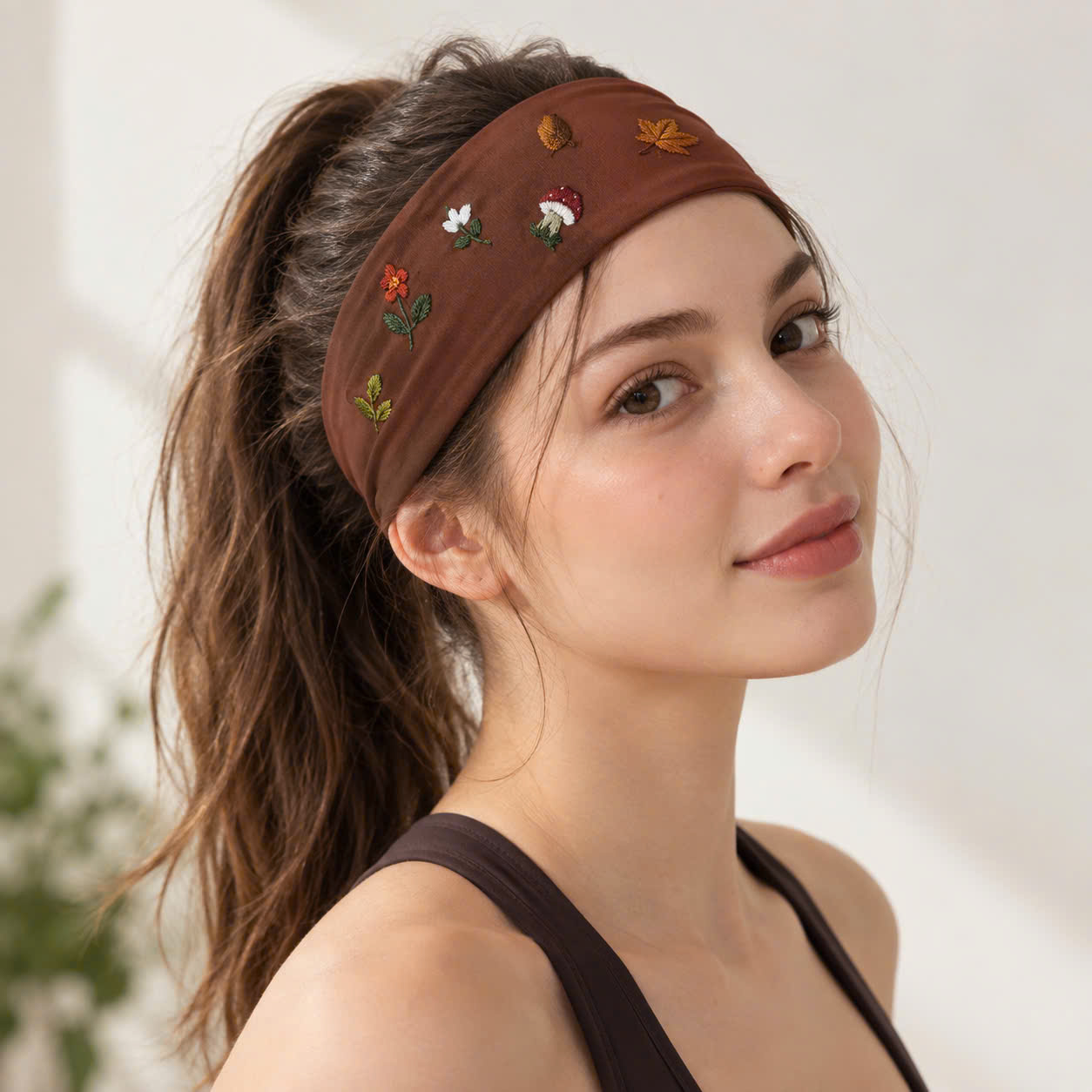
Autumn Woodland Sports Headband
If stray hairs keep falling into your face mid-workout, a headband may be worth trying. This one has a stretchy, one-size-fits-most band and hand-embroidered botanical designs.
How to Build Long-Lasting Workout Hairstyles Step by Step
Build workout hairstyles in stages: prep your hair, set one or two base anchors, contain the length with a braid or bubble ties, and add a wide fabric headband to manage front flyaways.
Rushing through hair prep before a training session often leads to loose bands, falling pins and distracting flyaways on the gym floor. A methodical approach gives you sport hairstyles that look clean, hold up better through heavy movement and are easier to take down after your workout. Many of these ideas carry over to gym class, as shown in our hairstyles for school guide.
Step 1: Prep Strands and Assess Hair Texture
Begin by gently detangling hair with a wide-tooth comb or paddle brush, starting from the ends and working up toward the roots. Do not style over knots, because tension on existing tangles can break hair as you move. Avoid slick, silicone-heavy finishing serums or hair oils right before training. They reduce natural surface friction, which can make hair ties and clips slide down during exercise.
If your hair is freshly washed and slippery, mist the roots lightly with water or a mild mineral texturizing spray to add some grip. For dry or naturally textured hair, a small drop of lightweight leave-in conditioner smoothed through the mid-lengths can make the ends easier to manage.
Step 2: Establish Base Anchors with Staggered Tension
Rather than pulling all your hair into a single tight band, divide it into working zones. For gym hairstyles for long hair, a tiered ponytail can take some of the weight off the crown. Section off the top portion of your hair from the temples back and secure it with a fabric-covered tie. Next, gather the middle and lower sections, incorporating the tail of the first section into the lower anchor.
This staggered technique spreads the weight of your hair across two separate points on your head, so the upper scalp does not carry the whole mass and there is less pulling in one spot. When gathering hair, use the flats of your fingers rather than a fine-toothed comb to smooth strands backward, which helps keep the tension relaxed.
Step 3: Secure Mid-Lengths with Braids or Bubbles
A loose ponytail that swings freely during exercise rubs against shirts, sports bra straps and barbell knurling. For high-energy movement, turn loose tails into contained shapes. For a bubble ponytail, place small, smooth hair ties every two to three inches down the length of the tail. Gently tease each segment outward with your fingertips to add volume and keep the tail tidy.
Alternatively, plait the length into a classic three-strand braid, a herringbone weave or a rope twist. Braiding holds individual strands together, which can cut down on tangles from fans, wind or sudden changes of direction. Fasten the end of the braid with a soft tie. This contained shape helps keep hair from whipping across your face during runs or jumps.
Step 4: Layer a Wide Fabric Band for Hairline Control
Even structured braids and ponytails leave shorter front layers, bangs and temple baby hairs unsecured. A wide fabric headband can help manage these shorter strands. Hold the headband with both hands, slide it down around your neck like a collar, and then draw it upward over your forehead to your natural hairline. Check that the front edge rests at the hairline or slightly over it.
A wide band with some stretch can smooth baby hairs back and frame your face for a neat, intentional look. If you like a handmade touch, BabunobGem makes embroidered sports headbands with a stretchy, one-size-fits-most band and botanical embroidery. You can browse our embroidered hair accessories here, including headbands with botanical stitching and more.
Step 5: Post-Workout Release and Strand Preservation
How you undo exercise hairstyles is just as important as how you put them up. After your cooldown, resist the urge to yank hair ties downward in one swift motion. Yanking pulls trapped strands against the elastic, which can snag and break them. Special occasions call for a different approach, so browse these cute hairstyles for prom for polished ideas.
Instead, gently unwind each hair tie loop by loop with clean hands. Remove your fabric headband by lifting it forward and up off your forehead rather than dragging it backward against the direction your hair grows. Lightly shake your roots loose with your fingertips, and let your hair dry before brushing, since damp hair is more fragile. Heading out after your session? These cute date hairstyles are easy to dress up from a simple base.
Studio Experience: Practical Styling Tips for Active Days
In our studio, we suggest angling a fabric band over the tops of your ears, layering a scrunchie over a plain tie, spot cleaning embroidered bands after training and smoothing flyaways with a little water.
In our studio in Ho Chi Minh City, we spend our days working with natural linen, embroidery floss and hair accessories of all shapes. Here are four practical tips we often share with women who stay active. Looking for something dressier than gym styles? See these shoulder length wedding guest hairstyles.
Angle the Band over the Top of the Ears: Many people place fabric headbands straight backward across the crown, and the band can creep forward or slide back during dynamic movements. In our studio, we recommend angling the back of the band down toward the nape while letting the side edges cover the very top curve of your ears. This position uses the shape of your head to help the band stay put, so it does not have to be tight.
Use the Double-Tie Method for Heavy Hair: If you have thick, dense long hair, a single tie can stretch out under repetitive jumping or running. We recommend gathering the base with a plain inner tie first, then layering a fabric scrunchie, such as a linen one, over it. The inner tie does the holding, while the scrunchie covers the plain band and adds a handmade finish. After training, the same wide fabric tie can add polish to winter formal hairstyles.
Spot Clean Embroidered Bands Post-Training: Hand-embroidered accessories need gentle handling after a sweaty workout. In our studio, we recommend wiping your embroidered headband lightly with a clean, damp cloth after exercise, avoiding hard rubbing across the stitches. Let it air dry flat in a shaded, airy spot, away from direct heat. Do not wring it or put it in a washing machine.
Tame Temple Flyaways with Water Rather Than Sticky Sprays: Hairspray and gel can mix with sweat during high-intensity training and leave hair feeling sticky and stiff. A tip we often share is to dampen your fingertips with plain water and smooth temple baby hairs flat before sliding on a wide fabric headband. If you work out before the office, our cute hairstyles for work guide helps you switch looks.
Common Hair Care Mistakes to Avoid During Workouts
Common workout hair mistakes include pulling ponytails excessively tight, wearing rigid plastic accessories against equipment, and styling wet hair into high-tension updos.
Many people put more stress on their hair during workouts than they realize. Spotting these common styling errors makes it easier to keep your hair looking cute and your scalp comfortable.
Mistake: Pulling Hair into an Ultra-Tight High Ponytail for Every Session. Cranking your hair into a sleek, severe updo pulls hard on the hairline, temples and nape. The American Academy of Dermatology notes that hair pulled back tightly over and over can cause traction alopecia, a type of hair loss. The Fix: Vary your styling height through the week. Switch between low nape braids, mid-height bubble tails and loose chignons secured with fabric scrunchies, so no single area of your scalp takes all the strain. If you notice thinning, see a dermatologist.
Mistake: Wearing Hard Plastic Clips or Rigid Alice Bands on Gym Benches. Thick plastic claw clips and rigid toothed headbands look stylish during warmups, but they can be a problem during floor work, bench presses or foam rolling. When your head rests against a firm weight bench or padded mat, hard plastic can press into your scalp and the base of your skull, which is uncomfortable and can crush your hair. If an accessory gives you a headache, take it off. If the headache continues, talk to a doctor. The Fix: For floor work or bench exercises, choose flat fabric headbands and fabric-covered hair ties instead.
Mistake: Tying Up Sopping Wet Hair Directly Before Training. Rushing from a quick pre-gym rinse or swimming session and bundling soaking wet strands into a firm bun can stress your hair. Wet hair is more fragile than dry hair and stretches more before it snaps, so wet strands held tight under an elastic are more likely to break as you move. The Fix: If your hair is still damp, weave it into a loose, unforced three-strand plait secured with a wide fabric hair tie.
Workout Hairstyles FAQ
What are the most reliable workout hairstyles for long hair?
Tiered bubble ponytails, braided high ponytails and twin Dutch braids are popular choices for long hair during training. These styles divide the weight of long hair across several points rather than letting a heavy ponytail bounce against a single elastic. Dividing the mass can help keep the base from slipping loose during jumps or sprints, keep long ends off equipment and sweaty shoulders, and reduce tangles from wind and movement.
How can I keep cute hairstyles for sports from slipping without pulling my scalp?
To help gym hairstyles stay put without over-tightening, rely on surface texture and more than one anchor point. A fabric-covered scrunchie or textured tie often grips better than a smooth rubber band. Position a wide, stretchy fabric headband so the back rests low at the base of your skull and the sides cover the tops of your ears. This uses the shape of your head to hold the band in place, so it does not need to be tight.
Can wearing gym hairdos every day cause hair damage?
It can if your updos are tight. Hair pulled back tightly over and over can cause traction alopecia, a type of hair loss, and repeating the same tight style at the same spot can also lead to breakage. To lower the risk, vary your updo height through the week, switch between braids and loose buns, and take your hair down gently after your workout. If you notice thinning, see a dermatologist.
What should I do if my workout headband keeps sliding off during exercise?
If your headband slides during workouts, it is often placed too far back on silky hair or sitting over oily skin. Slide the band down around your neck first, then pull it upward so the front edge rests directly on or slightly ahead of your front hairline. Make sure your forehead is clean and free of slick moisturizers or heavy hair oils before your workout, as surface oils reduce the fabric’s natural grip.
How do I clean fabric workout headbands with hand embroidery?
Spot clean hand-embroidered headbands gently rather than putting them in a washing machine. After exercising, wipe the fabric lightly with a clean, damp cloth, avoiding hard rubbing across the embroidery. Then lay the headband flat to air dry completely in an airy room, away from direct heat.
Finding Your Rhythm with Mindful Gym Hairstyles
A practical workout hairstyle can make training feel simpler, with less time spent fixing your hair. At BabunobGem, we embroider hair accessories by hand in small batches in our Ho Chi Minh City studio. Orders are usually prepared in 1–3 business days, and delivery to the US is estimated at 10–14 business days, with tracking. You can return items within 30 days under our Return Policy.
New here? Get 10% off your first order
Join our list for new small-batch designs and restocks, or browse the collection now.
Note: Each piece is embroidered by hand, so stitches and colors can vary slightly from the photos. Fit and feel depend on head size, hair type and how you wear it. This guide is for general information only.