Hair Clip Names and Their Uses
Hair clip names can be confusing when you are trying to find the exact piece for your daily routine or a special occasion. This guide breaks down the different types of clips and how to use them, helping you choose thoughtfully while exploring handmade options from BabunobGem.
Key highlights
- Learn the specific names of hair clips, from classic French barrettes to modern claw clips and sectioning tools.
- Understand which clip mechanisms tend to suit fine hair, thick hair and half-up styles.
- Discover how hand-embroidered linen clips add a subtle, cottagecore touch to your everyday wardrobe.
- Find practical tips from our studio for caring for fabric-covered accessories and avoiding common styling mistakes.
The Complete Glossary of Hair Clip Names and Materials
The most common hair clip names include claw clips, French barrettes, snap clips, alligator clips, and hairdressing crocodile clips, each featuring a distinct mechanism designed for specific hair types and styling needs.
When you start looking into hair accessories, the sheer variety of terms can feel overwhelming. Knowing the names of hair clips helps whether you are searching for a vintage style online, following a hair tutorial, or looking for a handmade gift. The name of a clip usually refers to its metal or plastic mechanism rather than its decorative top, and knowing the mechanism is the first step in working out what will hold your hair.
In the world of hair accessories, the base material of the clip and the decorative elements attached to it play a significant role in both function and aesthetics. Mass-produced clips are often made of molded plastic. In contrast, artisanal pieces might use natural fabrics like linen, cotton or silk, combined with hand embroidery. At our studio in Ho Chi Minh City, we work mainly on natural linen, a textured canvas for our botanical embroidery.
Understanding Clip Mechanisms
The mechanism is the engine of the hair clip. A French barrette, for example, uses a tension bar that snaps into a clasp. This design suits holding a set amount of hair in place. If you have fine hair, a large French barrette might slide out, while a smaller one is more likely to stay put. Snap clips, on the other hand, work by bending a piece of metal concave and convex to open and close. They lie flat against the head, which makes them well suited to pinning back bangs or securing small flyaways.
Claw clips operate on a spring mechanism, using interlocking teeth to gather and hold hair. They have become popular again because they make quick updos easy. Then there are the tools used primarily by professionals. Hairdressing clips, such as duckbill and alligator clips, are designed with a single hinge and a long, narrow beak. They are meant to slide into the hair easily to hold sections temporarily while cutting, dyeing, or heat styling. To compare jaw sizes and shapes before you buy, see our guide to the main types of claw clips.
The Role of Fabric and Embroidery
When a metal clip is covered in fabric, it becomes a decorative piece as well as a functional one. Fabric-covered clips, especially those made from linen or velvet, offer a softer look than bare metal or shiny plastic. Hand embroidery adds another layer of character. Because we embroider our pieces by hand in small batches, each one comes out slightly different.
We often use motifs inspired by nature, such as roses, daisies, sunflowers, lavender, lilies, wildflowers and bees. These designs lean into a cottagecore or boho look and appeal to people who appreciate things that are made slowly. Whether it is a set of snap clips or an oval barrette, the pairing of linen and hand embroidery gives a textured, handmade look. You can browse all of our handmade hair clips in one place.
| Clip Name | Mechanism Type | Hair Type | Common Uses |
|---|---|---|---|
| French Barrette | Metal tension bar and clasp | Medium to thick (depending on size) | Half-up styles, securing ponytails |
| Snap Clip | Bendable metal teardrop | Fine hair, small sections | Pinning bangs, securing flyaways |
| Claw Clip | Spring hinge with interlocking teeth | Depends on claw size: small for fine hair, large for thick | Quick updos, French twists |
| Alligator Clip | Pinch hinge with teeth | Medium to thick | Holding sections, attaching bows |
| Hairdressing Crocodile Clips | Hinged jaws with wide teeth and a spring | Thick, heavy hair | Professional sectioning, styling |
| Duckbill Clip | Smooth, narrow pinch hinge | Fine to medium | Pin curls, sectioning during blowouts |
| Banana Clip | Two curved combs clasping at the top | Thick, curly, or textured | Creating cascading ponytails |
| Bobby Pin | U-shaped ridged metal wire | Many hair types | Invisible holds, securing buns |
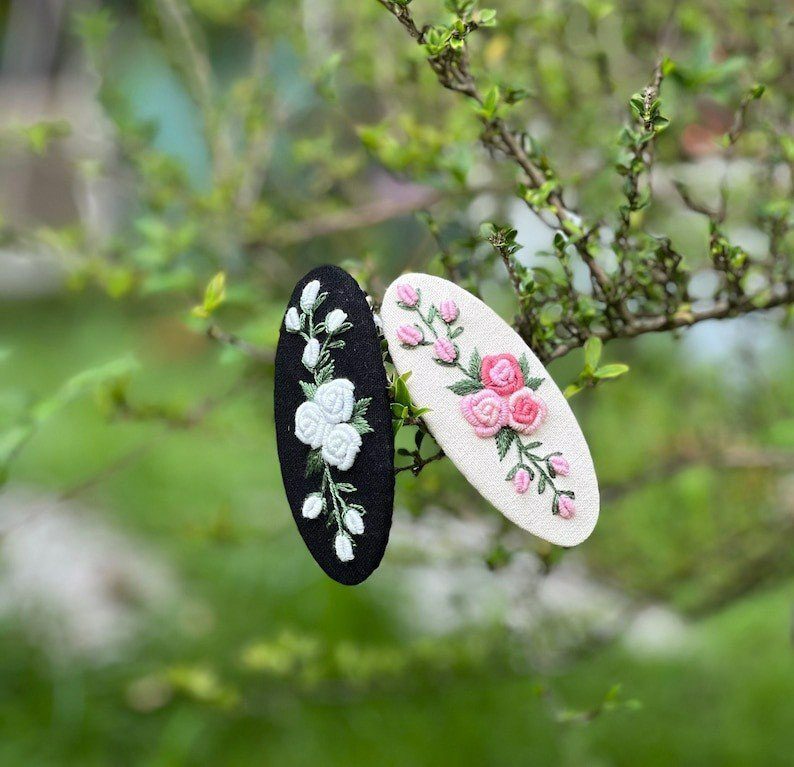
If generic plastic clips feel like they lack personality, a hand-embroidered barrette may be worth a look. This oval piece is wrapped in linen with an embroidered rosette and measures about 3.5 by 1.5 inches.
How to Choose the Right Clips for Styling Hair
To choose the right clips for styling hair, you should assess your hair’s volume, match the clip’s mechanism to your intended hairstyle, and consider the material’s aesthetic for the occasion.
Building a functional and beautiful collection of hair accessories requires a bit of strategy. It is easy to buy a clip simply because it looks pretty, only to find out later that it slides down your neck after an hour or pinches your scalp. Choosing clips for styling hair by volume, mechanism and occasion makes that less likely. Here is a step-by-step guide.
Step 1: Assess your hair volume and texture
A key factor in choosing a hair clip is how much hair you need it to hold. If you have fine, slippery hair, large French barrettes and heavy metal claws may slide out. Instead, look for smaller snap clips, which lie flat against the head and are made for small sections of hair. Our snap clips are about 7 cm long, and our hand-embroidered claw clips suit half-up styles and fine hair. If your hair sits above the shoulders, these claw clip hairstyles for short hair show what still works.
If you have thick, coarse or curly hair, you usually do better with mechanisms that offer more space and stronger tension. Large claw clips with wide-set teeth work well for gathering all your hair into a twist. When looking at barrettes for thick hair, pay attention to the curve of the metal; a deeper curve allows more hair to sit inside the clip without popping the clasp open. Once you have the right size, these hair claw clip styles show a few easy ways to wear it.
Step 2: Match the clip to the occasion
Think about where you will be wearing the clip. For a relaxed day at home, running errands, or gardening, you might want something simple and comfortable. A set of linen-wrapped snap clips embroidered with flowers adds a thoughtful touch to a casual outfit without feeling overdressed. For a more polished environment, an oval rosette barrette—perhaps one featuring faux pearl beads—can elevate a simple blouse or dress. For more ways to wear one, our barrette hairstyles guide walks through easy half-up and side-swept looks.
If you are working out or doing something highly physical, clips may not be the right choice. In those cases, you might switch to a sports headband with a stretchy band, or use a linen scrunchie to keep your hair out of the way.
Step 3: Consider the material and construction
The material of the clip affects both its durability and its vibe. Plastic and acrylic clips are common and come in many colors, but they can sometimes feel brittle or look mass-produced. Metal clips are durable but can be harsh on the hair if they have sharp edges. Fabric-covered clips are another option. Linen, in particular, has an earthy texture that softens the look of the metal hardware underneath. For a soft pop of color, our pink hair clips wrap the barrette in embroidered linen.
When choosing fabric accessories, consider how they are made. Machine embroidery is precise and uniform, while hand embroidery tends to look a little more varied from piece to piece. Because our pieces are made slowly by hand, each one is slightly different.
Step 4: Factor in the styling technique
Are you using the clip to hold a finished style, or are you using it as a tool to create a style? If you are blow-drying, straightening, or curling your hair, you need tools specifically designed for temporary holds. This is where hairdressing crocodile clips come in. Their wide, toothed jaws open far enough to hold large, thick sections of wet or dry hair out of the way while you work on another section. Once the styling is done, you remove the sectioning clips and place your decorative barrettes or snap clips to finish the look.
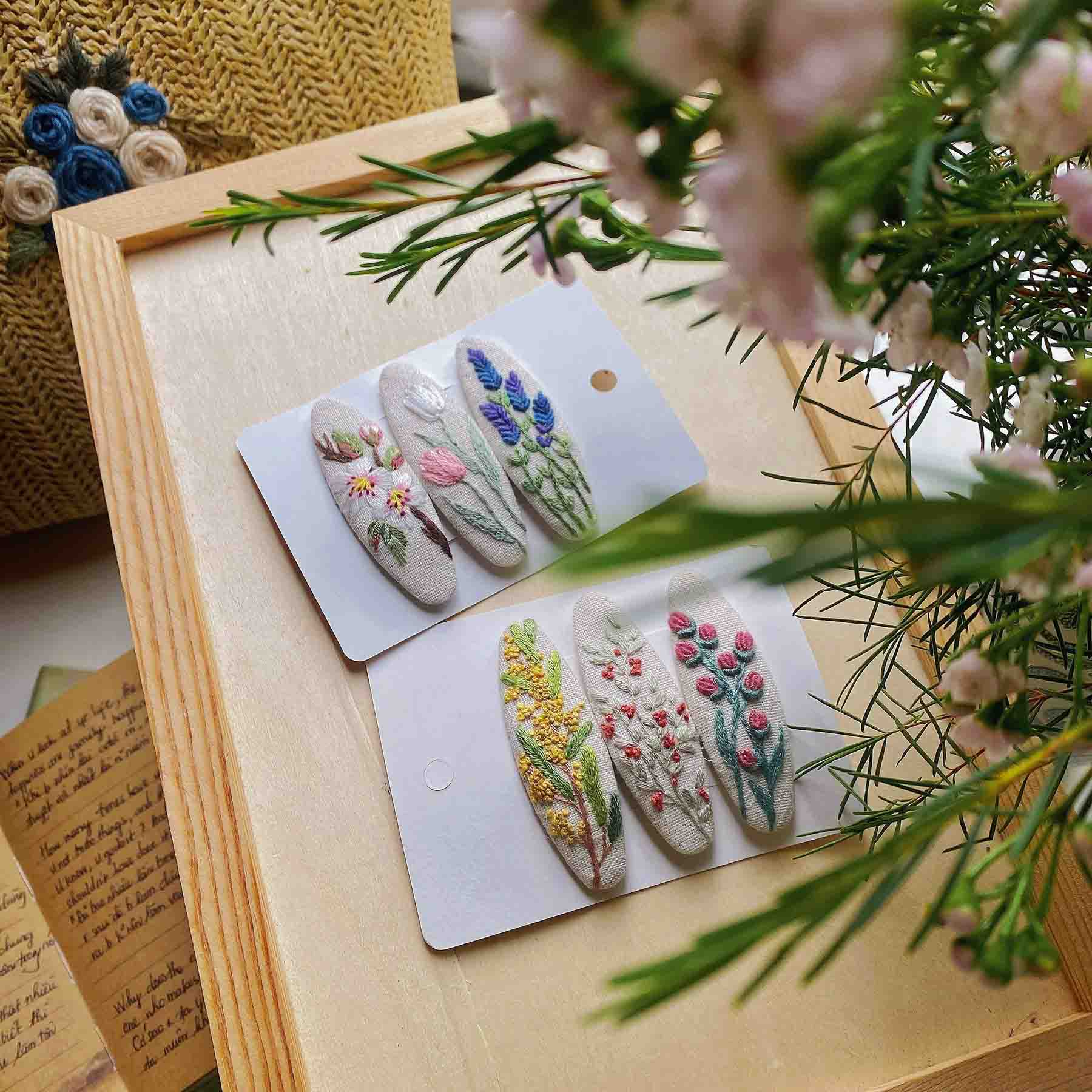
Embroidered Snap Clips (Set of 6)
Building a small collection of everyday accessories? US shipping is $7 for the first item, and each extra item adds just $1 to your shipping cost.
Studio Tips for Wearing and Caring for Your Clips
To get the most out of your hair clips, layer smaller clips for added visual interest, spot clean fabric accessories with a damp cloth, and always gather your hair gently before securing the clasp.
Over the years of designing and making hair accessories in our Ho Chi Minh City studio, we have learned a lot about how different materials behave and how to style them effectively. Hand-embroidered linen requires a slightly different approach than a standard plastic claw clip. Here are some practical tips we often share with people who are building their collection of handmade accessories.
Layering snap clips If you have fine hair and want to make a statement, try wearing two or three snap clips stacked parallel to each other just above your ear. You can pair a plain clip with one that features floral embroidery. Because our snap clips are about 7 cm long, they make a small, textured cluster when worn together. Our set of six embroidered linen snap clips is an easy way to try this.
Cleaning linen accessories Linen is a natural fiber that looks beautiful but needs gentle care. If your embroidered barrette or snap clip gets a little makeup or oil on it, do not soak it in water, as soaking can damage the embroidery. Instead, spot clean the fabric gently with a damp cloth. Let it air dry completely in a well-ventilated area before wearing it again.
Pre-styling for better grip If you find that barrettes tend to slide down your hair as the day goes on, try adding a little texture to your hair first. A light spray of dry shampoo or texturizing spray at the roots and mid-lengths gives the metal clasp something to grip onto. You can also lightly tease the section of hair where the clip will sit.
Storing embroidered items Hand embroidery involves delicate threads that can catch on sharp objects. When you take off your clips at the end of the day, store them in a small box or a dedicated drawer rather than tossing them loosely into a bag with keys and pens. This helps protect the stitching.
Common Mistakes When Using Hairdressing Clips and Barrettes
Common mistakes include using professional sectioning clips for all-day wear, forcing too much hair into a small barrette, and pulling the hair too tightly, which can be uncomfortable and strain your hair.
Even with the right accessories, how you use them matters. People often struggle with their clips, either because they are using the wrong tool for the job or because they are applying too much tension. Recognizing these common mistakes can help you avoid broken accessories and unnecessary strain on your hair.
Mistake: Using hairdressing crocodile clips for everyday wear. Hairdressing clips are designed with strong springs and teeth to hold hair temporarily while you blow-dry or flat iron. They are not meant to be worn for hours. Leaving them in all day can create harsh dents in your hair and may cause discomfort against your scalp. Fix: Keep your sectioning clips on your vanity for styling, and switch to a proper claw clip, barrette, or scrunchie for your actual hairstyle.
Mistake: Overstuffing a French barrette. It is tempting to try and twist all your hair into a single beautiful barrette, but if you have to force the clasp shut, you are using too much hair. Over time, this pressure can bend the tension bar or even break the clasp. Fix: If the barrette will not close easily, use it for a half-up style instead, or upgrade to a larger size designed specifically for thick hair. Our guide to hair clips for long hair covers sizes and placements for more length and weight.
Mistake: Pulling hair too tightly. Securing your hair in a very tight twist or pulling the sides back forcefully before clipping puts a lot of tension on your hair. The American Academy of Dermatology notes that hair pulled back tightly over and over can cause a type of hair loss called traction alopecia. Fix: Gather your hair loosely. For a workout, try a stretchy sports headband instead of anchoring your hair tightly with metal clips. If you get a headache, take the accessory out and let your hair down, and see a doctor if it continues. If you notice thinning, see a dermatologist.
Mistake: Sleeping in metal or hard plastic clips. Leaving clips in overnight can damage both the accessory and your hair. The friction against your pillow can cause breakage, and the hard materials can press uncomfortably into your head. Fix: Always remove clips before bed. If you need to keep your hair contained while sleeping, tie it loosely in a scrunchie instead.
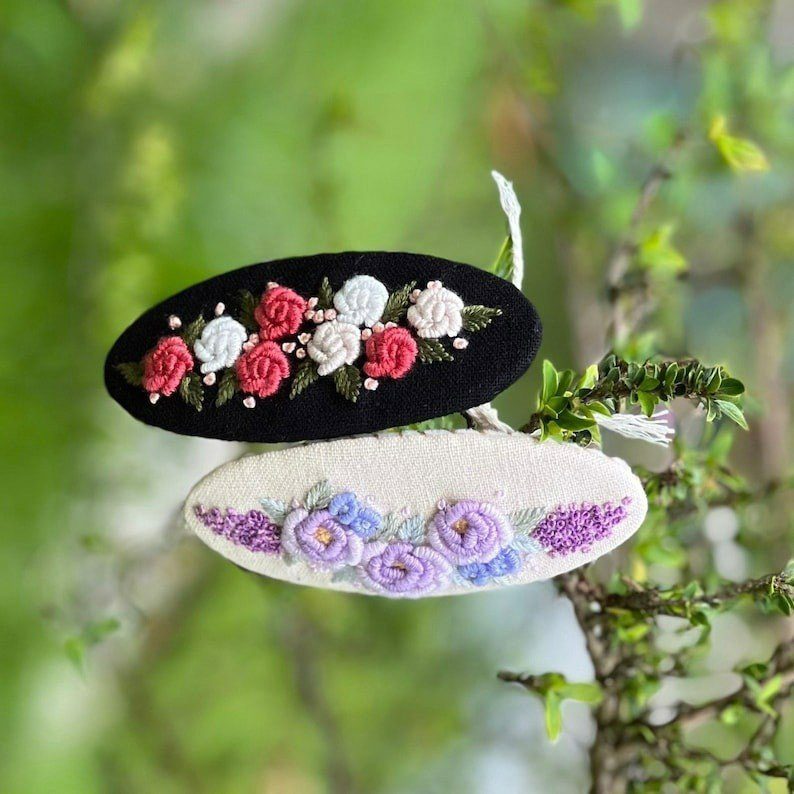
Ordering from a small studio overseas can feel uncertain, so here is what we can tell you. Orders are usually prepared in 1 to 3 business days and take an estimated 10 to 14 business days to reach the US, with tracking. You can return items within 30 days under our Return Policy.
Hair Clip Names FAQ
What are the names of hair clips used in salons?
The most common clips used by stylists in salons are duckbill clips, alligator clips, and hairdressing crocodile clips. These are primarily used as sectioning tools. They feature long, narrow shapes and strong hinges that allow stylists to isolate sections of hair temporarily while cutting, coloring, or heat styling. They are generally not intended for decorative, all-day wear.
What is the difference between a barrette and a snap clip?
A French barrette uses a metal tension bar that locks into a clasp, making it ideal for holding a specific, gathered volume of hair, like a half-up style. A snap clip is a single piece of bendable metal shaped like a teardrop that snaps open and closed. Snap clips lay flat against the head and are better suited for pinning back small sections of hair or bangs.
Which clips work well for fine hair?
For fine hair, smaller snap clips and lightweight claw clips are usually good options. Large, heavy metal barrettes tend to slide down fine hair because there is not enough volume to create tension against the clasp. Our snap clips are about 7 cm long, and our hand-embroidered claw clips suit half-up styles and fine hair.
How do I clean a linen hair clip?
To clean a linen hair clip, spot clean it only. Use a soft, damp cloth to gently dab any stains on the fabric. Do not soak the clip in water or put it in a washing machine, as this can damage the embroidery. Let it air dry completely.
Can I wear embroidered clips every day?
Many people do. Hand-embroidered pieces need a little care, though, so it is a good idea to rotate your accessories and store them away from sharp objects that might snag the hand-stitched details.
Finding Your Signature Style
Learning the different hair clip names and how their mechanisms work makes it easier to build a collection that fits your daily life. Whether you reach for a snap clip to keep your bangs back or an oval rosette barrette for a half-up style, knowing what each clip does makes choosing easier. At BabunobGem, we embroider our pieces by hand in small batches in our Ho Chi Minh City studio, and most items are under $25.
New here? Get 10% off your first order
Join our list for new small-batch designs and restocks, or browse the collection now.
Note: Each piece is embroidered by hand, so stitches and colors can vary slightly from the photos. Fit and feel depend on head size, hair type and how you wear it. This guide is for general information only.